Beyond the To-Do List: Cultivating Deep Work in a Distracted World
9 minGolden Hook & Introduction
SECTION
Nova: You know, Atlas, there's this pervasive myth out there, this almost comforting lie we tell ourselves: that being constantly busy, always connected, always responsive, somehow equates to being productive. We wear our exhaustion like a badge of honor.
Atlas: Oh, I know that feeling. It's like you're running on a treadmill at top speed, heart pounding, but when you look around, you haven't actually moved anywhere. You're exhausted but the meaningful impact feels… elusive. It’s a scattered feeling, exactly as you said.
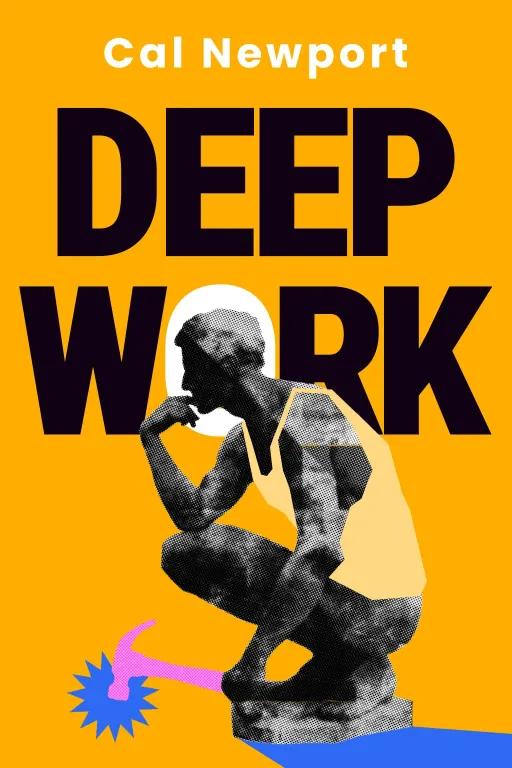
Nova: Exactly! And it leaves so many of us, especially those driven leaders and strategic thinkers in our audience, feeling perpetually behind, perpetually unfulfilled. But here's the contrarian truth: true productivity, the kind that creates lasting value, rarely happens in that state of frantic busyness. It happens in the quiet. It happens when you engage in what Cal Newport, in his highly acclaimed book, calls "deep work."
Atlas: Deep work. I've heard the term, but for someone constantly juggling emails, meetings, and sudden "urgent" requests, it almost sounds like a fantasy. Like a luxury for academics, not for someone in the trenches of a demanding career. What makes Newport, a computer science professor who famously shuns social media, the authority on this?
Nova: Well, his own life is a testament to it. He’s a tenured professor at Georgetown, publishes groundbreaking research, writes best-selling books, all while maintaining a balanced personal life, and he does it all without a single social media account. He walks the talk. His premise is simple but profound: the ability to focus without distraction on a cognitively demanding task is a skill, and it's becoming incredibly rare, and therefore, incredibly valuable. It’s what allows you to master complicated information and produce at an elite level.
The Silent Saboteur: Understanding Distraction and the Power of Deep Work
SECTION
Atlas: So, you're saying this isn't just about feeling good, but about developing a competitive edge? For our listeners who are aspiring leaders, who need to analyze complex markets or strategize next-quarter moves, this sounds critical. But how do we define "deep work" versus, say, just... regular work? What’s the clear distinction?
Nova: That’s a crucial question. Newport distinguishes between and. Deep work is professional activity performed in a state of distraction-free concentration that pushes your cognitive capabilities to their limit. These efforts create new value, improve your skill, and are hard to replicate. Think of it like an architect designing a complex building, or a strategist mapping out a five-year growth plan. It requires intense, uninterrupted focus.
Atlas: Okay, so it’s not just about sitting at your desk for a long time. It’s about the of that focus.
Nova: Precisely. Shallow work, on the other hand, is non-cognitively demanding, logistical-style tasks, often performed while distracted. These efforts don't create much new value in the world and are easy to replicate. Responding to routine emails, coordinating meeting logistics, browsing social media for "research" – that's shallow work. It feels busy, but it rarely moves the needle. The problem is, our modern work environments are wired for shallow work. Notifications, open-plan offices, the expectation of instant responses – they all conspire to keep us in a state of constant, low-level distraction, making deep work incredibly difficult.
Atlas: That makes perfect sense. I imagine a lot of our listeners feel trapped in that cycle. Always reacting, rarely proactively creating. It’s like being a firefighter, constantly putting out small fires, never having the time to build fire-resistant buildings. How does this constant context-switching affect our brains? Is it just inefficient, or is there a deeper cost?
Nova: There's a profound cost. Every time you switch tasks, especially from a cognitively demanding one to a shallow one like checking email, your attention doesn't immediately snap back. There’s a residue of attention left behind on the previous task. It’s called "attention residue." Imagine trying to solve a complex puzzle, then stopping to answer a quick text, then going back to the puzzle. That text, however brief, leaves a little mental echo, making it harder to re-engage with the puzzle at full capacity. Over time, this constant task-switching literally rewires your brain to be at focusing. You become accustomed to distraction.
Atlas: Whoa, that's kind of terrifying. So, the more we engage in shallow work and constant switching, the worse we get at the very thing we need to do to excel: deep thinking. It’s a vicious cycle. For an aspiring leader, this isn't just about personal productivity; it's about the quality of their strategic decisions.
Nova: Absolutely. Newport argues that in an increasingly complex and competitive knowledge economy, the ability to do deep work will be the defining characteristic of successful professionals. Those who can cultivate this skill will thrive, while those who remain trapped in the cycle of shallow work will stagnate. It’s not just about doing more; it’s about doing, with higher quality and greater insight.
Architecting Focus: Practical Strategies for Implementing Deep Work
SECTION
Atlas: Okay, you've convinced me that deep work is essential, not a luxury. But now for the million-dollar question: how do we actually it? How do you carve out that distraction-free concentration when your calendar is a battlefield and your inbox is a war zone?
Nova: That’s where the rubber meets the road, and it requires a deliberate, almost architectural approach to your day. Newport offers several strategies, but a foundational one is to deep work. Treat it like a non-negotiable meeting with yourself. Block out significant chunks of time—even 90 minutes to start—and protect them fiercely. This isn't about finding time; it's about making time.
Atlas: But what if an "urgent" email comes in? Or a team member needs something immediately? For someone leading a team, you can't just disappear for 90 minutes, can you?
Nova: This is where another titan of productivity, David Allen, and his "Getting Things Done" methodology becomes incredibly complementary. Allen’s system is all about clearing your head. If your mind is cluttered with unmanaged tasks, open loops, and vague commitments, it's impossible to enter a state of deep focus. Your brain is constantly trying to remember what you need to do next, creating internal distractions.
Atlas: So, GTD is like the operating system that allows the "deep work" application to run smoothly? It clears the mental clutter so you can actually?
Nova: Exactly! Allen's system helps you capture, clarify, organize, reflect on, and engage with all your commitments. When you know everything is captured in a trusted system, your brain can relax. It doesn't have to constantly remind you about that email you need to send or that report due next week. That mental space, that reduction in cognitive load, is precisely what you need to then in deep work effectively.
Atlas: So it’s not about choosing between Newport and Allen; it’s about combining their strengths. First, get everything out of your head and organized with GTD, then schedule your deep work blocks. That makes a lot more sense. But what are some immediate, actionable steps our listeners can take tomorrow to start this? Give us the simplest, most impactful thing.
Nova: The simplest, most impactful thing you can do tomorrow, for even just one 90-minute block: First, capture all those nagging tasks and thoughts that are swirling in your head – write them down, put them in a task manager, whatever works for you. That’s your GTD foundation. Then, schedule a specific 90-minute block for deep work. During that time, turn off notifications – phone, email, Slack, everything. Close all unnecessary tabs. Focus on one single, important task that requires your full cognitive power. It could be strategizing, writing, problem-solving. This isn't just about getting that task done; it's about training your brain to focus again.
Atlas: That sounds challenging, but also incredibly liberating. The idea of truly giving one task my undivided attention for 90 minutes feels almost revolutionary in today’s environment. It's like taking back control of your own mind.
Synthesis & Takeaways
SECTION
Nova: It is liberating, Atlas. And it’s not just about getting more done. As Newport and Allen both implicitly suggest, true productivity comes not from doing more, but from consistently doing less, with greater intensity and focus. It’s an investment in your cognitive capital, leading to higher quality output, greater personal satisfaction, and ultimately, a more impactful career. It means you’re not just busy; you’re actually something meaningful.
Atlas: It sounds like this isn't just about efficiency, but about finding more fulfillment and mastery in what we do. It’s about being deliberate with our most valuable resource: our attention. For anyone looking to truly lead and make a strategic impact, reclaiming that focus is paramount.
Nova: Absolutely. So, for everyone listening, here’s your challenge: Tomorrow, schedule just one 90-minute block for deep work. Turn off all notifications. Focus on one single, important task. Experience the difference. Then, start building from there. Share your experience with us, tell us what you focused on and how it felt. We’d love to hear how you’re reclaiming your focus.
Atlas: It's a small step that could lead to monumental shifts. Don't let the constant noise steal your potential.
Nova: This is Aibrary. Congratulations on your growth!