Navigating Stress & Cultivating Calm
Golden Hook & Introduction
SECTION
Nova: If you think working harder is the key to escaping overwhelm, you might actually be digging yourself deeper into a productivity pit. What if the secret to sustained peak performance isn't more effort, but strategic surrender and quiet introspection?
Atlas: Strategic surrender? Wow, that's a bold claim, especially for anyone out there who identifies as a focused achiever. It almost sounds counter-intuitive to everything we're taught about success.
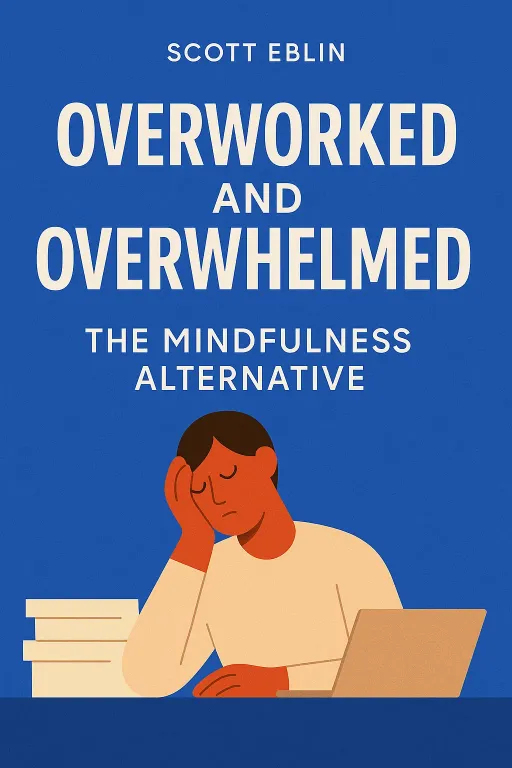
Nova: It absolutely does, doesn't it? And that's precisely why we're diving into two incredibly insightful books today that challenge that very notion. First, we'll explore Scott Eblin's "Overworked and Overwhelmed." Eblin, a former corporate executive turned leadership coach, has spent years observing and advising high-achieving professionals, seeing firsthand how easily they get trapped in this relentless cycle of busyness. His work is rooted in practical experience, not just theory, which really resonates with people striving for meaningful impact.
Atlas: Oh, I like that. So, for anyone managing high-pressure teams or navigating a demanding career, feeling like they're constantly chasing their tail, this is speaking directly to them. I imagine a lot of our listeners can feel that pressure to always be "on."
Nova: Exactly. And then, we'll pair that with Andy Puddicombe's "GET SOME HEADSPACE." Puddicombe's journey is fascinating; he's a former Buddhist monk who trained for years in the Himalayas before bringing ancient mindfulness techniques to a global audience in an incredibly accessible way. His unique background lends such authentic depth to his practical advice.
Atlas: A former monk helping busy professionals? That's quite the combination. I'm already curious how these two seemingly different worlds connect to help someone optimize their daily output and find focus amidst the noise.
Nova: They connect beautifully, Atlas. Because together, these books emphasize that navigating overwhelm isn't just about better time management, it's profoundly about mental resilience and intentional self-care. It's about shifting from reactive survival to proactive thriving.
Breaking the Cycle of Overwhelm with The Three Rs
SECTION
Nova: Let's start with Eblin's core premise: the busyness trap. He observes that high-achievers often mistake activity for accomplishment, believing that constant motion equals progress. But this relentless pace is unsustainable; it drains energy, dulls focus, and ultimately hinders performance. He offers a powerful framework to break free: The Three Rs – Renew, Refocus, and Reengage.
Atlas: Renew, Refocus, Reengage. Okay, I can see how those words might appeal to someone who values self-growth. But how does this go beyond just telling people to "take a break" or "prioritize better"? Because honestly, that advice can feel a bit hollow when you’re staring at an overflowing inbox.
Nova: That's a great question, and it's where Eblin's insights really shine. He reframes these concepts as strategic imperatives, not just nice-to-haves. Take 'Renew.' It’s not just about a coffee break. It’s about recovery. Think of your energy like a phone battery. You wouldn't try to run a marathon on 5% charge, but professionals constantly try to power through their day on fumes. Eblin points out that many executives just "power through" lunch, answering emails, missing true renewal. He suggests things like short, intentional walks, deep breathing exercises, or even just stepping away from your screen for five minutes to look out a window. It’s about consciously recharging your physical and mental batteries.
Atlas: Oh, I know that feeling. Working through lunch has become almost a badge of honor for some. But wait, for someone who's already swamped, finding time for "active recovery" sounds like another thing to add to an already impossible to-do list. How do you integrate that without feeling like you're falling further behind?
Nova: That's where 'Refocus' comes in, and it's incredibly powerful. Eblin says it's not simply about time management; it’s about intentional decision-making regarding. We're constantly bombarded by distractions – the constant ping of notifications, the endless stream of emails. 'Refocus' means creating deliberate blocks for deep work, protecting those times, and making conscious choices about what truly deserves your attention. He tells stories of leaders who, by simply blocking out 'no meeting' time in their calendars or dedicating 90 minutes each morning to their single most important task, regained hours of productive, focused work. It's a strategic pause to decide where your energy go, rather than letting it be pulled in a thousand directions.
Atlas: Okay, so it’s less about managing time and more about managing attention and energy. That makes sense. For a pragmatic learner, that shift from "doing everything" to "doing the right things deeply" is a crucial distinction. What about 'Reengage'? Is that just motivational fluff, or is there a tangible practice there?
Nova: Not fluff at all. 'Reengage' is about reconnecting with your purpose, your 'why.' Many high-achievers get caught in the daily grind, feeling like they're on a treadmill, losing sight of the bigger picture. Eblin argues that sustained energy comes from aligning your daily tasks with your core values and long-term goals. It’s about regularly asking yourself: "Why am I doing this? How does this contribute to something meaningful?" He encourages structured reflection, perhaps a weekly check-in with yourself, to ensure your actions are in sync with your purpose. This isn't just about feeling good; it's about tapping into a deeper, more resilient source of motivation that prevents burnout.
Atlas: That's actually really inspiring. It sounds like Eblin is giving us a framework to not just survive the overwhelm, but to actually thrive and find deeper meaning in our work, which is something many driven people are looking for. It’s about being effective, but also fulfilled.
The Power of Mindful Resilience and Brain Rewiring
SECTION
Nova: Precisely. And while Eblin gives us the external structure to manage our energy and focus, Andy Puddicombe in "GET SOME HEADSPACE" provides the crucial internal toolkit. He shows us how to cultivate mental resilience and inner calm, not by escaping our busy lives, but by rewiring our brains to handle them better.
Atlas: A monk teaching busy professionals to rewire their brains? That sounds like a big leap for someone who might be skeptical about "woo-woo" stuff. How does 5-10 minutes of breathing really rewire a brain that's been in overdrive for years?
Nova: That's the beauty of it, Atlas. Puddicombe demystifies mindfulness. He makes it incredibly accessible, emphasizing that it's not about emptying your mind or becoming a zen master. It's about observing your thoughts and feelings without judgment, creating a little space between you and your internal chatter. He uses the metaphor of the "monkey mind" – our thoughts are constantly swinging from branch to branch. Mindfulness is simply learning to watch the monkey, not necessarily control it.
Atlas: Oh, I know that monkey mind feeling all too well. So, it's not about silencing the thoughts, but changing our relationship with them?
Nova: Exactly. And the science backs him up. Daily, even short, practices of mindfulness and meditation can literally rewire the brain. We're talking about neuroplasticity – the brain's ability to change and adapt. Regular mindfulness strengthens areas of the brain associated with focus, emotional regulation, and stress reduction, like the prefrontal cortex, while dampening activity in the amygdala, which is our fear center. So, those 5-10 minutes aren't just a break; they're a workout for your brain, building resilience the overwhelm hits.
Atlas: Wow. That's a significant point. It's not just a temporary fix; it's a fundamental change in how your brain processes information and stress. For someone who wants mental clarity amidst the noise, that's a huge benefit. But is it just another trend, or is there solid evidence that this isn't just a fleeting wellness fad?
Nova: It's definitely not a fad. Puddicombe's approach is rooted in centuries of contemplative practice, now validated by modern neuroscience. The accessible delivery is what makes it so revolutionary. He breaks down meditation into simple, bite-sized practices that anyone can integrate, regardless of their background or schedule. It’s about consistency, not duration. Even just focusing on your breath for a few minutes can interrupt the stress response cycle, lowering cortisol levels and improving cognitive function. It’s a powerful tool to improve focus, emotional regulation, and overall stress reduction, making you a more effective and calmer 'conscious navigator' of your life.
Atlas: I guess that makes sense. If you can train your body, why not your mind? And the idea that it's about building resilience the storm, rather than just reacting to it, is a really proactive approach. It's about building a secure foundation, mentally.
Synthesis & Takeaways
SECTION
Nova: Absolutely. And that's where the beautiful synergy between Eblin and Puddicombe lies. Eblin gives us the strategic framework to manage our external demands – how to structure our day, renew our energy, and align with purpose. Puddicombe provides the internal toolkit – how to cultivate a mind that can navigate those demands with calm, clarity, and resilience. It's a holistic approach to thriving in a high-pressure world.
Atlas: So, it’s not about choosing one over the other. It’s about integrating both. You need the external structure to prevent the busyness trap, and the internal resilience to handle what inevitably comes your way. That's actually really empowering.
Nova: It truly is. And the most powerful takeaway, the "tiny step" that both authors implicitly champion, is consistency over intensity. Dedicate just 5-10 minutes each morning to a simple breathing exercise from Puddicombe's approach before tackling your to-do list. Just that small act of intentional presence.
Atlas: And then, when distractions inevitably arise throughout the day, apply one of Eblin's 'Refocus' strategies. Decide what to do, block out that deep work time, or consciously step away for a five-minute renewal. It’s about strategically injecting moments of calm and clarity, not adding more to an already overwhelming plate.
Nova: Exactly. It's about embracing the journey, understanding that every step is progress, even the small ones. By protecting those 5-10 minutes for your mental well-being, you're not just taking a break; you're actively building a more focused, resilient, and effective version of yourself.
Atlas: That's such a hopeful way to look at it. It's not about being perfect, it's about being intentional. And for anyone who values self-growth and wants actionable wisdom, that's a powerful invitation to start. So, our challenge to you, dear listener, is to try that tiny step this week. Just 5-10 minutes. See what happens.
Nova: It’s a small investment for a profound return in mental clarity and sustained energy. We hope this conversation has sparked some reflection and given you tangible tools for your own journey.
Atlas: This is Aibrary. Congratulations on your growth!