

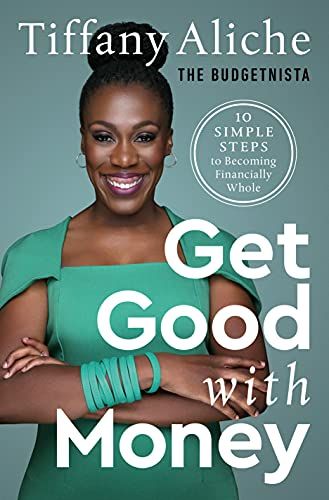
Get Good with Money
Ten Simple Steps to Becoming Financially Whole
Introduction
Nova: Imagine waking up one morning and realizing that the person you trusted most just scammed you out of thirty-five thousand dollars. You are a preschool teacher, you do not make a lot of money, and suddenly, you are buried in debt, you lose your job in a recession, and you have to move back into your parents' house at age thirty. That is exactly where Tiffany Aliche, better known as The Budgetnista, found herself before she wrote the book we are talking about today: Get Good with Money.
Atlas: Wow, that is a heavy start. I think a lot of people feel like they are behind if they do not have a million dollars by thirty, but hearing that she actually went backward and still built a financial empire? That is actually really hopeful. But Nova, there are a million finance books out there. What makes this one different from the rest of the pack?
Nova: It is the concept of Financial Wholeness. Most books focus on Financial Independence, which is that big, scary number where you never have to work again. But Tiffany argues that for most of us, that feels impossible. Wholeness, on the other hand, is about having ten specific pillars of your life in order so that you are safe, secure, and can actually sleep at night. It is not about being rich; it is about being whole.
Atlas: I like that. It feels more like a health check-up than a race to a finish line I can't see. So, how do we get to this one hundred percent whole status?
Nova: She breaks it down into ten steps, and today we are going to dive into how she went from sleeping on her sister's couch to helping millions of women save and pay off hundreds of millions of dollars. We are talking about everything from the Noodle Budget to why your insurance is actually the floor of your entire financial house.
Key Insight 1
The Foundation of Wholeness
Nova: The first two pillars are the ones people usually hate talking about: Budgeting and Saving. But Tiffany has a way of making it feel less like a restriction and more like a tool. She introduces something called the Noodle Budget.
Atlas: The Noodle Budget? Please tell me that does not involve actually eating instant ramen for every meal.
Nova: Well, it is named after that! It is your absolute bare-bones, survival-mode budget. If you lost your job tomorrow, what is the absolute minimum you need to keep the lights on and food on the table? No Netflix, no eating out, no gym membership. Just the essentials.
Atlas: That sounds depressing, Nova. Why would I want to think about my life at its most miserable level?
Nova: Because it gives you a number. If you know your Noodle Budget is two thousand dollars a month, and you have six thousand dollars in savings, you know you can survive for three months no matter what. It turns a vague fear of the unknown into a concrete fact. It is about peace of mind, not deprivation.
Atlas: Okay, I can see that. It is like knowing where the emergency exit is in a theater. You hope you never use it, but you feel better knowing it is there. But how do you actually stick to a budget without feeling like you are in a cage?
Nova: That is where the Split Method comes in. This is one of the most practical parts of the book. Tiffany suggests that instead of having one bank account where everything happens, you automate the split. You have one account for your bills, one for your savings, and one for your spending.
Atlas: Wait, so I am not just looking at one big number and guessing if I can afford a latte?
Nova: Exactly. Your paycheck hits, and it immediately gets diverted. The money for your rent and electricity goes into the Bills account and you do not touch it. The money for your future goes to Savings. Whatever is left in your Spending account? That is yours to use guilt-free. You do not have to do math at the register because the math was already done for you by the automation.
Atlas: That sounds like a dream for someone like me who hates checking their balance. It is like setting up a system that protects me from myself.
Nova: Precisely. She says that automation is the new discipline. You do not need more willpower; you just need a better system. And once you have that system, you move to the second pillar: Saving. She talks about the Oops Fund, which is just a small starter emergency fund of maybe one thousand dollars, before you build up to that full Noodle Budget reserve.
Atlas: An Oops Fund. I love that name. It makes it feel less like a chore and more like a safety net for when life inevitably gets messy.
Key Insight 2
The Debt Shuffle and the Credit Game
Nova: Now we have to talk about the two things that keep people up at night: Debt and Credit. Tiffany is very clear that debt is not a moral failing. Remember, she was scammed into thirty-five thousand dollars of debt. She felt the shame, but she realized shame does not pay the bills.
Atlas: That is a huge point. People get so paralyzed by the guilt of debt that they just stop opening the envelopes. What is her strategy for actually tackling it?
Nova: She calls it the Debt Shuffle. Most people try to pay off everything at once and get overwhelmed. She suggests focusing on either the smallest balance to get a quick win, which is the snowball method, or the highest interest rate to save money, the avalanche method. But the key is her focus on the emotional side. She says you have to forgive yourself first.
Atlas: I think that is the part most finance gurus miss. They just give you a spreadsheet. But if you are still mad at yourself for that credit card spree three years ago, the spreadsheet won't help. What about credit scores? People treat those like a GPA for their entire life.
Nova: Tiffany treats the credit score like a game. She explains that it is just a measure of how well you play with the bank's money. She breaks down the five components: payment history, amounts owed, length of credit history, new credit, and credit mix.
Atlas: So it is not just about paying on time?
Nova: No, and that is a common mistake. Payment history is the biggest chunk, thirty-five percent, but the second biggest is credit utilization. If you have a ten thousand dollar limit and you are using nine thousand of it, the banks get nervous, even if you pay it on time. She recommends keeping it under thirty percent, or even ten percent if you really want to see that score jump.
Atlas: It is funny how it works. You have to show them you have the money but also show them you do not actually need to use it. It is totally a game.
Nova: It really is. And she emphasizes that a good credit score is not for bragging rights; it is a tool to lower your costs. A better score means lower interest on a mortgage or a car loan, which means more money stays in your pocket for the other pillars of wholeness.
Atlas: So, we have the budget, the savings, the debt plan, and the credit score. That is four pillars. We are almost halfway to being whole.
Key Insight 3
The Floor and the Ceiling
Nova: Pillar five is one that most people skip because it feels boring, but Tiffany calls it the floor of your financial house: Insurance. She says that without insurance, one bad day can wipe out all the work you did in the first four steps.
Atlas: Insurance always feels like I am paying for something I hope I never use. It is hard to get excited about it.
Nova: Think of it this way: if you have a beautiful house but no foundation, the first storm is going to knock it over. She covers life insurance, health insurance, disability, and even renters insurance. She is a big fan of term life insurance over whole life because it is cheaper and does the job of protecting your family while you build your own wealth.
Atlas: Okay, so insurance is the floor. What is the ceiling? I am guessing that is where the investing comes in?
Nova: Exactly. Pillars six and seven are about Investing. But she makes a very important distinction that I haven't seen in many other books. She separates Investing for Retirement from Investing for Wealth.
Atlas: Wait, aren't they the same thing? You put money in the market and it grows, right?
Nova: Not exactly. Retirement investing is about your long-term survival. This is your 401k or your IRA. This is the money you do not touch until you are sixty-five. It is slow, it is steady, and it is often automated through your job. Tiffany says you should aim to put fifteen percent of your income here once your debt is under control.
Atlas: And the other one? Investing for Wealth?
Nova: That is for your life now and in the near future. This is using brokerage accounts to build money for a house, a business, or just to have more options. Retirement is for the person you will become; Wealth is for the person you are now. By splitting them, you ensure that you aren't sacrificing your old age for your current dreams, or vice versa.
Atlas: That makes so much sense. I always felt like my 401k was this black hole where money goes to die until I am old. Knowing I can invest for things I actually want to see in ten years makes it much more motivating.
Nova: And she keeps it simple. She is a huge advocate for low-cost index funds. You do not need to be a stock market genius or pick the next big tech company. You just need to own a little bit of everything and let time do the heavy lifting. She often says, if it is exciting, you are probably doing it wrong. Investing should be as boring as watching grass grow.
Key Insight 4
The Big Picture and the Legacy
Nova: We are entering the home stretch now. Pillar eight is Net Worth. This is where you take everything we have talked about and put it on one sheet of paper. Assets minus Liabilities.
Atlas: This sounds like the part where I might want to hide under the covers again. What if my net worth is negative?
Nova: Tiffany's was negative for a long time! The point of tracking it isn't to judge yourself; it is to see the trend. If your net worth was negative fifty thousand last year and it is negative forty thousand this year, you are winning. You are ten thousand dollars better off. It is the ultimate scoreboard for your financial health.
Atlas: Okay, I can handle a scoreboard. But what about the last two? They sound a bit more advanced.
Nova: Pillar nine is your Financial Team. Tiffany argues that as you get closer to wholeness, you cannot do it alone. You need a team of professionals: a Certified Financial Planner, an accountant, an insurance agent, and an estate attorney.
Atlas: That sounds expensive. Do I really need a whole squad just to manage my money?
Nova: You do not need them all on day one. But as your life gets more complex, a good accountant can save you more in taxes than they cost you in fees. A good lawyer can protect you from lawsuits. It is about moving from a DIY mindset to a CEO mindset. You are the CEO of your life, and every CEO needs a board of advisors.
Atlas: I like that. It makes me feel like a boss rather than just someone trying to pay rent. And the final pillar? Pillar ten?
Nova: Estate Planning. This is the one people avoid because it involves thinking about death. But Tiffany is very blunt: if you do not have a plan for your stuff, the state has one for you, and you probably won't like it.
Atlas: So we are talking about wills and trusts?
Nova: Yes, but also things like a power of attorney and a living will. It is about making sure your wishes are respected and that your family isn't left with a mess during their most difficult time. She says that true financial wholeness isn't just about you; it is about the legacy you leave behind. It is the final piece of the puzzle that makes the other nine pillars permanent.
Conclusion
Nova: We have covered a lot of ground today. From the Noodle Budget to the Split Method, and from the Debt Shuffle to Estate Planning. Tiffany Aliche's Get Good with Money isn't just a book about numbers; it is a roadmap to a life where money is a tool for peace rather than a source of anxiety.
Atlas: It really feels like she is holding your hand through the whole process. I love that she does not expect you to be perfect. She just wants you to be whole. That ten-pillar framework makes it feel like I can take it one step at a time. I don't have to be a millionaire tomorrow; I just need to get my insurance in order or set up my Oops Fund.
Nova: Exactly. Financial wholeness is about being one hundred percent prepared for the life you want to live. It is about the security of knowing that if the worst happens, you have a floor, and if the best happens, you have a ceiling that keeps rising. Tiffany's journey from a scammed preschool teacher to The Budgetnista is proof that no matter where you are starting, you can get good with money.
Atlas: I am feeling a lot more capable already. It is time to go look at my Noodle Budget and see where I stand.
Nova: That is the best place to start. Remember, the goal isn't to be rich; it is to be whole. Thank you for joining us on this deep dive into Tiffany Aliche's wisdom. This is Aibrary. Congratulations on your growth!