

Mastering the Craft: Advanced CAD/CAM Techniques
Golden Hook & Introduction
SECTION
Nova: What if I told you that merely “using” a CAD/CAM system, no matter how skilled you are with its interface, might actually be holding you back from true engineering mastery?
Atlas: Whoa, Nova, that’s a bold claim. I think a lot of our listeners, especially the ones who pride themselves on their CAD/CAM proficiency, might be raising an eyebrow right now. Are you saying our mastery of the software isn't enough?
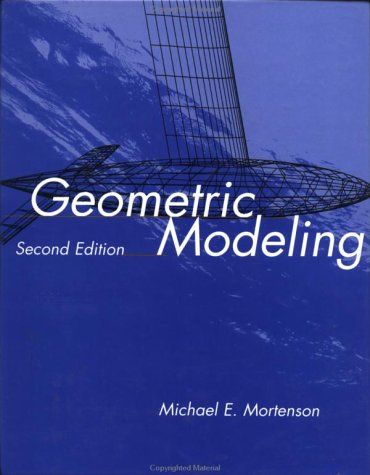
Nova: Precisely, Atlas. Because true mastery, the kind that pushes boundaries and unlocks novel solutions, comes from understanding the behind the software, not just the clicks. And that’s exactly what we’re diving into today, drawing insights from two foundational texts: "Geometric Modeling" by Michael E. Mortenson, which lays out the mathematical underpinnings of CAD, and "The CAD/CAM Handbook" by John J. Craig, which gives us a comprehensive overview of integrated systems and advanced manufacturing techniques.
Atlas: That makes perfect sense for our audience. They’re problem-solvers, always looking for that strategic edge, that deeper understanding to refine processes and drive efficiency. They don't just operate machines; they want to master their efficiency, and precision is paramount.
Nova: Absolutely. And when you look at these texts, they’re not just about teaching you how to use a function; they're about explaining that function works, and what it’s doing under the hood, which is a completely different level of control.
Atlas: So, it’s about moving beyond the surface to the fundamental principles. My analytical mind is already buzzing. Let’s start with that "mathematical DNA of design."
The Mathematical DNA of Design: Geometric Modeling
SECTION
Nova: Exactly. When we talk about geometric modeling, we’re talking about the mathematical language that defines every curve, every surface, every dimension in your CAD model. Michael E. Mortenson’s "Geometric Modeling" is a deep dive into this, exploring the algorithms and mathematical constructs that allow us to create and manipulate 3D shapes.
Atlas: Okay, but how does understanding algorithms help me design a better part? I can already draw complex geometries with my software. What kind of 'geometric principles' are we talking about here? Can you give an example of how this helps with a real-world design, especially when I hit a wall with intuitive software use?
Nova: Think about designing something like an aerospace impeller blade, or a custom medical implant—something with incredibly complex, organic, freeform surfaces. You can sketch it in CAD, but achieving the precise curvature, the perfect blend, the exact surface quality required for optimal performance or biocompatibility? That’s where intuitive software use often hits a wall.
Atlas: I can definitely relate. You get to a point where the software tools feel like they're fighting you, or you can't quite achieve that ideal smooth transition.
Nova: Right. If you understand, for example, what a NURBS curve or a Bezier surface mathematically, you gain a level of control that’s almost like sculpting with pure numbers. Mortenson explains the parameters, the control points, the weights – the actual equations that define these shapes. This knowledge lets you troubleshoot why a surface might have unwanted ripples, or how to subtly adjust a design to improve its aerodynamic properties without losing integrity.
Atlas: So, it’s not just about knowing the curve tool is, but the curve tool manipulates data points to create that specific arc. How does that translate into tangible benefits for an engineer on the shop floor? Fewer errors, better parts, more efficiency?
Nova: Exactly. Imagine a situation where a part comes off the machine and it has an unexpected surface finish issue, or it doesn't fit perfectly with another component. If you only know how to click the "fillet" button, you might blame the machine. But if you understand the underlying geometric definition, you can go back to the CAD model and identify if the issue stems from a subtle mathematical discontinuity in your original surface definition, or perhaps a tolerance stack-up that wasn't properly accounted for in the geometric model itself.
Atlas: That's a powerful distinction. It means you can predict behavior and optimize toolpaths before you even cut metal, which directly addresses the precision and efficiency our listeners are constantly striving for. It turns what feels like a black box into a transparent process.
Nova: It’s empowering. Instead of just reacting to problems, you're designing with a deeper predictive understanding. That’s the leap from user to master.
Beyond the Screen: Optimizing Manufacturing with Integrated CAD/CAM
SECTION
Nova: Now, understanding the geometry is one thing, but then bringing that perfect design to life, that’s where the of CAD and CAM becomes paramount. This is where John J. Craig’s "The CAD/CAM Handbook" really shines, providing a comprehensive overview of how these systems work together.
Atlas: Okay, so we've got the perfect digital model, thanks to our geometric modeling insights. But the leap from screen to machine—that’s where things can get messy. What does 'integrated' really mean in practice for an engineer trying to optimize an entire workflow? It’s not just about hitting 'export,' is it?
Nova: Not at all. It's about creating a seamless digital thread. Think about it: traditionally, you design in CAD, then export to CAM, and sometimes there are translation errors, data loss, or manual re-entry of information. An integrated system means your design changes in CAD can automatically update your CAM toolpaths, preventing costly errors and delays. Craig’s handbook delves into advanced techniques like feature-based machining, where the CAM system recognizes design features like holes, pockets, or slots, and automatically applies the correct machining operations.
Atlas: That sounds like a dream for strategic optimizers. It minimizes human error and speeds up the process significantly. But what about troubleshooting? When a part comes off the machine and it's not quite right—and let's be honest, that happens—how does this deep understanding of the system help me diagnose if it was a design flaw, a CAM programming error, or a machine issue?
Nova: That’s a critical question, and it’s where true mastery shines. With an integrated approach, you can trace the entire digital process. If a part is off, you don't just guess. You can look at the geometric definition, then check if the CAM programming correctly interpreted that geometry, if the tool compensation was applied correctly, or if the clamping strategy was optimal. Craig’s book helps you understand the entire ecosystem, allowing for precise diagnosis.
Atlas: So, instead of a trial-and-error approach on the shop floor, you have a diagnostic roadmap that connects the digital blueprint to the physical reality. It’s like having an X-ray vision for your entire manufacturing process. That’s not just optimization; that’s problem-solving at a fundamental level.
Nova: Exactly. It's about moving from reactive troubleshooting to proactive optimization. Understanding the integration allows you to predict potential issues before they even arise, and when they do, you have the knowledge to pinpoint the exact digital or physical source of the problem. It’s about total control, from concept to component.
Synthesis & Takeaways
SECTION
Nova: So, what Mortenson and Craig really show us is that true mastery in CAD/CAM isn't just about operating software; it's about understanding the entire digital ecosystem—from the mathematical DNA of your designs to the seamless integration of your manufacturing processes.
Atlas: It’s about connecting the 'why' with the 'how' to not just fix problems, but to prevent them and push innovation. For our listeners who are always looking to optimize and innovate, what's one immediate, tiny step they can take this week to start bridging that gap between software user and true master?
Nova: I would say: explore one new advanced feature in your preferred CAD/CAM software this week, but don't just learn to use it. Focus on its geometric principles. Ask yourself: "Why does this button work the way it does? What mathematical concept is it leveraging?"
Atlas: That's a brilliant way to start turning that analytical mind towards the tools themselves. It's about demystifying the software and gaining a deeper appreciation for the precision it offers. And the satisfaction of seeing your designs come to life with unparalleled accuracy...
Nova: ... knowing your enhanced skills contribute directly to product excellence. That's the healing moment for any engineer, the true joy of mastery.
Atlas: Absolutely. It's about innovating with purpose, building a better future, one geometrically precise part at a time.
Nova: This is Aibrary. Congratulations on your growth!