

The Doctor's Dilemma: A Game Theorist's Guide to Healthcare Strategy
Golden Hook & Introduction
SECTION
Dr. Celeste Vega: Have you ever wondered why two hospitals in the same city will both spend millions on the exact same piece of cutting-edge equipment, only for both to go underused? Or why a doctor and a patient, who both want the best possible health outcome, can sometimes end up in a spiral of mistrust? These aren't failures of character; they're failures of strategy. And the key to understanding them lies in a field you might not expect: game theory.
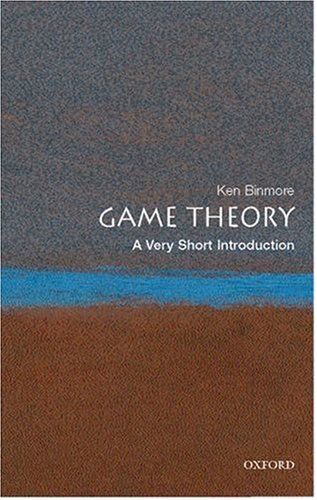
Dr. Celeste Vega: Welcome to 'Page Turners.' Today, we're diving into Ken Binmore's "Game Theory: A Very Short Introduction" with a very special guest, healthcare professional Melrick Janjay Willie. We'll tackle this from two perspectives. First, we'll explore the 'Healthcare Arms Race' through the lens of the famous Prisoner's Dilemma. Then, we'll shift gears to discuss how we can actually design trust into future systems, especially those involving AI, by understanding the concept of Equilibrium.
Dr. Celeste Vega: Melrick, it is so great to have you here. Your background is fascinating—you've got this deep experience in both engineering and healthcare. It feels like you're the perfect person to discuss a topic that lives right at the intersection of logical systems and human behavior.
Melrick Janjay Willie: Thanks for having me, Celeste. I'm excited. I think people often see those fields as separate, but they're really not. Both are about complex systems with interacting parts. Sometimes those parts are gears and circuits, and sometimes they're doctors, patients, and administrators. The underlying logic can be surprisingly similar.
Deep Dive into Core Topic 1: The Healthcare Arms Race & The Prisoner's Dilemma
SECTION
Dr. Celeste Vega: That's the perfect setup. To kick things off, let's start with the most famous idea in all of game theory: the Prisoner's Dilemma. It's a story that perfectly explains my opening question about those two hospitals. Are you familiar with it?
Melrick Janjay Willie: I've heard the name, but I'd love to hear your breakdown.
Dr. Celeste Vega: Fantastic. So, imagine the police arrest two partners in crime for a major offense, but they only have enough evidence to convict them on a minor charge. They separate the prisoners into different rooms, so they can't communicate. Then, they offer each one a deal, and this is where the game begins.
Melrick Janjay Willie: Okay, I'm with you.
Dr. Celeste Vega: The deal is this: "If you confess and implicate your partner, and your partner stays silent, you walk free, and your partner gets ten years in prison. If you both stay silent, we can only get you on the minor charge, so you'll both serve just one year. But... if you both confess, we'll have all the evidence we need, and you'll both get five years."
Melrick Janjay Willie: Ah, so there are four possible outcomes based on their combined choices.
Dr. Celeste Vega: Exactly. Now, put yourself in one prisoner's shoes. You don't know what your partner will do. You think, "Okay, what if my partner stays silent? Well, if I also stay silent, I get one year. But if I confess, I walk free. So confessing is better."
Melrick Janjay Willie: Right. Zero years is better than one.
Dr. Celeste Vega: "Now," you think, "what if my partner confesses? If I stay silent, I'm the sucker who gets ten years. But if I also confess, I only get five. So confessing is still better." In every single scenario, your personal best move is to confess. And since your partner is rational and thinking the exact same way, they also confess.
Melrick Janjay Willie: And they both end up with five years.
Dr. Celeste Vega: They both get five years! Which is so much worse than the one year they each would have gotten if they had just trusted each other and stayed silent. That's the dilemma: two perfectly rational individuals, making what seems like the best choice for themselves, end up creating a worse outcome for the group. Melrick, as someone who's seen complex systems up close, does this dynamic of 'rational' choices leading to a bad group outcome ring a bell?
Melrick Janjay Willie: Oh, absolutely. It's a perfect model for what you called the 'healthcare arms race.' It happens all the time. Let's take your example of two competing, non-profit hospitals in a mid-sized city.
Dr. Celeste Vega: Okay, so they're our two prisoners.
Melrick Janjay Willie: Exactly. And the 'game' is whether to invest, say, ten million dollars in the latest, greatest robotic surgery system. Let's map it out. If Hospital A buys it and Hospital B doesn't, Hospital A gets all the prestige. They put up billboards, attract the top surgeons, and capture a bigger market share. They 'walk free,' so to speak. Hospital B looks outdated and loses patients. They get the 'ten-year sentence.'
Dr. Celeste Vega: And vice-versa if Hospital B is the one that buys it.
Melrick Janjay Willie: Right. Now, if neither of them buys it, they both save ten million dollars and maintain their current market split. That's the 'both stay silent' option—a pretty good outcome for both of them, and for the community's healthcare costs. But... if both of them buy the machine?
Dr. Celeste Vega: They both confess.
Melrick Janjay Willie: They both confess. They've both spent the ten million, but neither gains a competitive advantage. They just split the same patient pool, and now both of their multi-million-dollar machines are only operating at 40% capacity. It's an incredible waste of resources. From an engineering perspective, it's like building two redundant power plants right next to each other when one would have been sufficient. The system as a whole is deeply inefficient.
Dr. Celeste Vega: And just like the prisoners, the administrator at Hospital A thinks, "Well, if Hospital B doesn't buy it, we absolutely should. And if they buy it, we to buy it just to keep up." So the individually rational choice is always to buy.
Melrick Janjay Willie: Always. And so they get stuck in this trap. It's a stable outcome, but it's a suboptimal one for everyone. The hospitals have higher costs, which eventually get passed on to patients and insurers, and the community has duplicated, underutilized assets. It's a perfect, and frankly frustrating, real-world Prisoner's Dilemma.
Deep Dive into Core Topic 2: Designing Trust & Equilibrium in Medical AI
SECTION
Dr. Celeste Vega: That's a perfect, if slightly depressing, real-world example. It shows how we can get stuck in a bad 'game.' But game theory also offers a way to think about stable outcomes, or what's called an 'Equilibrium.' And this is where it gets really interesting for the future of healthcare, especially with your interest in AI.
Melrick Janjay Willie: So, an equilibrium is a way out of the dilemma?
Dr. Celeste Vega: Not always out, but it's a way to understand why systems settle where they do. The formal term is Nash Equilibrium, named after the mathematician John Nash. It's a state where, given what everyone else is doing, you have no incentive to unilaterally change your own strategy. In the Prisoner's Dilemma, both confessing is a Nash Equilibrium. If you know your partner is confessing, your best move is also to confess. You can't improve your situation by changing your mind alone.
Melrick Janjay Willie: So it's a stable point, but not necessarily the best point.
Dr. Celeste Vega: Precisely! Think of two hot dog stands on a one-mile-long beach. Where do they set up? If they cooperate, they might agree to set up at the quarter-mile and three-quarter-mile marks to serve the whole beach. But if they compete, Stand A will think, "I can move a little closer to the middle and steal some of Stand B's customers." Stand B thinks the same thing. They keep inching toward the center until they end up right next to each other, back-to-back, in the exact middle of the beach.
Melrick Janjay Willie: And everyone at the ends of the beach has a long walk. A stable outcome for the vendors, but a terrible one for the customers.
Dr. Celeste Vega: You got it. That's a Nash Equilibrium. Now let's apply this to a future scenario. We have a diagnostic AI, a doctor, and a patient. The AI is, let's say, 98% accurate at spotting a rare condition on a scan. The doctor can either trust the AI's recommendation or spend an extra hour doing their own, slower analysis. The patient can either trust the doctor's final recommendation or decide to seek a second opinion, which is costly and time-consuming. Melrick, from your analytical, systems-thinking perspective, what does a 'good' equilibrium look like here, and what are the dangers of a 'bad' one?
Melrick Janjay Willie: That's the billion-dollar question, isn't it? A 'bad' equilibrium is easy to imagine, and it's a spiral of mistrust. Let's say the doctor is worried about liability, or maybe just their own professional ego. Their strategy becomes 'always double-check the AI.' The patient, in turn, might perceive this lack of confidence. They see the doctor hesitating or running extra tests, so their strategy becomes 'always get a second opinion.' The result? The system is slow, expensive, and the amazing efficiency of the AI is completely wasted. Everyone is acting 'rationally' based on their own fears, and we end up in a stable but very inefficient place.
Dr. Celeste Vega: The hot dog stands are back-to-back in the middle of the beach again.
Melrick Janjay Willie: Exactly. A 'good' equilibrium, on the other hand, is one of engineered trust. In this scenario, the doctor's best strategy is to use the AI as a powerful assistant. They trust its output for the 95% of clear-cut cases, which frees up their time to focus on the 5% of truly complex, ambiguous cases where human judgment is irreplaceable.
Dr. Celeste Vega: So the doctor's strategy changes from 'verify' to 'supervise.'
Melrick Janjay Willie: Precisely. And because this process is transparent and efficient, the patient's best strategy becomes 'trust the doctor-AI team.' They get a faster, accurate diagnosis, and they feel confident in the process. This is a stable, high-trust, and highly efficient equilibrium. But—and this is the critical part that connects to my engineering background and the user's question—you don't get there by accident.
Dr. Celeste Vega: You have to design the game.
Melrick Janjay Willie: You have to design the game. To get to that good equilibrium, we have to solve the data problem. The AI's 'strategy' is only as good as the data it was trained on. Who ensures that data is diverse and unbiased? Who validates the AI's performance? How is patient data protected throughout the process? If the doctor can't trust the AI's inputs, they'll never trust its outputs. If the patient feels their data is being misused, they'll never trust the system. Building that good equilibrium means building verifiable integrity into every single step. It's an engineering problem of system design just as much as it is a medical or ethical one.
Synthesis & Takeaways
SECTION
Dr. Celeste Vega: That's such a powerful way to frame it. It's not just about hoping people trust each other; it's about building a system where trust becomes the most rational strategy for everyone involved. So, to bring it all together, the Prisoner's Dilemma shows us the traps we can fall into when individual rationality leads to collective failure. But the concept of Equilibrium gives us a framework for consciously designing our way out of those traps.
Melrick Janjay Willie: Exactly. And that's what I find so empowering about game theory. It moves the conversation away from just blaming individuals for making 'selfish' choices and toward analyzing the structure of the game they're forced to play.
Dr. Celeste Vega: So, if you were to leave our listeners with one final thought or a piece of actionable advice from this, what would it be?
Melrick Janjay Willie: For anyone listening, especially if you're in a technical or complex field like engineering or healthcare, the takeaway isn't to be cynical about human nature. It's to become a system architect. Start looking at the strategic interactions around you in your workplace or your community. Ask yourself: Who are the players? What are their available strategies? And most importantly, what are their payoffs—what do they gain or lose from each choice?
Dr. Celeste Vega: See the hidden game.
Melrick Janjay Willie: See the hidden game. And if you don't like the outcome the game is producing, maybe you can't change the players, but you might be able to change the rules. You can change the payoffs, improve communication, or increase transparency. You can redesign the game itself to make cooperation the most logical and stable strategy. And that's an incredibly powerful idea.
Dr. Celeste Vega: Change the game, not the players. Melrick Janjay Willie, thank you so much for turning this theoretical concept into something so practical and urgent. This was fantastic.
Melrick Janjay Willie: The pleasure was all mine, Celeste. Thank you.