

Wisdom for the Second Half of Life
Golden Hook & Introduction
SECTION
Nova: Alright Atlas, I have a challenge for you today. We're diving into some profound wisdom for the second half of life. Give me your five-word review of what that phrase, "the second half of life," truly means to you. Make it witty, make it insightful.
Atlas: Oh, a five-word review? Okay, let's see... "Beyond achievement, into deep meaning."
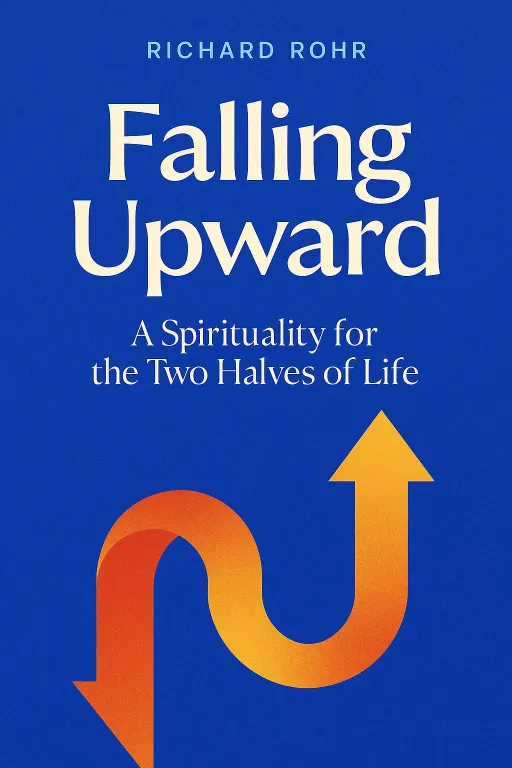
Nova: Ooh, I like that! "Beyond achievement, into deep meaning." That's a fantastic setup for today's conversation because we are talking about two incredible books that really redefine our understanding of aging, purpose, and spiritual growth. We're looking at Richard Rohr's seminal work, "Falling Upward," and Arthur C. Brooks' incredibly insightful "From Strength to Strength."
Atlas: Two heavy hitters! Rohr, the Franciscan friar, known for his deep dive into contemplative spirituality, and Brooks, the social scientist turned Harvard professor, who's been praised for blending rigorous research with profound life philosophy. How do these two seemingly different voices converge on this idea of the 'second half'?
Nova: That's the magic, isn't it? Rohr, with his deep spiritual wisdom, really challenges our conventional understanding of success. He posits that true spiritual growth often begins when the ego-driven achievements of the first half of life start to wane. It's a journey beyond external validation to an internal, soulful search. It's truly considered a cornerstone for anyone looking to mature their faith, widely acclaimed for offering a hopeful, rather than a crisis-driven, perspective on midlife and beyond.
Atlas: So, it's less about a mid-life and more about a mid-life? That’s a radical reframe, especially for people who've spent decades building careers or families, only to hit a point where those external markers don't feel as fulfilling anymore.
Nova: Exactly! And that's where Brooks comes in. While his book isn't exclusively spiritual, his insights into transitioning from what he calls 'fluid intelligence' to 'crystallized intelligence' perfectly complement Rohr's spiritual framework. Brooks, who's led major think tanks and now teaches at Harvard, provides a practical, research-backed roadmap for high achievers to find new purpose and happiness when their professional peak might be receding. His work has really resonated, receiving widespread acclaim for giving practical advice that feels both grounded and deeply optimistic.
The "Falling Upward" Paradox
SECTION
Atlas: So, Rohr talks about "falling upward." That phrase alone is incredibly counter-intuitive. We're taught to always climb, always achieve, always ascend. How can "falling" possibly be a path to growth, let alone growth? It sounds rough, but also intriguing.
Nova: It absolutely is counter-intuitive, and that's precisely why it's so powerful. Rohr argues that the first half of life is about building our container—our ego, our identity, our career, our family. We're driven by achievement, by proving ourselves, by finding our place in the world. And that's necessary. It's good work.
Atlas: Right, we're all busy trying to get our ducks in a row, build our empires, raise our kids. It's a constant upward trajectory, or at least we hope it is.
Nova: Precisely. But then, for many, there comes a point—often in midlife or later—where those external achievements, while fulfilling, no longer provide the same deep satisfaction. The container is built, but it might feel empty, or perhaps it feels too small. Rohr calls this the "necessary suffering" or the "great loss" that actually initiates the second half of life. It’s when our carefully constructed lives, our egoic identities, start to crack, or even fall apart.
Atlas: Oh, I know that feeling. I imagine a lot of our listeners can relate to that sense of "Is this all there is?" after reaching a goal they thought would bring ultimate happiness. But wait, if everything we've built starts to crack, that sounds terrifying, not uplifting. How do you find the "upward" in that fall?
Nova: That’s the paradox. The "falling" is the dismantling of the false self, the ego-driven identity that relied on external validation. It's when we realize that our true self, our deeper spiritual identity, isn't defined by our job title, our income, or even our family roles. It's often through these moments of loss, failure, or disillusionment – the "falling" – that we are forced to look inward, to seek a deeper source of meaning beyond the superficial.
Atlas: So, the very thing that feels like a setback or a personal crisis is actually the catalyst for profound spiritual deepening. Can you give an example of what that "falling" might look like in a real person's life and how it leads to this "upward" movement?
Nova: Think of someone who has dedicated their entire life to a high-pressure career, let's say a CEO of a successful tech company. They've accumulated wealth, prestige, power. They are the epitome of first-half success. Then, perhaps they're forced into early retirement due to a company merger, or they face a health crisis that puts everything into perspective. In that moment, the external structures that defined them are suddenly gone or shaken.
Atlas: That sounds like a common narrative for high achievers, especially in this economy. They've tied so much of their identity to their work.
Nova: Exactly. In the first half of life, that person might have seen this as a devastating failure, a fall from grace. But in the second half, if they embrace Rohr's wisdom, this "fall" becomes an invitation. It forces them to ask, "Who am I without my title? What truly matters?" It's in that space of uncertainty and vulnerability that they might discover a long-dormant desire for service, a deeper connection to their faith, or a passion they never had time for. The "upward" isn't about getting a new, equally prestigious title; it's about connecting with a more authentic, soulful self, finding purpose in contribution rather than accumulation.
Atlas: That’s actually really inspiring. It sounds like a shift from proving yourself to yourself, and letting go of the need for constant external validation. That’s going to resonate with anyone who struggles with tying their self-worth to their accomplishments.
Shifting Strengths - From Fluid to Crystallized Wisdom
SECTION
Nova: And that naturally leads us to the second key idea we need to talk about, which often acts as a practical companion to Rohr's spiritual wisdom: Arthur C. Brooks' concept of shifting from 'fluid intelligence' to 'crystallized intelligence.'
Atlas: Okay, so, fluid intelligence, crystallized intelligence. What exactly do you mean by those terms? Are you saying our brains don't just get "slower" as we age? Because that's the narrative we often hear.
Nova: It’s a common misconception, Atlas, and Brooks expertly debunks it. Fluid intelligence is our ability to think on the spot, to innovate, to solve novel problems quickly, to reason abstractly, and to process new information rapidly. It's raw brainpower, and it tends to peak in our 20s and 30s. Think of a brilliant young programmer quickly mastering a new language, or a strategist coming up with a completely fresh idea.
Atlas: So, the fast, agile, quick-thinking brain. The one that can learn a new app in five minutes.
Nova: Precisely. But then there's crystallized intelligence. This is our accumulated knowledge, our wisdom, our experience, our vocabulary, our ability to connect disparate ideas, to see patterns, and to understand human nature. It's the kind of intelligence that grows with age, experience, and reflection. It doesn't peak; it continues to accumulate and deepen throughout our lives.
Atlas: That makes sense. So, it's not about being slower, but about having a different of strength. Can you give an example of how crystallized intelligence manifests, especially in a professional or community context? How does it actually work?
Nova: Absolutely. Imagine that young, brilliant programmer with high fluid intelligence. They can code faster, innovate quicker. Now, imagine a seasoned mentor in the same field, perhaps in their 60s. They might not be able to code as rapidly, but they know problems are worth solving, to navigate office politics, to build resilient teams, to communicate complex ideas simply, and to inspire junior colleagues. That's crystallized intelligence in action. It's not about speed, it's about depth, judgment, and insight.
Atlas: That’s a perfect example. It sounds like the mentor knows the 'why' and the 'how' based on years of living and observing, rather than just the 'what' and the 'fast.' But how can someone intentionally cultivate this crystallized intelligence? Is it just about accumulating facts, or something deeper, especially for someone seeking spiritual growth and purpose?
Nova: That's the crucial part, and Brooks emphasizes it. It's not just about passively accumulating facts. It's about actively integrating your experiences, reflecting on your failures and successes, learning from your relationships, and deepening your spiritual understanding. For someone seeking divine connection and life purpose, cultivating crystallized intelligence means engaging in practices that build wisdom: quiet reflection, mentorship, service, reading widely, and truly listening to others. It’s about converting raw experience into actionable insight and empathetic understanding.
Atlas: So, it's not just about wisdom for yourself, but wisdom that you can then and with others. That ties directly into the idea of purpose and connection. It sounds like a powerful way to serve.
Synthesis & Takeaways
SECTION
Nova: That’s exactly it, Atlas. When you bring Rohr and Brooks together, you get this incredibly holistic and hopeful vision for the second half of life. Rohr offers us the spiritual invitation to embrace the "falling upward"—to see life's inevitable challenges and transitions not as failures, but as profound opportunities for spiritual deepening, for shedding the ego and finding true meaning.
Atlas: And Brooks then gives us the practical, research-backed roadmap for to make that fall a graceful ascent, by recognizing and intentionally cultivating our unique, age-given strengths. It's not about desperately clinging to our youthful peak, but about leveraging our crystallized intelligence—our accumulated wisdom and faith—to serve, connect, and find new purpose. It sounds less like retirement and more like reinvention, but with a soul.
Nova: Precisely. It’s about moving from a life of success to a life of significance. And for our listeners who value growth, curiosity, and are driven by purpose, this shift is not only possible but incredibly rewarding. It leads to deeper connection, spiritual growth, and profound inner peace.
Atlas: It’s a powerful message. For someone who wants to start this journey, what's a tiny step they can take today? What's one thing they can do to begin cultivating this "crystallized wisdom" and embrace the "falling upward" paradox?
Nova: A great starting point, directly from our insights today, is to reflect on a past challenge. Think of a moment of difficulty, a setback, or a perceived failure that, in retrospect, led to unexpected spiritual growth or a deeper understanding of yourself and God. How did that "fall" actually help you "fall upward"?
Atlas: I love that. And for the deeper question, for cultivating that wisdom for their life purpose and divine connection?
Nova: Dedicate 15 minutes daily to quiet reflection. Use that time to intentionally nurture your 'crystallized intelligence' – your accumulated wisdom and faith. How can you use that time to connect with your inner self, to process your experiences, and to discover how your unique wisdom can serve others at this stage of life? It's in that quiet space that true clarity emerges.
Atlas: That's a beautiful way to connect the dots. Reflection as the foundation for purpose and connection. Thank you, Nova, for shedding light on these profound ideas. This is Aibrary. Congratulations on your growth!









