

The Human Element: Art, History, and the Technology of Expression
Golden Hook & Introduction
SECTION
Nova: Alright, Atlas, quick fire. Five words. Give me your five-word review of societies trying to "fix" art.
Atlas: Oh, I love this. Well-intentioned, stifling, sterile, predictable, boring.
Nova: Ouch. Harsh, but surprisingly accurate given what we're diving into today. It's like you peeked at my notes.
Atlas: Well, sometimes the truth just hits different. It makes me think of all the grand plans that somehow miss the messy, beautiful reality.
Nova: Exactly! And that tension between grand plans and messy reality, especially in the realm of human expression, is precisely what we're exploring. Today, we're unpacking "The Human Element: Art, History, and the Technology of Expression," drawing deep insights from two incredibly sharp, and sometimes wonderfully provocative, minds.
Atlas: I'm curious. These sound like quite different books. How do they connect?
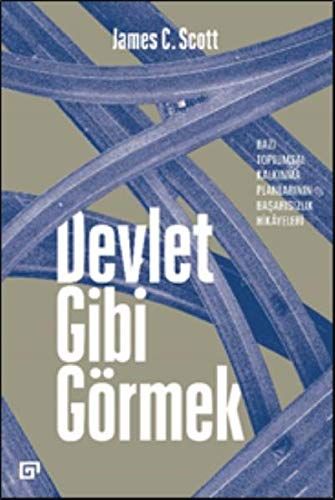
Nova: They do seem disparate on the surface, but they brilliantly illuminate the same core idea: how systems, whether governmental or artistic, influence and are influenced by our innate human need to create. We're talking about James C. Scott's seminal work, "Seeing Like a State," which is this incredible dive into how top-down planning can inadvertently stifle organic, local expressions. And then, we're pairing that with Tom Wolfe's "From Bauhaus to Our House," a truly iconic, and often controversial, satirical look at how artistic movements themselves can become rigid, almost like a state, imposing their will.
Atlas: Ah, Tom Wolfe. The master of social commentary and that distinctive New Journalism style. He wasn’t exactly shy about taking on the establishment, was he? I remember "From Bauhaus to Our House" sparking quite the uproar when it came out. It felt like he was poking holes in sacred cows.
Nova: Absolutely! Wolfe was never one to pull punches, and that book was a verbal broadside against the perceived tyranny of modern architecture, specifically how European modernism was adopted, almost wholesale, by American elites and institutions. He saw it as an artistic ideology being imposed from the top down, often at the expense of local character and human-scaled design. It's a fascinating lens to view our first core topic through.
Atlas: So, we're talking about how attempts to improve or order society, even with good intentions, can sometimes accidentally crush the vibrant, spontaneous parts of human culture and art? That’s a powerful idea.
The Iron Cage of Design - How Top-Down Systems Stifle Creativity
SECTION
Nova: Precisely. Let's start with James C. Scott. His concept of "legibility" in "Seeing Like a State" is crucial here. Scott argues that states, in their quest to govern and manage, need to make their populations and environments "legible." They simplify, standardize, and abstract complex realities into categories and statistics that are easier to measure and control. Think of scientific forestry, where diverse forests are reduced to uniform grids of timber trees, or standardized cadastral surveys that ignore traditional land-use patterns.
Atlas: That makes me wonder, so it's like when a city planner draws perfect grids on a map, completely ignoring how people actually use alleyways, community gardens, or informal gathering spaces? They see a clean blueprint, but they miss the living, breathing city.
Nova: Exactly! It's a fantastic analogy. And Scott shows how this drive for legibility, while seemingly rational and efficient, often leads to the destruction of what he calls —that local, practical, often tacit knowledge that guides complex, organic systems. When applied to human communities, this can stifle bottom-up creativity, local customs, and diverse artistic expressions because they don't fit neatly into the state's simplified model. The state, in its pursuit of order, inadvertently creates a sterile environment.
Atlas: That sounds rough, but isn't there some merit to order? I mean, roads need to be planned, cities need infrastructure. Are we saying any kind of top-down structure is inherently bad for creativity?
Nova: Not inherently bad, but it carries a significant risk. The problem arises when the state, or any central authority, assumes it possesses all the necessary knowledge and dismisses local, organic processes. Scott isn't against planning, but against what he calls "high-modernist ideology" – an unwavering faith in scientific and technical progress, combined with a strong state, to redesign society from scratch. This often leads to catastrophic failures because it ignores the human element, the unpredictability, and the local adaptations that make life rich and functional.
Atlas: So, it’s not just about physical infrastructure, but also about cultural and artistic infrastructure?
Nova: Absolutely. And this is where Tom Wolfe's critique in "From Bauhaus to Our House" perfectly illustrates Scott's point within the artistic realm. Wolfe argues that the Bauhaus movement, originating in Germany, brought with it a high-modernist ideology of architecture. It was rational, functional, stripped of ornament, and aimed for a universal aesthetic.
Atlas: Right, the glass boxes, the flat roofs, the stark concrete. I can picture it.
Nova: Precisely. And Wolfe, with his characteristic wit, paints a picture of how this "international style" was imported into America by influential architects and patrons in the mid-20th century. It wasn't just an architectural style; it was presented as a moral imperative, the proper way to build. It became the default for corporate headquarters, university buildings, and even public housing, often regardless of local climate, materials, or cultural preferences.
Atlas: So, it became this imposed aesthetic, a sort of artistic "state" dictating taste? That's going to resonate with anyone who’s felt like they had to conform to a certain style in their own creative field.
Nova: Exactly that. Wolfe satirized how this imported dogma, championed by a cultural elite, effectively suppressed other forms of American architecture. Local traditions, regional styles, and even the very idea of ornamentation were deemed "backward" or "bourgeois." The result, in Wolfe's view, was often sterile, dehumanizing environments that lacked connection to the people who inhabited them. He saw it as a top-down imposition of aesthetic control, mirroring Scott's observation of how centralized planning can kill organic life.
Atlas: That makes me think about how historical precedents inform our current digital dilemmas. It's like the argument that Bauhaus was functional and democratic, but then became an oppressive dogma. Was it just a matter of taste, or something deeper about control?
Nova: It was deeper. It was about a belief system, an ideology, that became institutionalized. The Bauhaus thinkers genuinely believed they were creating a better, more equitable future through design. But when that belief system becomes the acceptable system, enforced by powerful institutions, it stops being a choice and starts being a constraint. It becomes the "one best way" that crushes all others. The irony is that something intended to be revolutionary and democratic ended up feeling incredibly prescriptive and elitist to many.
Digital Canvas, Old Constraints - Freedom and Control in the Age of Digital Art
SECTION
Nova: So, if the state and powerful artistic movements could impose their will on physical spaces and traditional art forms, what about the invisible algorithms and platforms of today's digital art? Are we truly free on the digital canvas, or are we just building new kinds of "Bauhaus" with pixels and code?
Atlas: That's a huge question for anyone creating online, especially for those of us who think about ethical technology. Are these digital platforms the new "states" or "Bauhaus" movements, subtly dictating what art gets seen, what styles are rewarded, and even what "success" looks like? I mean, an algorithm isn't a human architect, but its impact can feel just as constraining.
Nova: Absolutely. Think about how social media algorithms favor certain types of content – rapid-fire videos, emotionally charged posts, specific visual aesthetics. Artists, seeking visibility and engagement, often find themselves adapting their creative choices to "feed the algorithm." It's not overt censorship, but a powerful, invisible hand shaping artistic output. The pressure for "virality" can influence anything from a digital painting's color palette to a musician's song structure.
Atlas: So, the "legibility" that Scott talked about with states, simplifying complex realities, is now happening with algorithms trying to categorize and optimize content. They want art that's "algorithm-legible," which might mean art that's easily digestible, predictable, or fits trending patterns, rather than truly innovative or challenging work.
Nova: Precisely. And this extends to the economics of digital art. The rise of NFTs, for example, initially promised unprecedented freedom and direct connection between artists and collectors. It offered new forms of ownership and monetization, bypassing traditional gatekeepers. But as the market matured, we've seen specific platforms gain dominance, certain aesthetics become highly valued, and new forms of speculation emerge. The "freedom" quickly becomes intertwined with market forces and platform rules, creating new constraints and gatekeepers.
Atlas: But wait, looking at this from an artist's perspective, doesn't digital art also offer unprecedented freedom? Low barriers to entry, global reach, new mediums, collaborative tools. Isn't it a counter-narrative to Scott's "state" and Wolfe's "house" – a true liberation?
Nova: It absolutely offers incredible new avenues for expression, and that's undeniable. The tools are accessible, the reach is global, and the possibilities for new forms of art—generative art, interactive experiences, virtual reality installations—are boundless. The freedom to experiment is immense. However, the constraints are often more subtle, more insidious. It's not about being told "you can't paint that," but rather, "if you paint that, it won't be seen."
Atlas: Ah, the visibility trap. So, the digital "state" isn't banning your art, it's just making it invisible if it doesn't conform to its internal logic. That's a powerful and ethical dilemma for technologists designing these platforms. How do we ensure these digital spaces foster genuine creativity rather than just amplifying what's already popular or easily categorized?
Nova: That's the million-dollar question. It's about recognizing that every system, every platform, has an inherent bias, a design philosophy that shapes behavior. Just as the Bauhaus movement, with its emphasis on functionality and universal form, unwittingly stifled regional expressions, so too can an algorithm, designed for "engagement" or "efficiency," inadvertently stifle experimental or niche digital art. The freedom is there to create, but the freedom to is often mediated by forces outside the artist's control. It’s a new form of the "iron cage" Scott described, only this one is made of code and data.
Synthesis & Takeaways
SECTION
Nova: So, what we've seen today, from the rigid urban planning that ignored local life to the imposed architectural styles of modernism, and now to the subtle algorithmic nudges of digital platforms, is a recurring pattern. The human element, that inherent drive to create, to express, to build, is constantly interacting with systems that seek to control, organize, and make legible.
Atlas: Wow, that’s actually really inspiring, in a way. It's about being acutely aware of the invisible hands shaping our creative landscapes, both historically and digitally. It’s not just about we create, but and we create it, and the systems that dictate its journey. This really deepens my understanding of the impact of technology on humanity.
Nova: Exactly. Understanding these forces—both the explicit and the subtle—empowers creators and consumers alike. It allows us to ask critical questions: Is this system truly fostering genuine human expression, or is it merely optimizing for a predefined outcome? What are the unseen costs of this efficiency?
Atlas: And it makes me ponder: What digital "Bauhaus" are we unwittingly building today? Are we designing platforms and algorithms that celebrate the messy, unpredictable, and truly human elements of creation, or are we inadvertently constructing new forms of sterile, predictable control? How can we, as ethical technologists and contextual artists, ensure that the future of expression is one of genuine freedom and diverse voices?
Nova: Those are the questions we must continue to ask. Because the human element, that spark of creativity, always finds a way, but its path can be made either easier or harder by the structures we build around it.
Atlas: Absolutely. This is Aibrary. Congratulations on your growth!