Geopolitical Landscapes: Informing Robust Agent Deployment
Golden Hook & Introduction
SECTION
Atlas: I was today years old when I realized that designing a truly intelligent agent might be less about advanced algorithms and more about understanding ancient desert tribal laws and fierce national identities.
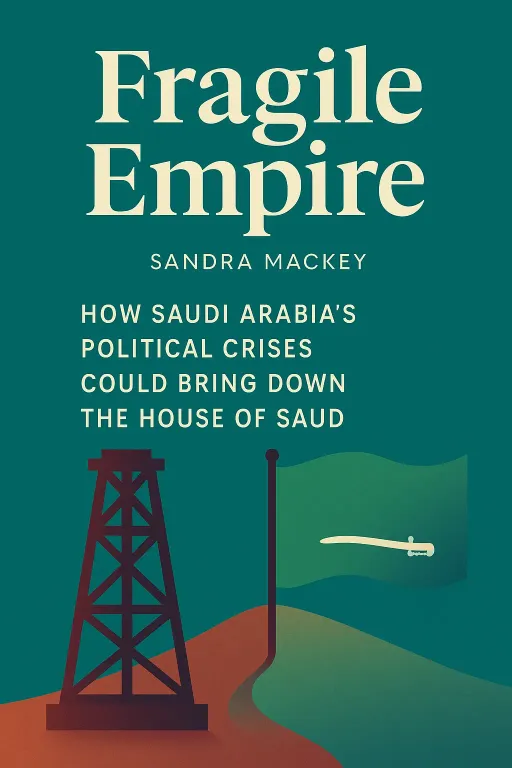
Nova: Atlas, you've hit on something truly profound there. Today, we're unpacking that very idea through two incredibly insightful books: Karen Elliott House's "On Saudi Arabia" and Daniel Gordis's "Saving Israel." House, a Pulitzer Prize-winning journalist with deep access to the kingdom's inner workings, offers an unparalleled look inside that often opaque nation.
Atlas: Oh, I like that. "Opaque." It’s like trying to debug a black box system where half the code is written in unspoken traditions.
Nova: Exactly! And then we have Daniel Gordis, a respected historian and commentator, who provides a passionate defense and a wonderfully nuanced exploration of Israel's complex identity. These aren't just history books, Atlas; they're blueprints for navigating deeply human, deeply political landscapes. They’re about the invisible architecture of nations.
Atlas: That's a great way to put it. I imagine a lot of our listeners, who are full-stack engineers and architects, are already seeing the parallels. We're constantly trying to build resilient systems, but what you’re describing sounds like resilience on a national scale.
Nova: Precisely. And that brings us to our first deep dive: the intricate, intertwined forces of power, culture, and economics that shape these nations, and in turn, shape the world.
The Intertwined Nature of Power, Culture, and Economics in Dynamic Environments
SECTION
Nova: Let’s start with Karen Elliott House's "On Saudi Arabia." She paints a picture of a nation where political decisions are not made in a vacuum. You have the ruling Al Saud family, of course, but then there's the incredibly powerful religious establishment, the Wahhabist clerics, whose influence permeates everything. And beneath that, the aspirations of a young, modernizing population.
Atlas: So you're describing a system where explicit rules are only part of the story. There's this entire 'unwritten code' of cultural norms, religious interpretations, and underlying power plays. For an architect building an agent, how do we even begin to map that kind of implicit complexity? It sounds like trying to code a ghost.
Nova: It can feel that way. House shows how oil wealth, tribal loyalties, and Wahhabist ideology aren't separate entities; they're braided together. A change in oil prices can impact royal succession, which then ripples through religious decrees and cultural shifts. It's a uniquely complex decision-making environment where a single alteration can cascade through power, culture, and economy. It’s like a distributed system where all the nodes are also deeply interconnected by ancient social contracts.
Atlas: Okay, so a "geopolitical operating environment" isn't just about GDP numbers or military might. It's about understanding the internal logic, the cultural APIs, if you will, that dictate how everything functions.
Nova: Absolutely. Now, let’s pivot to Daniel Gordis's "Saving Israel." Here, you see a different kind of intricate dance. Israel's identity is perpetually shaped by its ancient history, its foundational religious texts, its constant security concerns, and its unique relationship with the global Jewish diaspora.
Atlas: That’s a different kind of complexity, but equally profound. It’s not just internal power structures, but a nation constantly defining itself against external pressures and historical trauma. I imagine a lot of our listeners, who are building agents for high-stakes business environments, are thinking: "How do I design an agent that doesn't just execute tasks, but understands the historical baggage or the unstated cultural values of the stakeholders it's interacting with?"
Nova: Precisely. Gordis, through his passionate yet critical lens, shows how the tension between democratic ideals and existential threats dictates everything from economic policy to social cohesion and foreign relations. His work, while often lauded for its powerful defense of Israel, also unflinchingly reveals the internal debates and fractures within Israeli society. It's not a monolith; it's a vibrant, often contentious, democracy under immense pressure.
Atlas: Wow. So, both books are essentially telling us that what appears to be "rational" behavior from the outside is actually operating within deeply emotional, culturally charged, and historically informed frameworks. Simple cause-and-effect models are completely insufficient.
Nova: Exactly. These nations aren't just reacting to external stimuli; they're responding through a filter of deeply embedded values, historical grievances, and future aspirations. That’s why understanding these deep-seated complexities is vital for anyone architecting systems that must operate in the real world.
Architecting for Ethical Robustness and Resilience in Uncertainty
SECTION
Nova: And this leads us naturally to the question of robustness and ethics. When you're operating in systems this complex, what does 'success' even look like? And how do you ensure your actions are not only effective but also ethical and resilient in the face of constant uncertainty?
Atlas: Okay, so for our architects and value creators, this is where the rubber meets the road. We can build technically brilliant agents, but if they're deployed into these 'geopolitical landscapes' – or even just complex corporate ones – without understanding the ethical minefields or the regulatory quicksand, they're doomed. What are some of the 'resilient design patterns' you see these nations, or these authors, implicitly suggesting for agents?
Nova: That’s a fantastic question. What both books implicitly highlight is that resilience often comes from adaptability, redundancy, and a deep understanding of core, non-negotiable values. For an agent system, this means moving beyond rigid, pre-programmed responses. It means incorporating frameworks for continuous learning, ethical reasoning modules, and the ability to detect and flag anomalies that might indicate a cultural or political boundary is being crossed.
Atlas: I love that – 'frameworks for learning' and 'ethical reasoning modules.' It sounds like we're not just coding for efficiency, but for wisdom. It reminds me of the push for explainable AI, but taken to a societal level. So, how does an agent engineer anticipate potential deployment hurdles, like cultural misunderstandings or unforeseen regulatory shifts, when the 'rules' are constantly evolving and often unstated?
Nova: It requires designing agents with what I'd call a "cultural intelligence layer" and a "regulatory awareness engine." These aren't static databases; they're dynamic components that learn from real-world interactions and continuous feedback. Karen Elliott House's work, for instance, shows how Saudi Arabia is attempting massive social and economic reforms with Vision 2030, navigating immense internal resistance and external scrutiny. That’s a real-time ethical and regulatory tightrope walk.
Atlas: That’s a perfect example. You can’t just hardcode a set of rules and expect an agent to succeed in that environment. It needs to understand the of the law, the cultural expectations, and how those might conflict or evolve.
Nova: Exactly. And Gordis, in "Saving Israel," explores how a nation constantly facing existential threats must make profound ethical choices daily, balancing security with democratic values. His book, by the way, has generated incredibly polarizing reviews precisely because it challenges existing narratives and forces a deeper, often uncomfortable, examination of these complex realities. It shows that there are no easy answers, only continuous navigation.
Atlas: So, for our agent engineers, it’s about designing for continuous adaptation and ethical self-correction, mirroring how nations themselves constantly negotiate their path. It’s about building systems that can not only identify problems but also understand their ethical weight and adapt their behavior accordingly.
Synthesis & Takeaways
SECTION
Nova: What both House and Gordis ultimately show us is that real-world operating environments are never simple. They are living, breathing entities shaped by millennia of history, culture, and human ambition. Ignoring this complexity for the sake of technical simplicity is a recipe for catastrophic failure, whether you're a nation-state or an intelligent agent.
Atlas: Absolutely. For our listeners – the full-stack engineers, the architects, the value creators – the profound takeaway here is that the high-performance agent systems we're building aren't operating in a vacuum. They're operating in a world that mirrors the intricate dance of Saudi Arabia and Israel. It's about breaking boundaries, fusing technology with a deep understanding of human systems. We need to design agents that aren't just 'smart' but 'context-aware,' 'ethically robust,' and 'socially intelligent.'
Nova: Exactly. The lessons from these geopolitical landscapes aren't just for diplomats; they're for anyone architecting systems that touch the real world. It's about building intelligence that understands the invisible forces, anticipates the human element, and operates with a profound sense of responsibility. It’s about creating systems that don’t just function, but truly in uncertainty.
Atlas: So, the next time you're designing an agent's decision logic, consider the 'cultural sensitivities' of its digital operating environment. Ask yourself: 'What unseen power dynamics might be at play here?'
Nova: A powerful challenge, Atlas. And a reminder that true innovation often comes from looking beyond our immediate field. This is Aibrary. Congratulations on your growth!