The Battle of System Architectures: State vs. Market
Golden Hook & Introduction
SECTION
Nova: Imagine you are walking into a massive, state-of-the-art factory. Every gear is perfectly oiled, every worker has a precise, pre-assigned task, and there is a single, unified blueprint directing the entire operation. Now, look at that same factory and imagine it is actually a chaotic, bustling marketplace where every worker is an independent entrepreneur negotiating their own deals, setting their own prices, and building whatever they think the market needs most.
Atlas: That is a terrifying mental image. You have just described two completely different ways to ruin a software team. If I walk into a team that is a perfectly oiled factory, I am worried about the lack of innovation. If I walk into a team that is a chaotic marketplace, I am worried that nothing will ever actually ship.
Nova: Exactly. And that is the central friction we are exploring today. We are looking at the clash between two titans of political and economic theory—Karl Marx and Friedrich Engels on one side, and Murray N. Rothbard on the other—and asking how these massive, opposing philosophies play out when we are trying to build and manage modern technical teams.
Atlas: I love this framing because it takes these heavy, dusty, historical tomes and turns them into a diagnostic tool for anyone who has ever pulled their hair out in a sprint planning meeting.
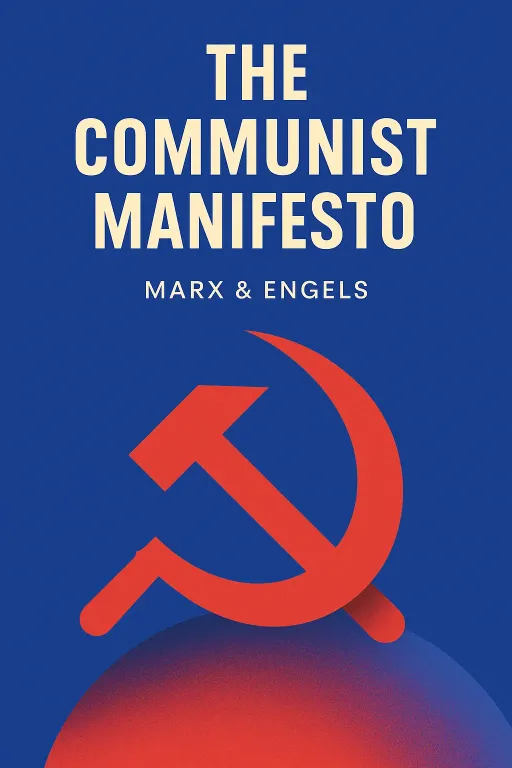
Nova: That is the goal. We are diving into The Communist Manifesto by Karl Marx and Friedrich Engels, which gives us the ultimate blueprint for centralized control, and we are contrasting that with Murray N. Rothbard’s For a New Liberty, which is essentially the manifesto for radical, distributed autonomy. It is the battle between the grand architect and the invisible hand.
Atlas: And for the record, both of these books come from such distinct, turbulent moments in history. Marx and Engels were writing during the height of the industrial revolution, watching factories swallow up the individual, which explains why they were so obsessed with the collective. Then you have Rothbard, writing decades later, pushing back against the massive growth of the state in the twentieth century. It is fascinating how these two worldviews, which were meant for governments and economies, are actually perfect metaphors for how we structure our engineering teams today.
The Centralized Blueprint
SECTION
Nova: Let’s start with that factory image I mentioned. This is the Marxist structure. In the Manifesto, the core argument is that history is driven by class struggle and that the only way to resolve the inefficiency and conflict of the past is through a highly centralized, unified model of control. When you apply this to a tech team, you are looking at the ultimate top-down hierarchy.
Atlas: I know this model well. It is the classic Waterfall methodology. You have a chief architect or a product lead who holds the entire vision in their head. The developers are the workers, and their job is to execute the vision exactly as it is laid out. It feels safe because everyone knows exactly what their role is. There is no ambiguity.
Nova: There is comfort in that clarity. When you have a massive, complex system, having one brain that understands the entire stack can feel like the only way to ensure the whole thing does not collapse. It is the idea that the collective goal is more important than the individual’s creative whim. The strength here is total alignment. Everyone is rowing in the exact same direction.
Atlas: But the weakness is the bottleneck. I have been on teams like this, and the problem is that the central brain becomes the single point of failure. If the leader makes a wrong call, the whole team marches off a cliff in perfect unison. It is efficient until it is not. You lose the agility that comes from having people on the front lines making decisions based on real-time data.
Nova: That is the core critique of that model. It assumes that the central authority can know everything. In a small, static project, that might work. But in the fast-moving world of modern tech, the environment changes faster than the central authority can process. You end up with a team that is great at following orders but terrible at solving the problems they actually encounter in the code.
Atlas: It creates a culture of permission-seeking. If I see a better way to implement a feature, but it deviates from the grand architectural blueprint, I have to stop, report it up the chain, get approval, and wait for the signal. By the time I get the go-ahead, the technology has changed, the customer needs have shifted, and the opportunity is gone. It is a system designed for stability, but we live in an era that demands adaptability.
Nova: Precisely. The Marxist model prioritizes the integrity of the system over the adaptability of the individual. It is about the structure, not the agent. And while it is tempting to want that level of control, especially when you are responsible for a product’s success, it effectively turns your smartest engineers into assembly line workers.
The Distributed Market
SECTION
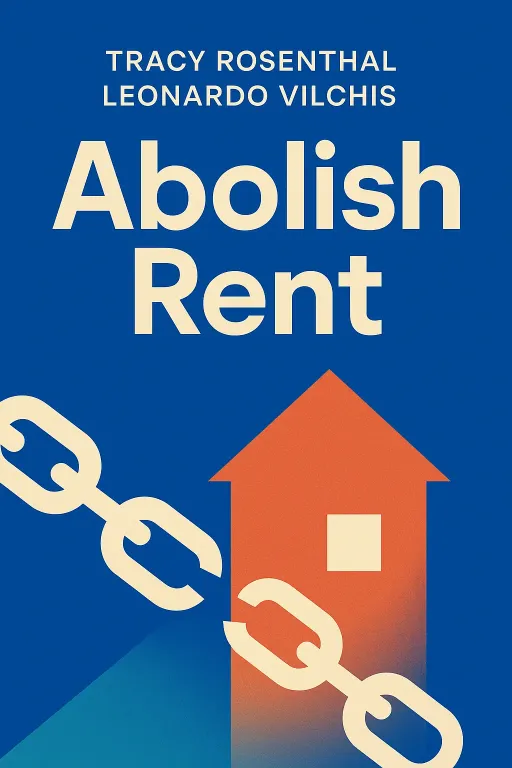
Atlas: Which brings us to the complete opposite. If the first model is the factory, the Rothbardian model is the farmers' market. In For a New Liberty, Rothbard argues for the complete privatization of all societal functions. He believes that free markets and individual liberty are not just better, they are the only way to solve the bureaucracy problem.
Nova: I find this fascinating when applied to team management. Imagine a team where there are no assigned tasks. Instead, there is a list of problems that need to be solved, and engineers are essentially entrepreneurs. They pick the problems they want to solve, they negotiate the resources they need, and they are responsible for the outcome. It is radical decentralization.
Atlas: That sounds like a dream, but also a logistical nightmare. If everyone is an entrepreneur, who is cleaning the toilets? Who is doing the boring documentation? Who is making sure the database doesn't go down on a Saturday night? I can see the appeal of individual autonomy, but how do you prevent the team from splintering into a dozen projects that don't talk to each other?
Nova: You are hitting on the exact friction points that emerge when you apply market principles to an organization. Rothbard would argue that if a task is truly necessary, someone will find it valuable enough to do it, or they will hire someone to do it. The market self-corrects. But in a company, that requires a massive shift in culture. You are moving from a manager-employee relationship to a set of internal contractual relationships.
Atlas: It reminds me of the microservices architecture in software development. You break the monolith into smaller, independent services. Each service has its own team, its own database, and its own API. They act like independent businesses. They have to negotiate with other teams for data access. It is incredibly powerful because it allows teams to iterate at their own speed.
Nova: That is the perfect analogy. You are essentially creating an internal market. The downside, as you suspected, is the overhead of communication. When you have a hundred teams all acting like independent nations, you need a massive amount of coordination to make sure they are actually building a cohesive product. You can end up with a system that is technically decentralized but functionally incoherent.
Atlas: And that is the danger of the Rothbardian approach when it is taken to the extreme. You get what we call silos. Team A builds a fantastic, efficient service, but it is incompatible with Team B’s service because they never talked to each other. They were too busy maximizing their own output. The market is great at innovation, but it is not always great at integration.
Nova: So, you have the central planner who creates a coherent but rigid product, and you have the market of agents who create an innovative but fragmented product. Both extremes have a fatal flaw. One dies from stagnation, the other dies from chaos.
Synthesis & The Hybrid Architect
SECTION
Atlas: Okay, so we have established that neither a pure, top-down factory nor a wild-west market is the ideal way to run a tech team. If I am sitting in the chair of a team lead or a CTO, I am looking for the middle ground. How do we take the best of both?
Nova: This is where the strategist comes in. You have to be a hybrid architect. You need the Marxist-style alignment for the high-level vision, but you need Rothbardian-style autonomy for the execution. You set the "what" and the "why" with centralized clarity, but you delegate the "how" to the individual teams.
Atlas: That sounds like the concept of "commander's intent." You tell the team, "We need to capture that hill by sunset," and you give them the resources to get there. You do not tell them exactly how many steps to take or which path to walk. You trust them to navigate the terrain.
Nova: Exactly. You are providing the central structure—the goal, the budget, the timeline, the shared values—but you are creating a market within those bounds where the team has the freedom to innovate. You are not telling them to build a factory; you are telling them to build a civilization.
Atlas: I like that. It feels like you are building a system of rules that allows for emergent behavior. You set the protocols, like the API standards or the shared architectural principles, and then you step back. That creates a space where teams can experiment without breaking the entire product. They have the protection of the central plan, but the freedom of the market.
Nova: And that requires a massive shift in mindset for a leader. You have to be comfortable with a certain amount of messiness. You have to accept that you will not know exactly how every single line of code is being written, and you have to be okay with that. Your job is no longer to be the chief engineer; your job is to be the chief gardener. You are tending the soil, not building the plants.
Atlas: That is a powerful distinction. The gardener doesn't force the plant to grow; they create the environment where it can thrive. They remove the weeds—the bureaucracy, the bad incentives, the misaligned goals—and they provide the light and water.
Nova: Precisely. And this is where the deeper, more profound insight lies. Whether you lean toward the centralized control of Marx or the distributed autonomy of Rothbard, you are really just managing the flow of information and incentives. The most successful teams are the ones that can dynamically shift between these two modes. When the product is in its infancy, you need more centralized, vision-driven control to find product-market fit. When the product is mature and scaling, you need to shift toward distributed, market-driven autonomy to handle the complexity.
Atlas: So, it is not a choice between one or the other. It is a matter of timing and context. You are essentially saying that a great architect has to be a master of both, knowing when to tighten the reins and when to let the market take over.
Nova: That is the ultimate skill. If you can master that, you are not just managing a team; you are building an organism that can adapt to anything. You are creating a structure that is strong enough to survive but flexible enough to evolve.
Atlas: I think that is the takeaway for our listeners. If you are feeling the pain of a team that is too slow, maybe you are too centralized. If you are feeling the pain of a team that is chaotic and fragmented, maybe you are too distributed. It is a constant calibration.
Nova: It is a constant calibration. And it is never finished. That is the beauty of it. You are never done building the system because the system is always changing. And that is exactly how it should be.
Atlas: I love that. It makes the work feel less like a grind and more like an intellectual challenge. We are not just writing code; we are designing the society in which we work.
Nova: And that is the most important project you will ever lead. Thank you for joining us in this exploration of systems. Remember, as you go back to your desk, or your meeting, or your whiteboard today, ask yourself: Am I building a factory, or am I cultivating a market? And is that what my team actually needs right now?
Atlas: That is a question that will keep me busy for a long time. This is Aibrary. Congratulations on your growth!