

The 'Black Box' Trap: Why You Need to Unpack Probability and Uncertainty.
Golden Hook & Introduction
SECTION
Nova: Most people believe hard work, skill, and sheer talent guarantee success. They are absolutely, unequivocally wrong. And believing that might actually be holding you back from true innovation.
Atlas: Whoa, Nova. That's a pretty bold statement to kick us off. So, you're telling me all those late nights, all that meticulous planning, all the skill we pour into our projects... it might just be... for nothing? Or, at least, not the thing? That's going to resonate with anyone trying to build something new, where the outcomes are always a little bit fuzzy.
Nova: Not for nothing, Atlas, but not the thing, not by a long shot. Today, we are pulling back the curtain on what I call the 'black box' of chance. To do that, we're diving into two pivotal books that fundamentally shift how we perceive success, failure, and the very fabric of reality.
Atlas: And these aren't just academic tomes, are they? These are books that challenge our intuition, written by people who've seen randomness up close.
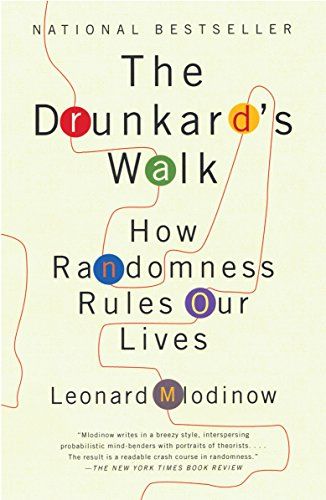
Nova: Precisely. First up, we have Leonard Mlodinow's "The Drunkard's Walk: How Randomness Rules Our Lives." Mlodinow, a physicist by training, has this incredible gift for making the most complex statistical and quantum concepts feel utterly intuitive, almost poetic. He brings a scientist's rigor to the everyday.
Atlas: And then there's Nassim Nicholas Taleb's "Fooled by Randomness: The Hidden Role of Chance in Life and in the Markets." Taleb, a former options trader and a deep philosophical thinker, wrote this book from the trenches, having witnessed firsthand how unpredictable financial markets—and life itself—can be. His perspective is truly battle-tested.
Nova: Together, these authors give us a crucial perspective shift, allowing us to design more resilient systems and strategies that account for inherent uncertainties.
Atlas: But how do we even begin to tell the difference between what's skill and what's just the universe flipping a coin? Where's our blind spot?
The Blind Spot: Mistaking Randomness for Skill
SECTION
Nova: Our blind spot, Atlas, is deep-seated. Our brains are pattern-seeking machines. We crave narrative, cause and effect. So, when something good happens, we immediately look for the 'why' – and we often land on skill, talent, or a brilliant strategy. Mlodinow illustrates how this wiring can lead us astray, making us see deterministic causes where pure chance is actually the dominant factor.
Atlas: So, for problem-solvers like our listeners, this means we might be designing solutions based on false positives, thinking we've cracked a code when we just got lucky? Or worse, giving up when we've just had a bad run?
Nova: Exactly! Think about the classic example of the "hot hand" in basketball. Everyone, from fans to coaches to the players themselves, believes in it. A player hits five shots in a row, and the narrative immediately forms: "He's got the hot hand! Feed him the ball!" It feels so intuitively right, doesn't it?
Atlas: Oh, absolutely. I mean, you see it happen. Someone gets in the zone, their confidence is up, and they just can't miss. It feels like a surge of pure, unadulterated skill taking over. You'd be crazy to believe in it.
Nova: And yet, when statisticians meticulously analyze thousands upon thousands of basketball shots, they find that those "streaks" are often no different from what you'd expect from a purely random sequence. It's like flipping a coin: you'll naturally get runs of heads or tails, say five heads in a row. But that doesn't mean the coin has a "hot hand" and is more likely to land on heads next.
Atlas: Hold on. Are you saying that when a basketball player hits five shots in a row, it's just... luck? That feels incredibly counterintuitive! Especially for anyone trying to optimize performance or predict outcomes in their own projects. If I'm building an intelligent system, and it performs incredibly well for a week, my instinct is to analyze it's so good, not to assume it's just a random spike.
Nova: And that's precisely the trap! We over-interpret success, attributing it to our genius, and we over-interpret failure, blaming ourselves or a flawed process, when both might simply be fluctuations in a random system. Mlodinow shows how this happens everywhere: in stock market fluctuations, in scientific discoveries, even in career trajectories. Someone gets a big break, and we say, "Ah, they were destined for greatness." But often, it was a random encounter, a lucky timing, that opened that door.
Atlas: So, for our listeners who are constantly iterating, constantly trying to find those leverage points for innovation, this means we might be chasing ghosts. We might be trying to replicate a "skill" that was actually just a lucky bounce, or conversely, abandoning a sound strategy because of a string of bad luck. That's a huge blind spot for anyone trying to apply data and logic.
Nova: It's a massive blind spot, and it's why it's so hard to distinguish true causality from mere chance. We project our desire for control and understanding onto a world that often operates on probabilities. It leads to flawed decisions, wasted resources, and a misunderstanding of what actually drives outcomes.
Unpacking the Black Box: Designing for Uncertainty
SECTION
Nova: This brings us perfectly to Taleb's insights. If randomness is so pervasive, and our brains are so prone to being "fooled" by it, how do we stop chasing those ghosts and actually build systems that thrive in uncertainty? How do we unpack this black box?
Atlas: Yeah, I mean, if everything's just random, does that mean we should just throw our hands up? For someone trying to design, say, a resilient smart grid, that's not exactly a comforting thought. We need level of predictability.
Nova: Not at all, Atlas. Taleb isn't saying give up; he's saying understand the of the randomness you're dealing with. He makes a crucial distinction, famously illustrated by his "turkey problem." It's a brutal analogy, but incredibly illuminating.
Atlas: The turkey problem? I'm intrigued. Tell me.
Nova: Imagine a turkey, living happily on a farm. Every single day for a thousand days, a benevolent farmer feeds it. From the turkey's perspective, based on a thousand data points, the farmer is its best friend, its provider, its guarantor of continued existence. Its model of the world is perfectly reinforced: "life is good, the farmer loves me, tomorrow will be like today."
Atlas: I see where this is going. So the turkey's entire predictive model is based on a consistent, positive feedback loop. It's optimizing for yesterday's data.
Nova: Exactly. Its confidence in the farmer's benevolence grows stronger with every passing day. Until day 1,001. Thanksgiving. The farmer, who has always been its provider, suddenly becomes its executioner. The turkey's entire worldview, built on mountains of empirical evidence, is shattered by a single, unforeseen, catastrophic event.
Atlas: Whoa. That's a brutal analogy. So for someone building intelligent systems or designing a new energy grid, this isn't just about 'risk management' in the traditional sense, is it? It's about recognizing entirely unforeseen, high-impact events – the "black swans" as Taleb calls them – that operate completely outside our normal probabilistic models.
Nova: Precisely. Taleb argues that we live in two kinds of domains: "Mediocristan" and "Extremistan." In Mediocristan, things like height or weight, or even coin flips, tend to average out. Extreme deviations are rare and don't disproportionately affect the whole. But in Extremistan, things like wealth, book sales, or market crashes are different. One single event, one "Black Swan," can have an outsized, truly catastrophic impact, like the turkey's Thanksgiving.
Atlas: So it's not enough to just know randomness exists; we need to understand its? And how do we even begin to account for a 'Thanksgiving' event in our designs, especially when we're trying to create something innovative and inherently uncertain? When you're building a control system, you can't just say, "Well, a Black Swan might happen, so I'll do nothing."
Nova: That's the strategist's ultimate challenge, isn't it? Taleb's answer isn't to predict Black Swans – he says they are inherently unpredictable. His insight is to build systems that are not just robust, but. Meaning they don't just resist shocks; they actually from them. This involves building in redundancies, having optionality, and recognizing that some exposure to small, manageable failures can actually inoculate you against larger, catastrophic ones.
Atlas: So it's about building systems that don't just a random hit, but maybe even get stronger from it, like a muscle. That's a complete paradigm shift for anyone in problem-solving. It's not about avoiding all risks, but understanding which kind of risks you're exposed to, and then designing for resilience, not just efficiency.
Synthesis & Takeaways
SECTION
Nova: Absolutely. The synthesis of Mlodinow and Taleb is this: first, recognize your inherent human tendency to mistake randomness for skill, to crave clean narratives where none exist. Then, understand that not all randomness is equal. Some uncertainties are manageable, others are catastrophic and unpredictable.
Atlas: So for the innovators and strategists listening, the real takeaway isn't to fear randomness, but to respect it. To build systems that don't just "survive" a random hit, but maybe even get stronger from it. To constantly question our assumptions, scrutinize our "successes" for lucky breaks, and build in redundancies, perhaps even embracing beneficial mistakes. It’s a complete mindset shift for solving complex problems and making a tangible difference.
Nova: A complete mindset shift, indeed. It's about moving beyond the illusion of control and designing for a world that inherently uncertain. It's about developing a probabilistic intuition that allows you to distinguish genuine causality from mere chance, leading to far more resilient and impactful creations. Because the black box of uncertainty isn't going away. Our ability to unpack it, though, and design around it, that's where true innovation lies.
Atlas: And that's a powerful thought to leave our listeners with. This is Aibrary. Congratulations on your growth!