

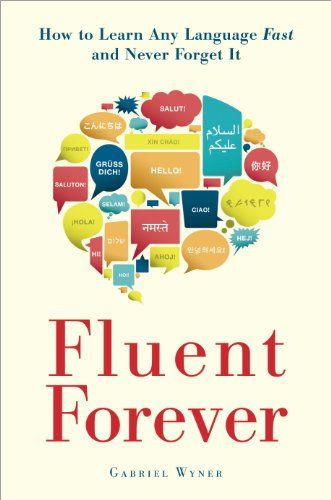
Fluent forever
How to Learn Any Language Fast and Never Forget It
Introduction
Nova: Imagine you are an opera singer. You have to perform in Italian, German, and French, and you need to sound like a native, but you do not actually speak any of those languages. That was the reality for Gabriel Wyner, the author of Fluent Forever. He was tired of the struggle, so he decided to hack the human brain to see if he could learn a language faster than anyone thought possible.
Nova: Exactly. He was a professional mimic. But then he went to a summer immersion program for German and realized that the way we are taught languages in school is fundamentally broken. He ended up learning German in just fourteen weeks, and then he did the same with Italian, French, Russian, and more. He wrote Fluent Forever to show that anyone can do this if they stop translating and start thinking in the language from day one.
Nova: It is all about how the brain stores information. We are going to dive into his system today, which moves away from boring textbooks and toward a method that uses neuroscience to make words stick forever. It is fast, it is intense, and it completely flips the script on traditional learning.
Key Insight 1
Breaking the Sound Barrier
Nova: The very first step in the Fluent Forever method is something almost every other program ignores. Wyner says you have to train your ears before you ever try to learn a single word. He calls it breaking the sound barrier.
Nova: Because if you cannot hear a sound, you cannot remember it. Think about it like this. If I tell you a word in a language that has sounds your brain is not used to, your brain will literally filter them out. It tries to map those new sounds to the closest sound in English. This is why people have thick accents and why they struggle to spell foreign words.
Nova: Precisely. Wyner uses something called minimal pairs to fix this. These are pairs of words that differ by only one tiny sound. For a Japanese speaker learning English, a classic example is rock and lock. To their ears, those might sound identical at first. By testing yourself on these pairs, you force your brain to create new neural pathways to distinguish those sounds.
Nova: That is a perfect analogy. Wyner found that once you can hear the sounds correctly, your ability to memorize vocabulary increases by about twenty percent. You are no longer memorizing random noise; you are memorizing distinct, clear sounds that your brain recognizes as meaningful.
Nova: Then you move on to the most controversial part of his method. You have to banish English from your study sessions entirely. No more translations allowed.
Nova: You use a picture. Wyner argues that translation is a middleman that slows you down. When you see the word cat, you have a mental image of a furry, meowing animal. When you learn gato equals cat, you are creating a link from gato to cat, and then from cat to the image. Wyner says you should link gato directly to the image of the cat.
Nova: Exactly. This creates a much stronger emotional and visual connection in your brain. It is the difference between knowing a language and actually feeling it.
Key Insight 2
The Death of Translation
Nova: Let us talk about why translation is actually a trap. When you translate, you are relying on your native language as a crutch. But languages do not map onto each other perfectly. The word for wood in one language might mean the material, but in another, it might also mean a small forest. If you just learn the English translation, you miss all that nuance.
Nova: Right. Wyner suggests using Google Images to find pictures for your vocabulary. If you are learning the word for dog, you do not write dog on your flashcard. You find a picture of a dog that resonates with you. Maybe it looks like your childhood pet. That personal connection makes the word much harder to forget.
Nova: That is where it gets creative. For abstract words, Wyner suggests using images that represent the concept to you personally, or even using short sentences where the word is missing. But he recommends starting with a very specific list of 625 words. These are all concrete nouns, verbs, and adjectives that are easy to visualize.
Nova: It is a sweet spot. These are the most common, high-frequency words that form the foundation of almost any conversation. Words like hand, jump, red, and mother. By the time you finish this list using only images, you have built a solid base of vocabulary that you actually understand conceptually, not just as a list of translations.
Nova: That brings us to the engine of the whole Fluent Forever system: the Spaced Repetition System, or SRS. This is the secret sauce that makes the whole thing work.
Nova: Not at all. It is actually a way to study less. It is based on the Ebbinghaus Forgetting Curve, which shows that we forget information at a very predictable rate. If you review a word right before you are about to forget it, you push that memory much deeper into your long-term storage.
Nova: Exactly. The software handles the timing. If you get a word right, it might not show it to you again for four days. If you get it right again, it waits ten days, then a month, then six months. You only spend time on the words you are struggling with.
Key Insight 3
The Memory Machine
Nova: The tool Wyner recommends for this is an app called Anki. It is a powerful flashcard program that uses these spaced repetition algorithms. But here is the catch, and this is where many people fail: you cannot use someone else's flashcards. You have to make your own.
Nova: Because the act of making the card is actually where the learning happens. When you search for the perfect image for a word, when you decide which sound clip to use, you are engaging with the word. You are creating memories. If you just download a deck, those cards have no personal meaning to you. They are just data points, and your brain is very good at deleting boring data.
Nova: It is an investment. Wyner says that thirty minutes of making your own cards is worth three hours of studying someone else's. Plus, you can customize them. If you are a doctor, you can add medical terms. If you love cooking, you can add kitchen vocabulary. The language becomes a tool for your life, not just a school subject.
Nova: That is stage three. Once you have those 625 words down, you start learning sentences. But again, no translation. You use something called cloze deletion. Basically, you take a sentence in your target language and you blank out one word.
Nova: Exactly. But you use a picture on the back of the card to give you the context. This teaches you grammar intuitively. You start to see how words fit together, how verbs conjugate, and how word order works, all without ever memorizing a boring grammar rule from a table.
Nova: It is very similar, but it is supercharged because you are using an adult's ability to recognize patterns and a computer's ability to track your memory. Wyner calls this the most efficient way to reach a point where you can actually start having real conversations.
Key Insight 4
The Power of Personal Connection
Nova: One of the most profound insights in Fluent Forever is that our brains are essentially filters. We are bombarded with millions of bits of information every second, and our brains have to decide what to keep and what to throw away. Most language learning fails because it feels like garbage to our brains.
Nova: Exactly. Wyner emphasizes that you should only learn things that matter to you. If a word in the 625-word list feels useless, skip it. If you find a word in a book you are reading that you love, add it. The more personal the connection, the stickier the memory.
Nova: Yes, especially for things like grammatical gender. In languages like German or French, every noun has a gender, and it often feels completely random. Why is a bridge feminine in German but masculine in Spanish? Wyner suggests using explosive, vivid imagery to remember these.
Nova: You might imagine a giant, elegant woman made of stone stretching across a river. Or for masculine words, you might imagine them exploding or being hit by a giant hammer. The more violent, sexual, or funny the image, the more likely your brain is to flag it as important.
Nova: It is all about hacking your biology. Your brain evolved to remember where the food is and how to avoid predators, not to remember vocabulary lists. By using vivid imagery and spaced repetition, you are tricking your brain into thinking that the word for bridge is just as important for your survival as the location of a tiger.
Nova: Wyner says that once you hit about two thousand to three thousand words, you reach a tipping point. You can start reading books and watching movies without constantly reaching for a dictionary. At that point, the language itself becomes your teacher. You learn new words through context, just like you do in English.
Conclusion
Nova: We have covered a lot today. From training your ears with minimal pairs to the death of translation and the power of spaced repetition. The core message of Gabriel Wyner's Fluent Forever is that language learning is not about intelligence; it is about strategy. It is about working with your brain instead of against it.
Nova: It really does. If you are tired of the cycle of learning and forgetting, this method offers a way out. It is a path to true fluency that sticks with you for life. Just remember: hear the sounds, skip the translations, and let the software handle the memory work.
Nova: Whether it is fourteen weeks or fourteen months, the journey is worth it. You are not just learning words; you are opening up a whole new world. Thank you for joining us on this deep dive into Fluent Forever.
Nova: This is Aibrary. Congratulations on your growth!