

Unlocking Your Deepest Potential: The Science of Peak Performance
Golden Hook & Introduction
SECTION
Nova: Atlas, I’ve got a challenge for you today. After our deep dive into unlocking potential, give me your five-word review of the core idea. Go!
Atlas: Whoa, five words? On the spot? Okay, let me think… ‘Focus, grow, rest, repeat, thrive.’ How’s that for a start?
Nova: Brilliant! It’s concise, it’s rhythmic, and it perfectly encapsulates the journey we’re about on. Because today, we’re peeling back the layers on something truly profound: how to tap into our deepest capabilities. We’re talking about two monumental works that have reshaped our understanding of human potential.
Atlas: And these aren’t just self-help platitudes, are they? These are backed by some serious psychological and performance science.
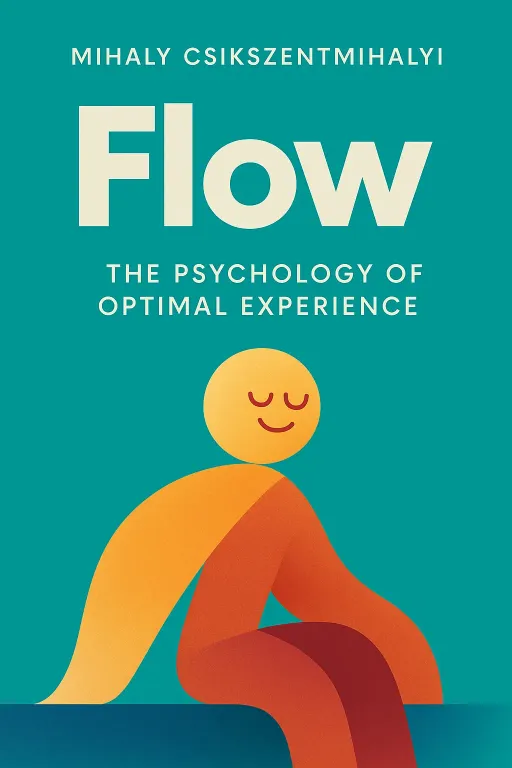
Nova: Absolutely. We’re going to explore the groundbreaking work of Mihaly Csikszentmihalyi in his seminal book, "Flow: The Psychology of Optimal Experience." Csikszentmihalyi, a pioneer in what we now call positive psychology, really shifted our focus from what makes us miserable to what makes us truly engaged and happy. His research was foundational in understanding optimal human experience.
Atlas: And then we’ll move into something that builds on that, right?
Nova: Exactly. We’ll then look at "Peak Performance" by Brad Stulberg and Steve Magness. These two, with their backgrounds in coaching elite athletes and top performers, give us the practical roadmap for how to sustain that high level of excellence, year in and year out. It’s a powerful combination, really. They show us that unlocking potential isn't just about fleeting moments of brilliance, but about building a sustainable system for it.
Atlas: So, it's not just about hitting a high note, but learning to compose an entire symphony of success and satisfaction. I love that.
The Elusive State of Flow: What It Is and How It Transforms Experience
SECTION
Nova: Precisely. And for that symphony, the first movement has to be 'flow.' Csikszentmihalyi's concept of flow is, in essence, a state of complete absorption in an activity. It's when you're so utterly immersed, so focused, that everything else fades away. Time seems to disappear, your sense of self-consciousness vanishes, and you just with the task.
Atlas: Oh, I know that feeling! Like when you’re totally lost in a good book, or a complex coding problem, or even just building something with your hands. You look up and hours have passed, but it felt like minutes.
Nova: Exactly! That’s the classic hallmark. He describes it as an "autotelic experience," meaning it's intrinsically rewarding. The activity itself is the reward. Think about a world-class violinist lost in a concerto, their fingers dancing effortlessly across the strings. They're not thinking about the audience, or the critics, or even the technique; they're simply the music. Their skill perfectly matches the challenge, creating this seamless, joyful engagement.
Atlas: So you're saying the challenge has to be just right? Not too easy, not too hard?
Nova: Precisely. That’s one of the critical conditions. If it’s too easy, you get bored. Too hard, you get anxious. But when the challenge stretches your skills just enough, that’s where the magic happens. You also need clear goals and immediate feedback. The violinist knows instantly if a note is off; the coder sees if their program compiles. This constant, real-time feedback loop allows for continuous adjustment and deeper immersion.
Atlas: That makes me wonder, for our listeners who are deep thinkers and curious learners, does ‘flow’ apply to intellectual tasks too, like writing, research, or complex problem-solving? Or is it more for physical or artistic pursuits?
Nova: Oh, absolutely! It’s incredibly relevant for intellectual work. Imagine a scientist completely engrossed in deciphering a complex data set, or a writer crafting a crucial paragraph, where the words just seem to pour out. The conditions are the same: clear objective—what exactly are you trying to understand or express? Immediate feedback—does this sentence convey my meaning? Does this data point fit the hypothesis? And that perfect balance of challenge and skill. It’s not about the type of activity, but the of engagement.
Atlas: So, it’s not just about the itself, but the you engage with it. And it sounds incredibly satisfying.
Nova: It is deeply satisfying. Csikszentmihalyi argues that these flow experiences are actually what make life worth living. They’re moments of intense positive experience that build our sense of self, competence, and joy. It’s not just about being productive; it’s about feeling truly alive and fully utilized. You emerge from flow not drained, but often energized and fulfilled, with a sense of growth.
Peak Performance Beyond Flow: The Stress + Rest = Growth Equation
SECTION
Nova: Now, while those moments of flow are incredible, how do you that level of excellence, day after day, year after year? That's where Stulberg and Magness step in with "Peak Performance." They argue that sustained success isn't about being in flow all the time, which is frankly impossible, but about a deliberate, cyclical process they sum up as: Stress + Rest = Growth.
Atlas: Okay, but in today's world, everyone's always on. We're told to hustle, to grind, to push harder. How do you actually in rest without feeling like you're falling behind? For many of our listeners, the idea of stepping away feels counter-productive, like you're losing momentum.
Nova: That's the counter-intuitive genius of their work, Atlas. They directly challenge that "grind culture" mentality. The stress component is crucial, yes. It's about purposeful practice – deliberately pushing yourself slightly beyond your current capabilities, engaging in challenging work. This creates micro-tears, metaphorical wear and tear, whether it’s physical, mental, or emotional.
Atlas: So, the stress is the breakdown, the challenge.
Nova: Exactly. But the doesn't happen during the stress. It happens during the. Rest isn't just passive recovery; it’s where your body and mind adapt, consolidate learning, and rebuild stronger. Think of an athlete: they don't get stronger the heavy lifting; they get stronger it, when their muscles repair and adapt during recovery. The same applies to mental and intellectual work. Your brain needs downtime to process information, form new connections, and solidify memories.
Atlas: What kind of ‘rest’ are we talking about here? Just sleeping, or something more? Because I imagine a lot of our listeners are already trying to get enough sleep, but still feel overwhelmed.
Nova: That’s a great distinction. Sleep is foundational, absolutely non-negotiable for peak performance. But it's more than that. It includes active recovery, like light exercise, spending time in nature, or engaging in hobbies that are completely unrelated to your primary work. It also means mental breaks, disconnecting from devices, and giving your prefrontal cortex a chance to chill. It’s about creating space for your brain to wander, to synthesize, to recover its cognitive resources.
Atlas: So, it’s not laziness; it’s a strategic, productive part of the process. That’s a huge reframe. And what about the "mental game" aspect they talk about? How does that tie into this stress-rest cycle?
Nova: The mental game is the bedrock that allows you to navigate the stress and optimize the rest. It involves cultivating self-awareness, self-compassion, and building a strong identity that isn't solely tied to your performance outcomes. It's understanding that setbacks are part of growth, learning to manage expectations, and developing resilience. It’s about having the clarity to know to push and to pull back, and having the discipline to honor that recovery. Without a strong mental game, you either burn out from too much stress or never push yourself enough.
Atlas: That sounds like it requires a lot of intentionality. For our curious learners, those who are always looking to master something new, this idea of purposeful rest must feel particularly challenging because there's always more to learn.
Synthesis & Takeaways
SECTION
Nova: It does, and that’s precisely where the synergy between flow and peak performance becomes so powerful. Flow gives us those moments of deep, satisfying engagement, where learning and performing feel effortless and joyful. It’s the intense, focused sprint. But Stulberg and Magness remind us that those sprints need to be embedded within a larger rhythm of stress and recovery. You can’t live in flow all the time, or you’ll burn out.
Atlas: So, it's about being fully present and absorbed when you're ‘on,’ but also fully ‘off’ and truly recovering when you're resting. It’s a deliberate rhythm, not just a constant sprint. It’s about optimizing your energy, not just maximizing your hours.
Nova: Exactly! It’s about working smarter, not just harder. It's understanding that the brain, like a muscle, needs both challenge to grow and rest to consolidate that growth. And the deep satisfaction from flow experiences can actually fuel your motivation during the purposeful practice phases, making the entire cycle more rewarding. It's a holistic approach to unlocking potential, recognizing that our best work comes from a balanced, intentional life.
Atlas: For our curious learners, what's one immediate thing they can do to start applying these ideas, beyond just thinking about them?
Nova: I would say, start by identifying one area where you’ve experienced flow, whether it’s a hobby, a project, or a task at work. Pinpoint the conditions that allowed you to enter that state. Clear goal? Immediate feedback? Challenge-skill balance? Then, try to intentionally recreate those conditions in other areas. And simultaneously, look at your weekly schedule. Where can you carve out a non-negotiable block for true, restorative rest, just as purposefully as you schedule your most challenging work? Treat recovery as a productive part of your growth.
Atlas: And how might that shift not just your output, but your entire experience of what you're trying to master? That’s something worth reflecting on. It’s a powerful invitation to rethink how we approach everything.
Nova: Absolutely. So, as we wrap up, I want to leave our listeners with this: Think about your own rhythm of challenge and recovery. Where can you invite more intense focus, and where can you truly, intentionally, let go?
Atlas: And how might that shift not just your output, but your entire experience of what you're trying to master?
Nova: This is Aibrary. Congratulations on your growth!









