

The Consultant's Structural Toolkit
Golden Hook & Introduction
SECTION
Nova: What if the most brilliant idea you've ever had, the one that could transform your business, fails not because it's bad, but because of how you presented it? Or worse, because you forgot the human element entirely?
Atlas: Oh, I know that feeling. It’s like perfectly engineering a rocket, but forgetting to fuel it, or worse, forgetting to tell mission control which button to press. For anyone who analyzes business models or is constantly trying to get buy-in for market entry strategies, that’s a nightmare scenario.
Nova: Exactly! Because in the world of high-stakes strategy and consulting, it’s not enough to the right answer; you have to articulate it with crystal clarity and ensure people are genuinely on board. Today, we're diving into two foundational texts that, when combined, offer a complete toolkit for exactly that.
Atlas: Okay, so we're talking about the art and science of influence, then. Tell me more.
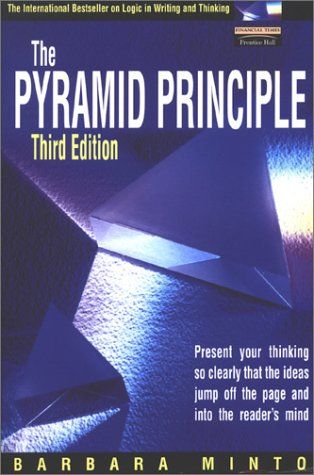
Nova: We're looking at Barbara Minto's seminal work, "The Pyramid Principle," and Peter Block's transformative "Flawless Consulting." Minto, a pioneer who developed the Pyramid Principle during her time as the very first female consultant at McKinsey & Company, gave us the blueprint for structuring thought. Her work emerged from the intense pressure of making complex recommendations clear and actionable for top executives.
Atlas: Wow, the first female consultant at McKinsey. That’s a testament to her rigor and ability to cut through noise. I can only imagine the kind of communication challenges she faced.
Nova: Absolutely. And then you have Peter Block, whose "Flawless Consulting" came from a place of challenging the traditional, often detached, consultant-client dynamic. He pushed for a more ethical, partnership-driven approach, arguing that true impact comes from genuine collaboration, not just delivering a perfect report.
Atlas: That makes sense. It’s the difference between being an expert for hire and a trusted advisor. So, we have the ultimate structure for clarity from Minto, and the ultimate guide to human connection from Block. Where do we begin?
The Pyramid Principle: Clarity in Communication
SECTION
Nova: Let's start with Minto and "The Pyramid Principle." Its core idea is deceptively simple: start with the answer. Don't build up to it; state your conclusion upfront, then support it.
Atlas: But wait, for someone building complex systems or analyzing a new market entry, isn't it more natural to lay out all the data, all the analysis, all the assumptions, and then arrive at the conclusion? How does starting with the answer actually help an analytical mind process information, especially when they need to see the full picture?
Nova: That’s a fantastic question, and it’s precisely why Minto’s framework is so revolutionary. Think about it from the perspective of your audience, especially a busy executive or a team trying to grasp a new strategic direction. Their time is precious. If you force them to sift through pages of data before they get to your point, you risk losing them. Starting with the answer immediately gives them the context for everything that follows.
Atlas: So, it's like giving them the headline before the article, or the destination before the map. It sets the stage for understanding.
Nova: Exactly! It's about respecting their cognitive load. Minto introduces the SCQA framework – Situation, Complication, Question, Answer – not as a presentation order, but as a to get to that answer first.
Atlas: Can you give me an example? Because "Situation, Complication, Question, Answer" sounds like a very linear process. How does that translate into a dynamic business scenario, especially when you're trying to innovate business models?
Nova: Let’s imagine a startup in the fintech space, trying to launch a disruptive new B2B SaaS product in a crowded market.
Atlas: Okay, I can relate to that. High stakes, lots of noise.
Nova: Right. So, the might be: "The current market for financial reporting software is dominated by legacy providers, which are expensive and slow to adapt, leading to high churn rates among their users."
Atlas: Clear, factual.
Nova: Then comes the: "While there's clear demand for more agile and affordable solutions, client acquisition costs for new entrants are skyrocketing due and integration is complex, making it hard for new players to gain traction quickly."
Atlas: That highlights the challenge.
Nova: The then naturally emerges: "How can we capture significant market share in this saturated, high-CAC market with a sustainable and scalable business model?"
Atlas: And the is where Minto’s magic really shines.
Nova: Precisely. The answer, presented first in your proposal, would be: "We should launch with a freemium model targeting mid-market SMEs in specific underserved verticals, leveraging AI-powered personalization to drastically reduce churn and increase customer lifetime value."
Atlas: That’s powerful. It’s direct, it’s confident, and it immediately tells me what you’re proposing. But then, if I’m an investor or a strategic partner, my next thought is, "Okay, but how do you that? How do you make sure that 'answer' isn't just a bold claim, but something solid, something you can build efficient systems around?"
Nova: And that's where the second crucial part of Minto's framework comes in: MECE. Mutually Exclusive, Collectively Exhaustive.
Atlas: Mutually Exclusive, Collectively Exhaustive. That sounds like a lawyer's dream. What does it mean for a strategist?
Nova: It means that when you break down your supporting arguments for that "Answer," each point should be distinct and non-overlapping, and together, they should cover all relevant aspects of the problem or solution.
Atlas: So, it prevents strategic blind spots and makes sure you're not repeating yourself. For someone focused on scalable success, that sounds like a way to build a truly robust plan. How would that apply to our fintech example?
Nova: For our fintech example, the three main supporting arguments for the freemium AI model might be: one, a detailed plan for customer acquisition through targeted digital marketing and strategic partnerships; two, a robust customer retention strategy leveraging AI for predictive analytics and proactive support; and three, a clear monetization pathway through tiered premium features and upsells.
Atlas: Right, those are distinct areas, and together, they cover the entire lifecycle of the customer and the financial model. It’s not just about getting to the point, but making sure the point is bulletproof, especially when you're looking for scalable growth in a new business model.
Nova: Exactly. It forces you to think rigorously and ensure every piece of your argument fits perfectly without gaps or redundancies. This clarity isn't just for your audience; it sharpens your own strategic thinking.
Flawless Consulting: The Human Element
SECTION
Nova: But even the most perfectly structured, MECE-backed proposal can fall flat if you don't connect with the people you're presenting it to. Which brings us to Peter Block and "Flawless Consulting."
Atlas: Oh, I like that. This feels like the perfect counterpoint. Minto gives us the logical architecture, and Block reminds us that even the most elegant building needs a foundation of trust and human connection to stand.
Nova: Absolutely. Block argues that consultation isn't just about delivering technical solutions or brilliant insights. It's fundamentally about building a relationship and fostering client commitment to the solution. It's about co-creation, not just delivery.
Atlas: Wait, so you're saying that for "The Strategist" or "The Builder" who's focused on "efficient systems" and "scalable growth," their technical brilliance isn't enough? That's a bit of a challenge to the traditional expert mindset. Many of us are trained to be the smartest person in the room, to have all the answers.
Nova: It’s a profound shift in mindset. Block emphasizes that the consultant's role is not to be the hero who swoops in with all the answers, but to be a partner who helps the client their own solutions and, crucially, them. This means engaging in genuine dialogue, confronting difficult truths when necessary, and ensuring the client is committed to implementing the change.
Atlas: That gives me chills. That's a huge difference from just handing over a report and walking away. It’s about building capability, not just dependency. Can you give me an example of how this 'authentic consultation' plays out in practice, especially when a consultant identifies a major operational inefficiency?
Nova: Let’s say a consultant identifies a critical bottleneck in a company’s supply chain—a classic "building efficient systems" problem.
Atlas: Right, so the Minto-trained consultant would come in with a perfectly structured proposal for optimizing the supply chain.
Nova: Exactly. Now, the flawed approach, from Block's perspective, would be for the consultant to present this perfect, data-driven plan, dictate the changes, and expect the client to simply implement it. What often happens? Resistance. The client feels dictated to, they don’t understand the nuances, they push back, and the brilliant solution never sees the light of day.
Atlas: Oh, I’ve been there. The "not invented here" syndrome.
Nova: Precisely. The authentic approach, however, involves the consultant bringing key client stakeholders into the process from the very beginning. They facilitate discussions, guide the client in discovery of the problem's root causes, and help them to co-create the solution. The consultant still brings expertise, but they use it to empower, not to dominate.
Atlas: So, instead of saying, "Here's your new supply chain," the consultant says, "Let's figure out how to build ideal supply chain together." That makes sense. If you're designing the future of commerce or trying to build resilient organizations, you need more than just a blueprint; you need the entire team bought in. How does this 'authentic' approach impact 'team dynamics' specifically?
Nova: It transforms them. When teams are involved in co-creating solutions, they develop a sense of ownership and commitment. It fosters trust within the organization and between the client and consultant. This empowerment builds internal capability and resilience, which are absolutely essential for sustainable, scalable growth. It moves from a transactional relationship to a truly transformative partnership.
Atlas: So it's not about being the hero, it's about enabling the client to be the hero, which ultimately leads to more sustainable, scalable impact. That's a profound shift. It’s intellectual rigor emotional intelligence.
Synthesis & Takeaways
SECTION
Nova: When you combine Minto’s Pyramid Principle with Block’s Authentic Consultation, you get an incredibly powerful toolkit. Minto gives you the clarity to articulate the 'what' – your brilliant strategy, your innovative business model. Block gives you the relationship and commitment to ensure the 'how' actually happens – that your vision takes root and thrives within an organization. They are two indispensable sides of the same coin of influence.
Atlas: That’s a great way to put it. For someone driven by scalable success, these aren't just frameworks; they're foundational for building trust and ensuring your vision actually takes root. It’s about not just having the best ideas, but ensuring they can actually be implemented and sustained.
Nova: Exactly. Because even the most perfectly conceived strategic plan is useless if it can't be communicated effectively, or if the people who need to execute it aren't genuinely bought in. The biggest ideas often fail not in their conception, but in their translation and adoption.
Atlas: That’s actually really inspiring. So, for our listeners who are scheduling 30 minutes weekly for deep work on a strategic challenge, perhaps the challenge isn't just the answer is, but they’re going to present it and they need to bring along the journey.
Nova: Precisely. A concrete step for everyone: next time you have a critical message to convey, whether it's a strategic proposal, a new process, or a market entry plan, try structuring it with the 'Answer First' principle. Start with your main conclusion, then support it with MECE arguments. See how it changes the conversation.
Atlas: And beyond the structure, consider the human element. Are you just delivering a solution, or are you genuinely partnering to build commitment and ownership? That shift can make all the difference between a good idea and a truly transformative one.
Nova: This is Aibrary. Congratulations on your growth!