

The Synergy of Vision and Execution
Golden Hook & Introduction
SECTION
Nova: What if the very things you believe are making you productive, the constant busyness, the urgent emails, the never-ending to-do list, are actually sabotaging your biggest, most impactful goals?
Atlas: Oh, Nova, you’re hitting a nerve already! I imagine a lot of our listeners just felt a shiver down their spine, thinking about their overflowing inboxes. It’s that feeling of running as fast as you can, only to realize you’re on a treadmill going nowhere.
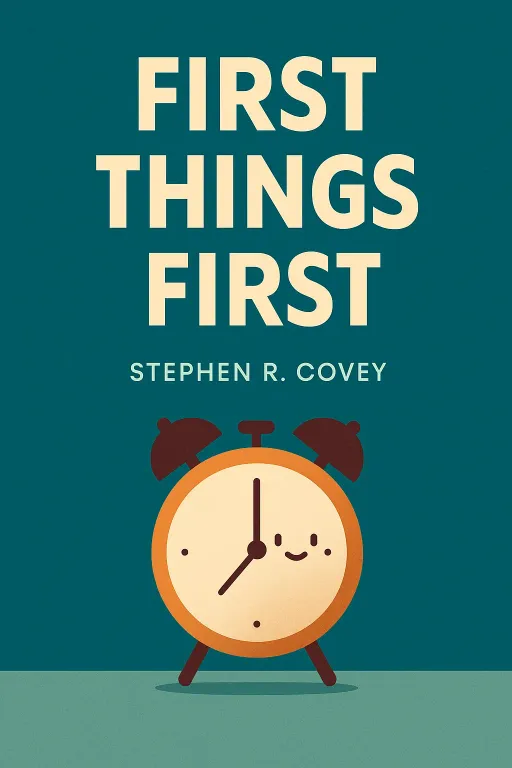
Nova: Exactly! It’s a common trap, this illusion of productivity. And today, we’re diving into how to escape it, drawing wisdom from two titans of productivity and personal effectiveness: Stephen R. Covey, author of "First Things First," and David Allen, the mind behind "Making It All Work."
Atlas: Two absolute legends. Covey, with his timeless insights into what truly matters, and Allen, who gave us the practical toolkit to actually something about it. I’m curious, for someone like our audience, who are driven, focused achievers, what’s the single most impactful idea we can pull from these two that they might not already know?
Nova: Well, it’s not about finding a new trick, Atlas, but rather a profound shift in how we approach our most valuable resource: our time and attention. Covey, in "First Things First," really hammers home this idea that we constantly prioritize the 'urgent' over the 'important.' Think of it like this: a ringing phone is urgent, but building a meaningful relationship with your child is important. Which one gets your immediate attention?
Atlas: Most people would probably grab the phone, right? It demands an immediate response. It’s like the squeaky wheel getting the grease. But then you look back at your day and realize you spent it putting out fires instead of building anything substantial. That resonates with the pragmatic learner who values efficiency; they want their time to count for something significant.
The Seductive Trap of Urgency
SECTION
Nova: Precisely. Covey's core argument is that we live in a culture that rewards urgency. Urgent tasks scream for our attention, they come with deadlines, they often involve other people, and they give us a quick hit of dopamine when we check them off. But these aren’t always the tasks that move us forward, that align with our long-term vision, or that prevent future crises.
Atlas: So, what does that look like in the life of, say, a researcher or an innovator, someone who needs deep, uninterrupted work time? I imagine they’re constantly battling urgent administrative requests, immediate data analyses, or meeting invites, all while their 'important but not urgent' groundbreaking research sits on the back burner.
Nova: It’s a perfect example. The urgent email about a minor budget query feels like it be answered now. The important task—let’s say, designing a novel experimental protocol or synthesizing complex literature for a new theory—doesn't have an external deadline today, or perhaps even this week. It’s amorphous, it requires deep cognitive effort, and it’s easy to defer. Covey calls this the "Quadrant 2" activity: important, but not urgent. This is where true growth, planning, prevention, and opportunity lie.
Atlas: Right. And for someone who’s driven by impact, constantly doing urgent-but-not-important tasks can feel incredibly unfulfilling. You're busy, but you're not making the kind of progress that truly matters to you. It’s like being stuck in a busy signal loop.
Nova: Exactly! And Covey’s insight here is simple but profound: if you don’t your important tasks, the urgent ones will always consume your day. You have to actively decide what’s important and then carve out time for it, fiercely protecting that time from the tyranny of the urgent. Otherwise, you’re just reacting, not creating.
Atlas: That makes sense. But wait, how do you even what’s truly important when everything feels urgent? For a focused achiever, the lines can blur pretty easily. Everything on their plate usually feels like it has high stakes.
Nova: That’s where David Allen’s wisdom from "Making It All Work" becomes incredibly powerful. While Covey gives us the philosophical framework for prioritizing, Allen provides the practical mechanics. Allen emphasizes that professional sanity, and indeed personal sanity, hinges on two axes: control and perspective.
The Dual Pillars of Control and Perspective
SECTION
Nova: Allen argues that you need both control and perspective to truly thrive. Control means managing the details, having a reliable system for capturing and organizing all your commitments, tasks, and ideas. Perspective, on the other hand, is about the big picture: your purpose, your values, your long-term goals.
Atlas: Okay, so control is about knowing what you need to do, and perspective is about knowing you’re doing it. Is that a fair summary? For someone who seeks value, understanding the 'why' is just as critical as the 'what'.
Nova: Absolutely. Think of it like a captain navigating a ship. Control is knowing where all the crew are, what condition the engine is in, how much fuel you have, the status of every single system on board. If you lack control, the ship is chaotic, things break down, you’re constantly putting out fires. But if you only have control without perspective, you’re just meticulously maintaining a ship that might be sailing in circles, or worse, straight into an iceberg.
Atlas: That’s a great analogy. So, the captain also needs perspective: knowing the destination, understanding the weather patterns, seeing the larger map. And if you only have perspective, a grand vision, but no control over the details?
Nova: Then you're just a dreamer. You have a beautiful vision, but no way to execute it. The ship never leaves port, or it quickly falls apart at sea because no one is minding the engine. Allen’s genius is in showing how these two seemingly disparate elements are deeply intertwined. Managing the details, getting them out of your head and into a trusted system, actually mental space to gain perspective. It clears the mental clutter so you can actually about your long-term goals and your deeper purpose.
Atlas: That’s a revelation for someone who feels overwhelmed. The idea that tackling the small, annoying details can actually help you see the bigger picture more clearly. I think many people, especially those striving for strategic learning, often feel like they have to choose between getting bogged down in minutiae and staying high-level.
Nova: Precisely. Allen's capture method, for instance, is all about getting out of your head. Every stray thought, every small task, every commitment, no matter how trivial, goes into a trusted external system. This isn't just about making a to-do list; it's about offloading the mental burden of remembering and organizing, so your brain can do what it does best: create, analyze, and strategize.
Bridging Vision and Execution with the Weekly Compass
SECTION
Nova: And this brings us beautifully to our actionable takeaway, the 'Weekly Compass' exercise, which marries Covey’s focus on the important with Allen’s practical approach to control and perspective.
Atlas: Okay, I’m ready. For someone trying to cut through the noise and reclaim their hours, this sounds like exactly what they need. How does it work?
Nova: Before your Monday starts, you identify one 'important but not urgent' task for your research or your deep work. This isn't an email, it's not a meeting prep, it's that Quadrant 2 activity we talked about. And then, you block 90 minutes specifically for it. Not 60, not 120 – 90 minutes. It's long enough to get into flow, but short enough to feel achievable.
Atlas: One 'important but not urgent' task, 90 minutes, blocked out before Monday even begins. That sounds incredibly focused. But what about the mental clutter you mentioned? The small tasks that pop into your head and derail you?
Nova: That’s where Allen’s capture method comes in. Before you even that 90-minute session, you use his capture technique. You take 5-10 minutes to clear your mind of small tasks, fleeting thoughts, commitments, anything that's taking up mental bandwidth. Write them down, put them in your system, get them out of your head. This isn't about them, it's about them so your mind is free to focus on that one important task for the next 90 minutes.
Atlas: So, it's a two-part process: first, the mental declutter, then the deep work. I love that. It’s not just about scheduling time, but also about preparing your mental state for truly focused work. That’s a huge difference. For a focused achiever, that clarity before diving into a complex research task would be invaluable.
Nova: It makes all the difference. Imagine consistently dedicating 90 minutes each week to something truly important, something that moves your needle forward, instead of letting it get swallowed by urgent demands. Over time, that accumulates into significant progress, innovation, and genuine impact. It’s about being proactive, not reactive.
Synthesis & Takeaways
SECTION
Nova: So, in essence, Covey teaches us to discern the profound difference between what screams for our attention and what truly deserves it. And Allen provides the practical scaffolding, the systems of control, that free our minds to actually with that important work, giving us the perspective to see its true value.
Atlas: It’s a powerful synergy. The vision without the execution is just a dream, and execution without vision is just busywork. This 'Weekly Compass' exercise feels like a tangible bridge between the two, especially for someone who values strategic learning and wants to maximize their knowledge gain. It carves out dedicated space for that deep, impactful learning.
Nova: Absolutely. It’s not about working harder, but working smarter, with intention. It’s about choosing your compass direction and then actually steering the ship, rather than just endlessly bailing water. The profound insight here is that true productivity isn't about doing more, but about doing what truly matters, consistently.
Atlas: That gives me chills, honestly. It’s such a hopeful way to look at how we can reclaim our time and our purpose, moving from a state of constant reaction to one of deliberate creation.
Nova: This is Aibrary. Congratulations on your growth!









