

The Compass Over the Clock
Golden Hook & Introduction
SECTION
Nova: Atlas, I've been thinking about this title, 'The Compass Over the Clock.' It immediately brings to mind a rather provocative idea: working harder may actually make you poorer.
Atlas: Poorer? Nova, that sounds like heresy in our productivity-obsessed culture. I thought the harder you work, the richer you get, in every sense.
Nova: Exactly! And that's the tension we're diving into today. It's not about working hard, but about we're working hard on. It’s about ensuring our effort is directed by purpose, not just by the relentless tick of the clock.
Atlas: Okay, you've got my attention. Because, honestly, I feel like I'm constantly running, but sometimes I look up and wonder if I'm running in the right direction.
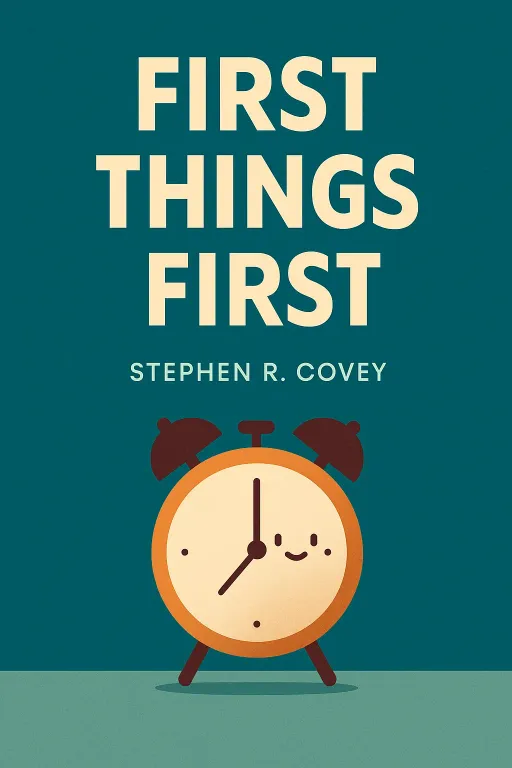
Nova: That feeling is precisely what we’re addressing. We're unpacking insights from two giants in the productivity and self-management space. First, the foundational work of Stephen R. Covey in 'First Things First,' a book that's been a touchstone for generations, emphasizing foresight and purpose. And then, Peter Bregman's more recent, highly practical guide, '18 Minutes,' which offers a tactical ritual to anchor us in that purpose.
Atlas: Covey's 'First Things First' is legendary. It’s fascinating how it’s still so relevant, pushing us to look beyond urgent tasks that scream for our attention. And Bregman, I recall, is known for his no-nonsense approach to making big ideas actionable for busy people.
Nova: Absolutely. And the core of their combined wisdom, and our discussion today, is about shifting our focus from mere busyness to genuine effectiveness, from the clock to the compass.
Atlas: So, how do we even begin to navigate this? Because for many of us, the "urgent" always seems to win.
The Importance of Quadrant II: The "Important, Not Urgent" Frontier
SECTION
Nova: That’s the million-dollar question, isn't it? Covey famously introduced a framework that helps us categorize our activities. He breaks them down into four quadrants based on urgency and importance. We've got Quadrant I: Urgent and Important – crises, deadlines, pressing problems. That's where most people spend their time, feeling like heroes putting out fires.
Atlas: The adrenaline rush, right? You feel like you’re accomplishing something vital because it’s.
Nova: Precisely. Then there’s Quadrant III: Urgent but Not Important. These are often distractions disguised as demands – some meetings, interruptions, other people's priorities that don't align with ours. They urgent because they demand immediate attention, but they don't actually move us toward our most important goals.
Atlas: Ah, the classic "reply-all" email chains that suck up an hour of your day but contribute nothing to your actual work. I know those well.
Nova: And then there’s Quadrant IV: Not Urgent and Not Important. These are the time-wasters, the excessive social media scrolling, mindless entertainment. The easy traps to fall into when we’re overwhelmed.
Atlas: Okay, so we have the fires, the distractions, and the time-wasters. Where does the magic happen?
Nova: The magic, and the true secret to preventing burnout and achieving lasting success, lies in Quadrant II: Important, but Not Urgent. This is where strategic thinking, relationship building, planning, prevention, and personal growth happen. These are the activities that, if done consistently, make Quadrant I crises less frequent, and Quadrant III distractions less tempting.
Atlas: But here’s the paradox, right? These Quadrant II activities are the most important for our long-term success, our impact, our personal growth – everything our user profile craves – yet they are the likely to be prioritized. Why is that?
Nova: It's a brilliant observation, Atlas, and it gets to the heart of the matter. Quadrant II tasks don't have external deadlines attached to them. They don't scream for our attention. There's no immediate crisis if you don't exercise today, or call that important client you haven't spoken to in months, or spend time strategizing your next career move. The consequences are often delayed, making them feel less pressing than the immediate demands of Quadrant I or III.
Atlas: So, we're essentially sacrificing our future selves on the altar of our present-day urgency. It’s like eating junk food because it’s readily available and tastes good, even though we know healthy food is better for us long-term.
Nova: That’s a fantastic analogy. Covey uses a similar one with the rocks, pebbles, and sand. Imagine a large jar. If you fill it first with sand and small pebbles, you won't have room for the big rocks. But if you place the big rocks – your Quadrant II priorities – in first, you can then fill in the gaps with pebbles and sand. The big rocks represent those vital, non-urgent activities that truly define our direction and impact.
Atlas: And most of us are filling our jars with sand and pebbles, leaving no space for the rocks that would actually make our lives meaningful and successful in the long run. It's a powerful image. But knowing this is one thing; implementing it is another. How do we carve out space for these "rocks" when the "sand" is constantly pouring in?
Nova: That's where Peter Bregman's work comes in, offering a practical, almost surgical, approach to ensuring those rocks don't get buried. He suggests a deliberate, tactical pause.
The 18-Minute Ritual: Reclaiming Your Compass
SECTION
Atlas: Ah, the "18 Minutes." It sounds so specific, almost like a magic number. What exactly happens in those 18 minutes, and how can it possibly combat the tidal wave of urgent tasks?
Nova: Bregman's premise is that we often dive into our day, or even our tasks, without a clear sense of direction, reacting to whatever pops up. He argues that a short, intentional pause can recalibrate your entire day, ensuring your actions align with your bigger goals. It’s about being proactive for just a few minutes to avoid hours of wasted, reactive effort.
Atlas: So it’s not about adding to our plate, but about making sure the time we spend is on the right things?
Nova: Exactly! It’s about focus. The ritual typically involves three parts, spread throughout the day, but the core idea is to pause before you dive into a significant block of work or at the start of your day. First, you identify your top priority – not just for the day, but for that specific block of time. What is the most important thing you need to achieve?
Atlas: Okay, so before I open my email, or before I tackle that big report, I should ask myself, "What's the most important thing I need to get done right now?"
Nova: Precisely. And then, you ask yourself, "What’s the amount of effort I can put into this task to make it successful?" This isn't about doing a bad job; it's about identifying the core requirement. For example, if your goal is to write a proposal, the least amount of effort might be to outline the key sections, rather than writing the entire thing on the spot. It’s about defining success for that specific task and then doing just enough to achieve it.
Atlas: That feels counter-intuitive to the "go all out" mentality, but I can see the efficiency play. It stops us from over-investing energy in tasks that don't warrant it, freeing up that energy for the truly important Quadrant II stuff.
Nova: Absolutely. And the third part of the ritual is to consider: "What can I do that will make it easier to do this task?" This might involve clearing your desk, silencing notifications, gathering necessary documents, or even just taking a deep breath to get into the right headspace. It’s about removing friction.
Atlas: So, it’s: 1. Identify the single most important thing. 2. Define the minimum successful effort. 3. Remove obstacles. That’s the 18 minutes? It sounds more like... 3 minutes, three times a day?
Nova: Bregman suggests a few ways to implement it, but the essence is that deliberate pause. It's a mental reset button. He argues that by consciously asking these questions, you're not just reacting; you're your energy. You're using your compass to steer your ship, rather than letting the waves push you wherever they please.
Atlas: I can see how this ritual, practiced consistently, would prevent you from getting lost in the weeds of urgent but unimportant tasks. It forces you to check in with your own priorities. For someone like our Pragmatic Learner, who values efficiency and impact, this is gold. It’s not about working, it’s about working and with more purpose.
Nova: Exactly. And it’s a skill that can be honed. Bregman’s book is filled with examples of how leaders and individuals use this pause to make better decisions, avoid burnout, and ensure their daily actions genuinely contribute to their annual goals. It’s the tactical execution of Covey's strategic vision.
Atlas: It’s like you’re building in small, recurring checkpoints. Instead of just driving hundreds of miles and hoping you’re heading the right way, you’re stopping every few miles to check the map.
Nova: That’s a perfect analogy, Atlas. And this leads us to the overarching principle that ties it all together: the idea of the compass over the clock.
Compass Over Clock: Defining True Success
SECTION
Nova: So, we have the – prioritizing Quadrant II activities, the important but not urgent. And we have the – the 18-minute ritual as a practical tool to ensure our actions align with those priorities. But what does this all mean for how we define success, especially for someone driven by impact and wanting their time to truly count?
Atlas: This is where it really resonates with that "Focused Achiever" persona. We don't just want to things; we want to do the things, the things that make a difference.
Nova: Right. The "clock" represents the relentless march of time, the deadlines, the constant demands that pull us into reactive mode. It’s about managing time, ticking off tasks, and often feeling busy. The "compass," however, represents our values, our long-term vision, our most important goals – our Quadrant II priorities. It’s about direction.
Atlas: And the book’s central question, "If you could only accomplish one thing today to feel truly successful in your career, what would it be, and why isn't it your top priority?" really hits home. It forces us to confront the gap between what we is important and what we actually.
Nova: It’s a powerful question because it bypasses the noise. If you could only do thing, what would it be? For most people, that one thing would likely be a Quadrant II activity. It would be the strategic planning session, the deep work on a crucial project, the conversation to strengthen a key relationship, or the preventative health activity.
Atlas: But why isn't it our top priority? Because, as we discussed, it lacks that external urgency. It’s easy to defer. It's easy to tell ourselves, "I'll get to it tomorrow," or "I'm too busy with this emergency right now." The immediate fires and the persistent distractions always seem to hijack our attention first.
Nova: And this is where the "Compass Over Clock" philosophy challenges conventional notions of productivity. True success isn't just about maximizing the minutes; it's about ensuring those minutes are spent moving you closer to your most meaningful destinations. It’s about the quality of your direction, not just the speed of your movement.
Atlas: So, for the Pragmatic Learner, the takeaway isn't just another time-management hack. It's a fundamental shift in how we perceive productivity and success. It’s about intentionality. It’s about asking, "Am I moving towards my goals, or just moving?"
Nova: Exactly. It’s about recognizing that the most impactful work often happens when we're not under pressure, but when we've created the space and the discipline to focus on what truly matters. It requires a conscious choice to prioritize the "important" over the "urgent," even when it feels uncomfortable or difficult. It’s about designing your life and career around your compass, rather than being swept along by the currents of the clock.
Atlas: And the beauty is that these aren't abstract philosophical ideals. Covey gave us the framework, and Bregman gave us a concrete method to implement it. It’s actionable wisdom. For anyone feeling overwhelmed, like they're constantly busy but not making meaningful progress, this is a powerful reorientation.
Nova: It’s about reclaiming agency over your time and, more importantly, over your life's direction. It’s about ensuring that by the end of the day, or the week, or the year, you can look back and say, "I spent my time on what truly counts."
Synthesis & Takeaways
SECTION
Nova: So, to wrap up, we've journeyed through the vital importance of Quadrant II – the "important, not urgent" activities that build our future success and prevent burnout. We've explored Peter Bregman's tactical "18-minute ritual" as a powerful tool to ensure our daily actions are aligned with these critical priorities. And we've synthesized these ideas into the core philosophy of prioritizing our "compass" – our long-term vision and values – over the relentless ticking of the "clock."
Atlas: It really boils down to this: the greatest risk in life isn't necessarily failure, but succeeding at things that don't actually matter. The compass guides us towards what matter, ensuring our efforts are directed towards our most meaningful goals, not just the loudest demands of the day. For our listener, the Pragmatic Learner who craves impact and efficiency, this is about cutting through the noise and making every hour count towards something truly significant.
Nova: The challenge now is to translate this understanding into action. So, as a concrete takeaway, we encourage you to identify just Quadrant II activity you can consciously schedule into your week. It might be a 30-minute planning session, a call with a mentor, or even just 15 minutes of focused reading on a skill you want to develop.
Atlas: And notice how that single act of intentionality, of choosing your compass, can subtly shift your entire perspective. It’s not about perfection, but about progress. It’s about making that small, deliberate choice to steer your ship.
Nova: We’d love to hear about your wins, big or small, as you start to implement this. What Quadrant II activity did you schedule? How did it feel to prioritize your compass? Share your experiences with us.
Atlas: Because ultimately, this is about empowering ourselves to make our time count, to achieve true success not by being busy, but by being purposeful.
Nova: This is Aibrary. Congratulations on your growth!









