

Feeling the Echoes of the Past: How Nostalgia Shapes Your Present Voice.
Golden Hook & Introduction
SECTION
Nova: Atlas, five words. Describe the feeling of nostalgia. Go.
Atlas: Warm, fuzzy, slightly sad, familiar, haunting.
Nova: Ooh, "haunting" is a good one! Mine would be: echo, comfort, challenge, wisdom, voice.
Atlas: "Voice"! That's an interesting one to include in nostalgia. How does that fit?
Nova: Well, that's exactly what we're diving into today. We're exploring how the echoes of our past, these complex feelings we call nostalgia, aren't just memories, but powerful forces actively shaping the authentic voice we use to navigate and express ourselves in the present.
Atlas: So, we're talking about more than just remembering the good old days?
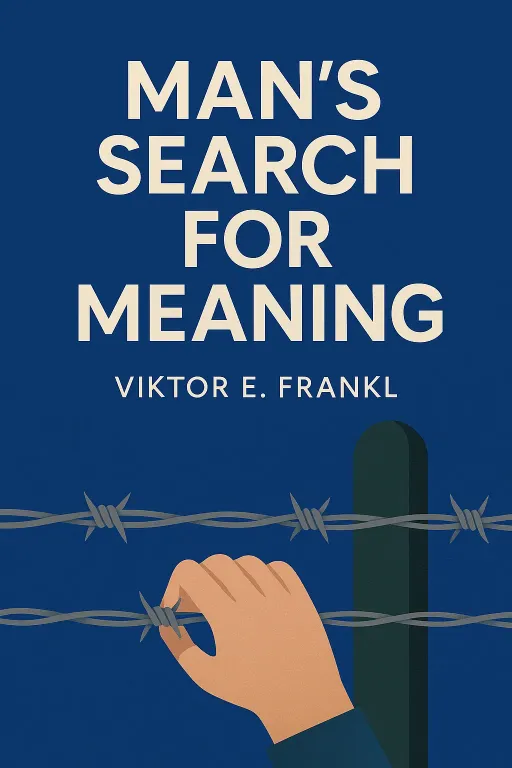
Nova: Much more. To really dig into this, we're going to lean on the profound insights of two incredible thinkers. First, Viktor Frankl, the author of the seminal "Man's Search for Meaning," whose harrowing survival of the Holocaust became the crucible for his theories on finding purpose even in extreme suffering.
Atlas: That's a powerful foundation for understanding human resilience.
Nova: Absolutely. And we'll also bring in Robert Neimeyer, a leading expert in grief research and therapy, known for his deep work on how individuals construct meaning from loss and difficult life events. These are not light topics, but they offer immense wisdom for anyone seeking deeper self-expression.
Atlas: Okay, so we're talking about heavy hitters here, but applied to something as personal as our voice. I imagine for many, "nostalgia" is just a simple, pleasant escape. A comforting memory.
Nova: That's the common perception, isn't it? Like a mental weighted blanket, as you said. But that's where we need to challenge ourselves.
The Dual Nature of Nostalgia – Beyond Simple Longing
SECTION
Nova: Nostalgia is far more complex than just a simple longing for what was. It's a multifaceted emotion that, yes, brings comfort, but can also carry a subtle anxiety or a pang of loss for what's gone, for the people, places, or versions of ourselves that are no longer present. It’s a powerful force actively shaping our current identity.
Atlas: Wait, anxiety? That sounds a bit out there. I thought nostalgia was pure comfort food for the soul! You're saying it has a dark, or at least a bittersweet, side?
Nova: Think about it. Recall a cherished memory, perhaps a perfect childhood summer day. You can feel the warmth, hear the laughter, taste the ice cream. It brings immense joy, right? But doesn't it also carry a quiet melancholy? A sense of something beautiful that's irrevocably passed, a time you can never fully recapture? That’s the duality.
Atlas: Oh, I know that feeling. It's like a happy sigh with a little hidden tear. Like watching old home videos and smiling, but then remembering someone in the video who's no longer with you. That makes sense.
Nova: Exactly. That bittersweet quality is what makes nostalgia so potent. It anchors us to our past, reminding us of where we've been and who we've become. And this complex interplay of comfort and loss profoundly shapes our current identity.
Atlas: So, if our voice is supposed to be authentic, does embracing this bittersweet side make it more genuine, rather than just focusing on the good bits? I imagine a lot of our listeners, especially those trying to master a new language or speak with confidence, want their voice to sound strong and positive.
Nova: Absolutely. Authenticity doesn't come from presenting a curated, perfect version of your past. It comes from acknowledging the full spectrum of your experiences. A voice that only speaks of sunshine lacks the resonance and depth of one that has known both light and shadow. When you embrace the complexities, your voice gains a richness, an empathy, a texture that is uniquely yours. It’s not about dwelling on the negative, but about integrating everything.
Atlas: That’s a great way to put it. It’s not hiding parts of yourself, but bringing them in.
Forging Your Voice: Transforming Past Echoes into Present Strength
SECTION
Nova: And that naturally leads us to the second key idea we need to talk about, which is how we can actively this understanding of nostalgia. How we transform these past echoes into present strength for our voice. This is where Frankl's concept of 'tragic optimism' becomes incredibly illuminating.
Atlas: Tragic optimism? That sounds like an oxymoron! How do you find optimism in suffering, especially when you're trying to build a confident, expressive voice right now? It sounds like a philosophical puzzle.
Nova: It’s a profound insight that emerged from the darkest of human experiences. Frankl, having survived concentration camps, observed that even when we are stripped of everything, our last freedom is to choose our attitude toward our circumstances. Tragic optimism isn't about denying the tragedy; it's about finding meaning and purpose it. It's the belief that human potential, even in the face of suffering, allows for achievement and discovery.
Atlas: That’s actually really inspiring. So, it's not about being blindly optimistic, but finding a reason to keep moving forward, to keep expressing, even when things are incredibly difficult.
Nova: Precisely. And that inner strength, that unwavering sense of purpose forged in adversity, inevitably reflects in one's voice. Think of someone who has overcome a major challenge. Their voice often carries a gravitas, an authority, an empathy that someone who hasn't faced such trials might lack. It’s an authentic power.
Atlas: And how does Robert Neimeyer's work on narrative fit into this? If Frankl gives us the 'why'—the purpose in suffering—does Neimeyer offer the 'how' through how we tell our story? Is it about rewriting history, or just how we construct our narrative to ourselves and others?
Nova: That’s a sharp distinction! It is very much about constructing meaning, not fabricating facts. Neimeyer emphasizes that we are all meaning-makers; we build narratives around our life events, especially the difficult ones. The story we tell ourselves our past directly influences our present self-expression. It’s not about changing what happened, but changing the we derive from it.
Atlas: Can you give an example? Like, how does that work in practice?
Nova: Imagine someone who had a significant public speaking failure early in their career. They could tell themselves, "I'm terrible at this; I should never try again." That narrative would silence their voice. Or, they could reframe it: "That experience taught me the importance of preparation and humility; it made me a more empathetic listener." This new narrative transforms the past failure into a source of wisdom, allowing them to speak with greater authority and connection now.
Atlas: I can see that. For our listeners who are exploring language and self-expression, and perhaps working on storytelling techniques, this isn't just about crafting a good plot; it's about owning narrative, even the parts that might feel uncomfortable or like past failures.
Nova: Exactly. It’s embracing those "bittersweet parts" that makes your communication deeper, more resonant, and uniquely yours. Your past, in its entirety, becomes the foundation of your authentic voice, allowing for deeper, more resonant communication. It gives your message an undeniable authenticity that simply can’t be faked.
Atlas: That’s a powerful idea. Our voice isn't just about the words we say, but the entire history that informs them.
Synthesis & Takeaways
SECTION
Nova: So, what we've really explored today is that nostalgia, in its full, complex glory, and the active process of meaning-making from our past, are not just passive memories. They are crucial, dynamic elements for forging a truly authentic and powerful voice in the present. It's about letting your history be your strength, not your shadow.
Atlas: That’s such a hopeful way to look at it. For someone who's passionately pursuing language, trying to speak aloud daily, and wants to express themselves vividly, what's they can do to harness these echoes for their present voice? How do they begin this process?
Nova: Here’s a simple, powerful practice: recall a cherished memory. Don't just think about it, truly the emotions from that moment. The joy, the comfort, maybe even the subtle wistfulness. Then, consciously let those feelings inform a current creative expression. It could be a story you tell, a conversation you have, a piece of writing. It’s about trusting that unique internal wellspring, letting those deep feelings guide your present voice. It’s about trusting that your voice, because of your past, is unique and powerful.
Atlas: That makes sense. It's about bringing that emotional truth into the present, making your voice truly yours. What a powerful way to think about our past.
Nova: Absolutely. Let your history be your strength, not your shadow.
Atlas: This is Aibrary. Congratulations on your growth!