

The Curiosity Compass: Navigating Your Path with Purpose
Golden Hook & Introduction
SECTION
Nova: Everyone talks about working harder, optimizing, achieving more. We’re constantly bombarded with advice on the 'what' and the 'how.' But what if all that relentless 'doing' is actually a distraction from the one thing that truly fuels lasting success and profound satisfaction?
Atlas: That's a bold claim, Nova. Most of us are taught from a young age that success comes from diligent action, from the visible output. Are you suggesting there’s a hidden lever we’re missing? Because for anyone striving to make a meaningful impact, that's a compelling thought.
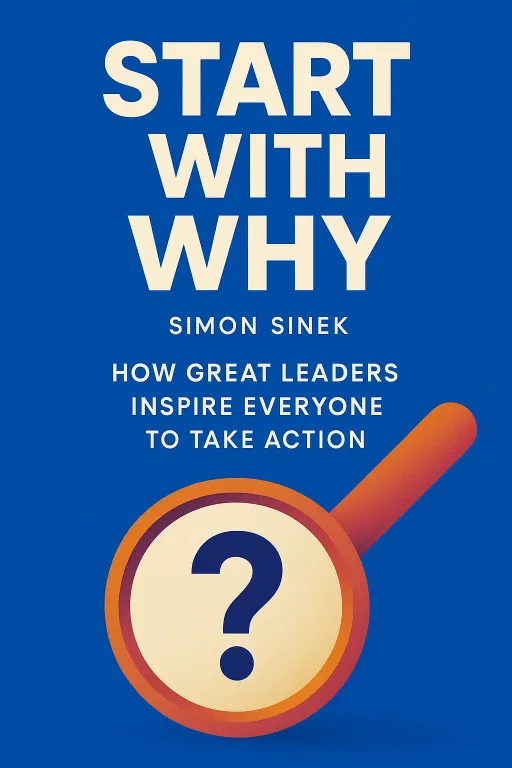
Nova: Absolutely, Atlas. Today, we're diving into the revolutionary ideas of Simon Sinek, particularly from his seminal work, "Start With Why," and its practical companion, "Find Your Why." Sinek, a former advertising executive, completely upended traditional business thinking by observing patterns in truly inspiring leaders and organizations. He found they all communicated and operated from a place of deep conviction, a core belief.
Atlas: So, it’s not just about what you produce or how you produce it, but the fundamental reason it all? What exactly does that 'why' mean in Sinek's framework?
Nova: Precisely. We're going to explore the profound power of understanding your 'why' and how it fundamentally shifts our approach to impact and fulfillment. Then, we’ll discuss the tactical, step-by-step process for actually finding and articulating that purpose, turning what might seem like an abstract idea into actionable insights.
The Power of 'Why': Beyond What You Do
SECTION
Nova: Sinek introduced this brilliant concept he calls the Golden Circle. It's three concentric rings: 'What' on the outside, 'How' in the middle, and 'Why' at the very core. Most companies and people communicate from the outside-in: 'Here's what I do, here's how I do it, want to buy it?' But Sinek argues that truly inspiring leaders and organizations communicate from the inside-out. They start with their 'why.'
Atlas: That's fascinating. So, they begin with their purpose or belief, then move to how they fulfill that purpose, and finally, what they actually produce. Can you give us an example where this 'why' made all the difference? Because for our listeners who are constantly strategizing their next move, understanding this distinction is key.
Nova: Think about Apple, that's Sinek's classic example. If Apple communicated like everyone else, they'd say: 'We make great computers. They're beautifully designed, simple to use, and user-friendly. Want to buy one?'
Atlas: Which is true, their products beautifully designed and user-friendly. That’s a pretty decent pitch.
Nova: It is, but it doesn't inspire. It doesn't create loyalty. Apple, however, starts with their 'why': 'Everything we do, we believe in challenging the status quo. We believe in thinking differently.' Then come the 'hows': 'The way we challenge the status quo is by making our products beautifully designed, simple to use, and user-friendly.' And only then, the 'what': 'We just happen to make great computers.'
Atlas: Whoa. That's a completely different emotional connection. It's not about the product anymore, it's about what you believe. It makes you feel like you're part of something bigger when you buy an Apple product. You’re not just buying a laptop; you're buying into a philosophy.
Nova: Exactly! People don't buy you do; they buy you do it. This isn't just clever marketing spin. A clear 'why' provides a profound filter for every decision. Does this new product align with our 'why' of challenging the status quo? Does this new hire believe what we believe? It builds resilience, too. When times get tough, you don't abandon your 'why.' You innovate it.
Atlas: Okay, but how does a 'why' actually concrete business decisions or personal direction, especially for someone in a high-stakes leadership role where quarterly results often dictate the 'what'? It sounds almost… idealistic when the pressures are so real. How does this apply to someone seeking to make a meaningful impact, not just sell products?
Nova: It's anything but idealistic. A strong 'why' acts as your North Star. For leaders, it means every strategic decision, every project, every hiring choice, can be measured against that core belief. If a decision doesn't serve your 'why,' it’s probably the wrong decision. It's about authenticity, not just messaging. It inspires teams because they're not just executing tasks; they're contributing to a shared belief. It’s what differentiates a transactional relationship from a truly transformative one.
Atlas: I see that. It's about finding that coherence, that internal consistency. For leaders who are often pressured by short-term 'whats' and 'hows,' this kind of clarity could be a powerful tool to resist external noise and maintain focus on long-term vision. It's about leading with conviction, not just competence.
Finding Your 'Why': From Concept to Action
SECTION
Nova: And that naturally leads us to the second key idea: if understanding your 'why' is so crucial, how do you actually find it? Sinek and his co-authors, David Mead and Peter Docker, realized that the abstract concept needed a practical roadmap, so they wrote "Find Your Why." It's a step-by-step process.
Atlas: So, how does someone actually this? Is it like writing a mission statement that you stick on the wall and forget, or is there a deeper, more investigative approach? For our analytical listeners who want to apply this strategically, what's the 'tiny step' they can take?
Nova: It’s definitely not a mission statement you forget. The genius of their process is that it's a discovery, not an invention. You don't sit down and try to a 'why.' You look backward. You identify patterns in your life, moments of profound satisfaction, instances where you felt most alive, most impactful, most aligned with your deepest values.
Atlas: That makes sense. It’s about unearthing something that's already there, rather than fabricating it. So, what kind of questions would someone ask themselves during this discovery process? Like, for an empathetic leader trying to align their team, how would they even begin to articulate a shared 'why'?
Nova: Exactly. You'd reflect on questions like: "When have you felt you made the greatest impact on someone else's life?" "What moments, personally or professionally, brought you a deep sense of fulfillment or pride?" "What core belief were you acting on in those moments?" You're looking for recurring themes, the underlying current that connects these peak experiences. It's about identifying the contribution you make and the impact it has.
Atlas: So, it's almost like psychological archaeology, digging through your own experiences to find the foundational beliefs. And once you have these patterns, how do you distill them into an actual 'why' statement?
Nova: The 'why' statement is a concise articulation, typically in the form: "To so that." For example, a teacher's 'why' might be: "To empower young minds so that they can confidently shape their own futures." Nova's Take on this is that these books provide a powerful framework for aligning your actions with your deepest motivations. It’s about creating a more impactful and fulfilling path, which is exactly what our listeners, the reflective strategists and empathetic leaders, are seeking.
Atlas: That's incredibly powerful because it moves beyond just identifying values to articulating the and the of those values. It gives you a clear purpose to rally around, both personally and within a team. I can see how that could genuinely transform organizational culture, moving from simply chasing targets to pursuing a collective belief. It’s building a path with purpose, not just building a path.
Nova: Precisely. It’s the difference between building a house because someone told you to, and building a home because you believe in creating a sanctuary for those you love. The effort might be the same, but the inspiration and fulfillment are worlds apart.
Synthesis & Takeaways
SECTION
Nova: So, what we've really explored today is how understanding and articulating your deepest purpose – your 'why' – can fundamentally transform your influence, your satisfaction, and the very trajectory of your path. It’s not just a feel-good concept; it’s a strategic imperative.
Atlas: For our listeners who are exploring possibilities, building their future, and striving for leadership that makes a meaningful impact, this isn't just about finding a job or a project. It’s about ensuring every step aligns with their core beliefs. It’s about intentionality at its highest level.
Nova: It truly is. These books offer a powerful framework for aligning your actions with your deepest motivations, creating a more impactful and fulfilling path. It offers a kind of clarity that cuts through the noise of daily demands.
Atlas: That's a beautiful way to put it. It’s about having a compass when you’re navigating complex terrain. So, for everyone listening, here’s a tiny step you can take today: take five minutes to reflect. What is the core belief or purpose that truly drives your work and aspirations?
Nova: And consider how understanding that 'why' could shift not just what you do, but you approach your next destination, your next leadership challenge, or even your next conversation. That clarity can be a game-changer.
Atlas: Absolutely. It’s about trusting your inner wisdom and embracing the lessons along the way.
Nova: This is Aibrary. Congratulations on your growth!









