

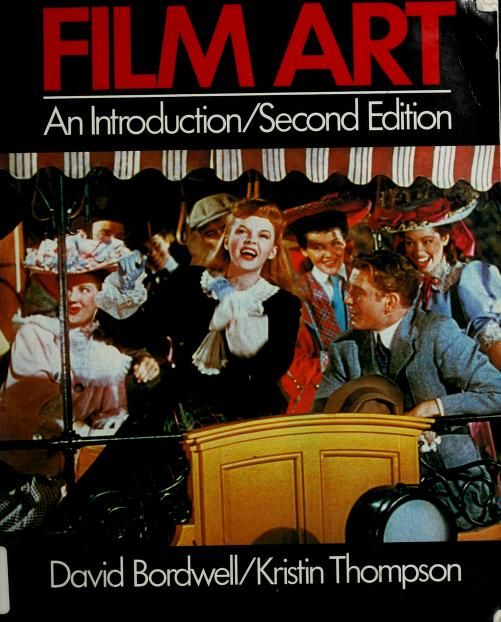
The Architecture of Attention: Decoding Cinema with David Bordwell’s Film Art
Golden Hook & Introduction
SECTION
Nova: Think about the last time a movie made your heart race, or brought a tear to your eye, or had you leaning forward in your seat, completely holding your breath. To our conscious minds, it feels like pure magic. But to our brains, it is actually a highly optimized system running a brilliant piece of emotional software. Today, we are looking at movies through a developer's lens! Welcome to the show, everyone. I am Nova, and joining me today is Charan, a brilliant tech student and analytical thinker who loves to look under the hood of complex systems. Charan, it is so wonderful to have you here with us!
Charan: Thanks, Nova! It is great to be here. You know, when you first suggested we look at David Bordwell's classic book,, I was a bit skeptical. I thought, I am a tech guy, what do I know about cinema aesthetics? But as I dug into Bordwell's work, I realized something fascinating. A movie isn't just a random collection of pretty pictures. It is a highly structured, beautifully engineered system. It has inputs, outputs, architecture, and even a user interface!
Nova: Oh, I absolutely love that perspective! And that is exactly what we are going to tackle today. We are going to dive into Bordwell's insights from two key angles. First, we will explore film form as a structured system of expectations and motifs, looking at how movies build their own internal logic. And then, we will look at editing and cinematography as the invisible user interface that directs our attention and emotions without us even realizing it. It is going to be a wild ride, so let's get right into it!
Deep Dive into Core Topic 1
SECTION
Nova: Let's start with this big, foundational idea that Bordwell talks about right at the beginning of the book: film form. Now, when most people hear the word "form," they might think of something dry or academic, like a template or a mold. But Bordwell defines film form as a dynamic system. He says a film is a structured system of relations among all its parts. We have narrative elements, which is the story itself, and then we have stylistic elements, like camera movements, lighting, color, and sound. And all of these elements work together to create a unified experience.
Charan: That makes total sense to me from a systems engineering standpoint. In tech, we talk about a system as a set of interacting components designed to achieve a specific objective. In a movie, the objective is to guide the viewer's cognitive and emotional state. The filmmaker is essentially writing code, and the different elements—the lighting, the dialogue, the music—are the variables and functions. When they interact correctly, the program runs smoothly, and the audience feels exactly what the filmmaker intended.
Nova: Yes! That is such a cool way to put it. And Bordwell gives us a perfect example of this system in action with a movie almost everyone knows:. Think about how that film is structured. It starts in Kansas, and Kansas is depicted in this flat, dusty, sepia-toned black-and-white. The music is melancholic, the framing is very grounded, and the narrative is all about Dorothy's desire to escape her dreary reality. This sets up a very specific "system state," right?
Charan: Exactly. It establishes a baseline. In systems design, you need a clear baseline so that when a state change occurs, the user immediately registers the difference. And boy, does have a massive state change!
Nova: Oh, it is legendary! When Dorothy's house lands in Oz, she walks up to the door, opens it, and the camera steps through into this explosion of vibrant, saturated Technicolor. The music swells into these bright, whimsical, orchestral tones. The visual and auditory inputs change completely. It is a massive shift in the film's formal system.
Charan: And what is brilliant about that, from an analytical perspective, is how it uses what Bordwell calls "motifs." A motif is any significant, repeated element in a film—it could be a color, a sound, a prop, or even a camera angle. In, think about the yellow brick road or Dorothy's ruby slippers. Those aren't just random props; they are visual anchors. They are like persistent UI elements that guide the user through a new and unfamiliar environment. Every time we see the yellow brick road, we know exactly what the objective is: follow it to get to the next level of the system, which is the Emerald City.
Nova: That is a fantastic analogy, Charan! The yellow brick road as a persistent navigation path! And Bordwell points out that these motifs work because they play with our expectations. Our brains are naturally wired to look for patterns. When a movie establishes a pattern, it creates an expectation. If the movie fulfills that expectation, we feel satisfied. If it delays it, we feel suspense. And if it subverts it, we feel surprised. It is all about managing the viewer's cognitive feedback loop.
Charan: Right, it is a feedback loop. If a system is too predictable, the user gets bored and tunes out. If it is completely chaotic with no patterns, the user gets frustrated and confused. The sweet spot—what makes a movie a masterpiece of form—is that perfect balance of predictability and surprise. It is like a well-designed video game level. It gives you enough familiar mechanics to make you feel competent, but introduces just enough new challenges to keep you engaged.
Nova: Exactly! And Bordwell emphasizes that this formal system is what allows us to make sense of a movie. We aren't just passive observers; we are active participants, constantly generating hypotheses about what will happen next based on the cues the film's system is giving us. It is a beautiful, collaborative dance between the filmmaker's design and the viewer's mind.
Deep Dive into Core Topic 2
SECTION
Nova: Now, let's pivot to how this system actually communicates with us on a second-by-second basis. This brings us to what I like to call the "invisible user interface" of cinema: editing and cinematography. In the book, Bordwell spends a lot of time on editing, which is simply the coordination of one shot with the next. And he makes a point that is absolutely mind-blowing when you really sit with it: editing has the power to completely construct a reality that doesn't actually exist.
Charan: Yes! This is where the technology of film gets incredibly cool. He talks about the Kuleshov Effect, right? That is a classic psychological phenomenon that every tech designer and filmmaker should study.
Nova: Oh, the Kuleshov Effect is the ultimate proof of how our brains process editing! For our listeners who might not know the story, back in the 1910s and 20s, Soviet filmmaker Lev Kuleshov did this famous experiment. He took a shot of an actor, Ivan Mozzhukhin, who had a completely neutral, expressionless face. He then cut that exact same shot of the face together with three different images: first, a bowl of hot soup; second, a dead child in a coffin; and third, a beautiful woman lying on a sofa.
Charan: And the results were wild, weren't they?
Nova: They were incredible! When the audience saw the face cut with the soup, they raved about how wonderfully the actor portrayed hunger. When they saw it cut with the coffin, they were deeply moved by his profound grief. And when they saw it with the woman, they praised his subtle expression of desire. But it was the exact same footage of his face every single time! The actor didn't change his expression at all. The meaning was created entirely in the space the cuts.
Charan: That is mind-blowing, Nova. From a cognitive science perspective, what is happening there is that our brains are natural pattern-matching engines. When we are presented with two sequential inputs, our brain automatically assumes a causal relationship between them. We interpolate the data. We create a bridge of meaning to connect Input A to Input B. In UX design, we call this "mental models." If you click a button and a folder opens, your brain instantly connects those two events, even though they are just lines of code executing independently. Editing exploits this exact same cognitive shortcut.
Nova: It really does! It is like the filmmaker is programming our thoughts. And to keep us from getting confused by all these cuts—because, let's face it, a typical modern movie has thousands of individual cuts—filmmakers developed a system called "continuity editing." Bordwell explains this beautifully. The whole goal of continuity editing is to allow space, time, and action to flow smoothly across a series of shots. It is designed to be completely invisible.
Charan: It is the ultimate frictionless user experience! If the UI is designed perfectly, you don't even notice it is there. You just achieve your goal. In film, if the editing is seamless, you don't notice the cuts; you just experience the story. And one of the key rules Bordwell talks about to maintain this frictionlessness is the 180-degree rule. I found this absolutely fascinating from a spatial geometry perspective.
Nova: Oh, the 180-degree rule is a classic! Can you explain how you saw that through your analytical lens?
Charan: Sure! Imagine a scene with two people talking. The filmmaker draws an imaginary line between them—that is the axis of action. The rule says the camera must stay on one side of that line. If you have Camera A looking at Person 1, and Camera B looking at Person 2, as long as both cameras stay on the same side of the 180-degree line, Person 1 will always be on the left side of the screen, and Person 2 will always be on the right.
Nova: Right! It keeps our spatial orientation consistent.
Charan: Exactly. If the camera suddenly crosses that line—which is called "crossing the axis"—their positions on screen instantly flip. Suddenly, the person who was on the left is on the right, and vice versa. To our brains, this is a massive spatial error. It is like a website where the "Next" button suddenly jumps from the bottom right to the top left of the screen. It causes a cognitive crash. Your brain has to pause for a fraction of a second to reorient itself, which breaks your immersion in the story. Continuity editing prevents that cognitive crash.
Nova: That is such a brilliant way to explain it, Charan! A "cognitive crash." I love that! And there are other techniques too, like "match-on-action," where a cut happens right in the middle of a physical movement—like someone opening a door. Because our eyes are following the continuous motion of the hand on the doorknob, our brain completely ignores the cut itself. The movement acts as a visual bridge that hides the seam.
Charan: It is like a transition animation in an app. When you tap an icon and it smoothly expands to fill the screen, that animation masks the loading time and keeps your visual focus locked. It is all about managing cognitive load. Filmmakers are master cognitive engineers, using these visual tricks to keep our brains fully immersed in the narrative simulation.
Synthesis & Takeaways
SECTION
Nova: This has been such an eye-opening conversation, Charan. We have looked at film form as a beautifully structured system of expectations and motifs, and we have explored editing and cinematography as the invisible, frictionless user interface that guides our attention and prevents those cognitive crashes. It really makes you realize that cinema is as much a science of human psychology and systems design as it is an art form.
Charan: Absolutely, Nova. Reading Bordwell's through this analytical lens has completely changed how I look at movies. It made me realize that whether you are writing code, designing an app, or directing a feature film, the core challenge is the same: how do you structure information and guide human attention to create a meaningful, seamless experience?
Nova: Oh, that is a beautiful synthesis. It really is all about the architecture of attention. And for our listeners out there, we want to leave you with a little challenge for your next movie night—something we like to call the "Deconstruction Challenge."
Charan: Yes! Next time you sit down to watch a movie, try to actively "reverse-engineer" it for just ten minutes. Pick a scene, and instead of just getting lost in the story, try to spot the invisible UI. Count the cuts. Notice where the characters are positioned relative to the 180-degree line. Look for repeated visual motifs—a specific color, a recurring camera angle, or a sound cue—and ask yourself: "What is this element trying to program my brain to feel right now?"
Nova: I love that challenge! It is like looking at the source code of your favorite film. You will be amazed at how much more you appreciate the incredible engineering that goes into every single frame. Charan, thank you so much for bringing your unique, analytical perspective to the show today. This was incredibly fun!
Charan: Thanks for having me, Nova! It was a blast. I am definitely going to be watching my next movie with a developer's eye.
Nova: And thank you to all our wonderful listeners out there. Keep exploring, keep connecting those dots across different domains, and we will see you next time! Bye for now!
Charan: Bye, everyone!