

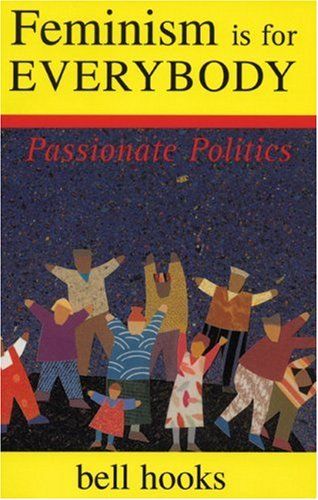
Feminism Is for Everybody
Passionate Politics
Introduction: Why Feminism Needs a Preamble
Introduction: Why Feminism Needs a Preamble
Nova: Welcome to the show. Today, we are diving into a book that is deceptively simple, yet profoundly revolutionary: bell hooks’ 2000 classic, "Feminism Is for Everybody: Passionate Politics." If you’ve ever felt like feminism was too academic, too exclusive, or just too confusing, this book was written specifically for you.
Nova: : That title alone is a statement, Nova. "Feminism Is for Everybody." It sounds like a bumper sticker, but hooks—born Gloria Jean Watkins—was anything but superficial. What was her main goal in writing this short, accessible primer?
Nova: Exactly. Her goal was to strip away the jargon and the gatekeeping. She wanted to present a clear, foundational definition of feminism so that anyone, regardless of their background, could see themselves as part of the movement. She said, "Come closer and you will see: feminism is for everybody." It’s an invitation, not a lecture. It’s about making the politics of liberation accessible to the masses.
Nova: : An invitation is a great way to put it. Because for a lot of people, the word 'feminism' itself has become a barrier. They hear it and immediately think of stereotypes or extreme positions. How does hooks immediately try to dismantle that preconceived notion right at the start?
Nova: She does it with a laser-focused definition. She cuts through decades of theory and boils it down to its essence. She states, and this is crucial, that feminism is simply a movement to end sexism, sexist exploitation, and sexist oppression. That’s it. No prerequisites, no required reading list, just a commitment to ending systemic inequality based on sex.
Nova: : Ending sexism. That sounds straightforward, but the implications are massive. If it’s that simple, why did we need a whole book to explain it? What was the context in the year 2000 that made this clarification necessary?
Nova: The context was that feminism, particularly in mainstream media, had become associated with a very narrow demographic—often perceived as white, middle-class, educated women focused only on career parity or specific issues. Hooks recognized that if feminism wasn't actively fighting for the liberation of people—including men who are harmed by patriarchy—it wasn't truly feminism. It was just a new form of elitism. This book was her rallying cry to broaden the tent.
Nova: : So, it’s less about defining what feminism in a complex theoretical sense, and more about defining who it? It’s a political positioning statement.
Nova: Precisely. It’s a political positioning statement that demands action. She frames it as 'Passionate Politics.' It’s not enough to agree with the definition; you have to live it. That commitment to action is what we’ll explore next, because hooks doesn't just define the goal; she outlines the necessary tools to get there.
Nova: : I’m ready to get passionate. Let’s move past the definition and look at the structure she proposes for this movement.
Key Insight 1: Dismantling the Oppressor/Oppressed Binary
The Core Tenet: Feminism is Not Anti-Male
Nova: Chapter one in the book is titled 'Feminist Politics,' and it immediately tackles the biggest misconception: that feminism is inherently anti-male. Hooks is crystal clear: feminism is not about hating men; it’s about dismantling the system of patriarchy that harms everyone.
Nova: : That’s a huge point of contention even today. When you say patriarchy harms men, what specific examples does hooks point to? Because the immediate listener reaction is often, 'Wait, men hold the power, how are they oppressed?'
Nova: That’s the genius of her framing. She argues that patriarchy creates rigid gender roles that restrict men just as much as they restrict women. Think about the expectation of stoicism—the idea that men must never show vulnerability, never cry, never express fear. Hooks points out that this emotional castration is a direct product of patriarchal demands placed on masculinity. It prevents men from forming deep, authentic connections.
Nova: : So, the system that grants men systemic power also forces them into a very narrow, often emotionally stunted box. It’s a gilded cage, in a way.
Nova: A perfect analogy. She emphasizes that when we fight sexism, we are fighting the that dictates these roles. If a man benefits from sexism—say, by having automatic authority in a workplace—he is benefiting from an oppressive structure. But he is also a victim of that structure if it demands he suppress his humanity to maintain that authority. The goal is liberation for all.
Nova: : That shifts the conversation dramatically. It moves it from a zero-sum gender war to a collective dismantling of a harmful ideology. But how does she address the historical reality that women have faced physical violence and economic subjugation that men, as a group, have not?
Nova: She doesn't ignore it; she centers it. She makes it clear that while patriarchy harms men, it women. The primary focus of feminist politics must remain on ending the systemic oppression of women. However, she insists that the for ending that oppression must be inclusive. If we only focus on women's liberation while ignoring how patriarchy warps men’s lives, we fail to create a truly equitable society. We just swap one set of rigid roles for another.
Nova: : It sounds like she’s arguing that true liberation requires a complete overhaul of how we define gender itself, not just a redistribution of power within the existing framework.
Nova: Exactly. She says, and I’m paraphrasing her sentiment here, that we cannot achieve equality by simply demanding men give up power; we must change the very structure where power is defined by domination. She often links this to the concept of love. She argues that a system built on domination cannot foster genuine love or connection, which is why ending patriarchy is essential for everyone's emotional well-being.
Nova: : Love as a political tool? That feels very bell hooks. It’s a soft word, but in this context, it sounds incredibly radical.
Nova: It is radical! She sees love—agape, unconditional love—as the necessary foundation for feminist politics. If we approach the struggle without love, we risk replicating the same domination we are fighting against. We risk becoming the oppressors in a new dynamic. It requires a conscious choice to see the humanity in everyone, even those who benefit from the status quo.
Nova: : So, if the definition is clear and the enemy is the system, not the gender, what’s the next practical step she outlines for the average person who wants to join this movement?
Nova: That brings us to the next crucial element: consciousness-raising. It’s the mechanism by which we move from theory to lived reality. It’s about shared learning and accountability, which is where the real work of intersectionality begins.
Key Insight 2: Making Feminism Truly Universal
The Unfinished Sisterhood: Race, Class, and Intersectionality
Nova: The concept of 'Feminism Is for Everybody' immediately runs into the historical problem of who 'everybody' has actually meant in practice. Hooks dedicates significant space to critiquing second-wave feminism for its failure to integrate race and class.
Nova: : This is where I think many people get lost. They hear 'feminism' and picture the suffragettes or maybe the 1970s movement, which often sidelined Black women and working-class women. How does hooks frame intersectionality, even if she doesn't always use the term Crenshaw coined?
Nova: She lived it, so for her, it wasn't a theory; it was daily life. She makes it clear that there can be no true sisterhood between white women and women of color if the white women are still operating under the assumptions of white supremacy. She points out that the concerns of a wealthy white woman—say, getting a seat on a corporate board—are fundamentally different from the concerns of a poor Black woman who is struggling to afford childcare or facing police brutality.
Nova: : That’s a stark contrast. If the movement prioritizes the needs of the most privileged within the oppressed group, it inherently fails the rest. Does she offer a specific example of this failure?
Nova: Absolutely. She discusses how early feminist literature often failed to acknowledge that for many women of color, the fight against sexism was inseparable from the fight against racism and classism. If you are fighting for the right to work outside the home, that’s great, but if you are a Black woman who had to work outside the home just to survive, your experience of 'liberation' is completely different. Hooks forces the reader to confront that privilege within the movement itself.
Nova: : So, the call to action here is for those who hold privilege within the feminist space—whether it’s class privilege, racial privilege, or even sexual orientation privilege—to actively listen and center the voices of those on the margins.
Nova: Precisely. It’s about radical empathy and a commitment to collective liberation. She argues that the liberation of the most marginalized among us is the true measure of the movement’s success. If the system is still oppressing poor women of color, then feminism has not yet succeeded for of us. It’s a powerful accountability mechanism.
Nova: : And what about men? We talked about how patriarchy harms them, but how does class affect their relationship to feminism? Does a working-class man have a different relationship to the movement than a wealthy CEO?
Nova: Unquestionably. Hooks notes that a wealthy man benefits immensely from the existing class and gender structure. He has economic power patriarchal privilege. A working-class man might be economically oppressed, but he still benefits from patriarchal norms that grant him social dominance over women in his community. Feminism must speak to both the economic plight of the working man the necessity for him to reject patriarchal dominance over women. It’s a complex balancing act that requires constant self-examination.
Nova: : It sounds exhausting, Nova. Constantly examining your own privilege and the blind spots of the movement. How does hooks suggest we sustain that level of critical engagement without burning out or becoming paralyzed by guilt?
Nova: That’s where the 'Passionate Politics' comes in. It has to be fueled by something sustainable, something deeper than anger. It has to be fueled by hope, by a vision of a better world, and by the practice of love and solidarity. It moves us from critique to construction, which leads us perfectly into the practical application of feminist thought.
Key Insight 3: The Necessity of Consciousness-Raising and Action
From Theory to Life: Passionate Politics and Praxis
Nova: We’ve established the definition—ending sexism for everyone—and the scope—including race and class. Now, let’s talk about the engine that drives this: 'Passionate Politics' and 'Consciousness-Raising.' These aren't just buzzwords; they are the methodology.
Nova: : Consciousness-raising groups were huge in the second wave. What does hooks say about them, and why does she insist they are still vital in the 21st century?
Nova: She sees them as the essential training ground. Consciousness-raising is the process where individuals share their personal experiences of sexism and oppression, realizing that their private troubles are actually public, systemic issues. It’s the moment the personal becomes political. Hooks stresses that without this shared, honest dialogue, feminist theory remains abstract and disconnected from reality.
Nova: : I can see how that works for women sharing stories of workplace harassment, for example. But how does that apply to the broader goal of ending oppression, like, say, ending violence, which is a major theme in the book?
Nova: Hooks dedicates a whole chapter to ending violence, arguing that patriarchy is fundamentally a system maintained through violence and the threat of violence. Consciousness-raising allows survivors to break the silence that protects abusers. When a group collectively acknowledges that domestic violence, sexual assault, or emotional abuse is not a private failing but a societal epidemic rooted in patriarchal entitlement, the collective power to demand change—legal, social, and personal—is immense.
Nova: : That’s a powerful link. It takes the shame away from the individual and places the responsibility squarely on the culture that enables it. But let’s talk about 'Passionate Politics.' It sounds warm, but what does it demand practically? Does it mean we have to be constantly energized and optimistic?
Nova: Not optimistic, but engaged. Passionate Politics means bringing your whole self—your anger, your love, your intellect, your vulnerability—to the political struggle. It’s the antidote to cynicism. Hooks argues that when we engage politically out of duty or anger alone, we burn out. But when we engage because we are passionately committed to a vision of a world based on justice and love, the work becomes sustainable.
Nova: : So, it’s about finding the joy and the deep personal fulfillment in the fight itself, not just waiting for the final victory?
Nova: Exactly. It’s about the process. She encourages readers to see feminism not as a burden, but as a path to a fuller, more authentic life. Think about the quote she shared: 'Feminist thinking teaches us all, especially, how to love justice and freedom in ways that foster and affirm life.' That affirmation is the passion.
Nova: : That’s a beautiful way to frame political engagement. It reframes activism from a chore to a life-affirming practice. It sounds like the book is less a manifesto of demands and more a guide to living a feminist life, day by day.
Nova: That’s the ultimate takeaway. It’s a guide to praxis—the integration of theory and action. It’s about making small, conscious choices every day that chip away at sexism, whether it’s challenging a sexist joke, supporting a marginalized colleague, or simply being honest about your own vulnerabilities. It’s about building the world we want to live in, one conscious choice at a time.
Conclusion
The Enduring Call to Action
Nova: We’ve covered a lot of ground today, moving from the simple, radical definition of feminism as an end to sexism, through the necessary inclusion of race and class, right up to the call for passionate, love-centered political action.
Nova: : It really highlights why this book remains a staple, even decades later. It’s the perfect entry point because it refuses to let us hide behind complexity. If you are against sexism, you are a feminist. Period. That’s the core message.
Nova: And the most enduring lesson, I think, is the insistence on liberation. Hooks made it clear that no one is truly free until everyone is free. The liberation of the most oppressed among us is the benchmark for our success. If we are still fighting battles based on race or class within our own movement, we haven't won yet.
Nova: : So, for our listeners who might feel overwhelmed by the current state of social discourse, what is the single most actionable takeaway from "Feminism Is for Everybody"?
Nova: The actionable takeaway is to adopt the mindset of 'Passionate Politics.' Don't let cynicism win. Engage with curiosity, listen with humility, and commit to the daily practice of challenging sexism wherever you see it, especially when it benefits you. Start small with consciousness-raising in your own circles.
Nova: : And remember that feminism isn't about taking power from one group to give to another; it’s about dismantling the very concept of domination so that everyone can live more fully and authentically. It’s about creating space for genuine connection and love.
Nova: Exactly. bell hooks gave us the blueprint for a feminism that is expansive, rigorous, and deeply hopeful. It’s a framework that invites everyone to the table, not just to talk, but to build a better world together.
Nova: : A world where justice and freedom foster and affirm life. That’s a powerful vision to carry forward.
Nova: Indeed. This has been a deep dive into the accessible radicalism of bell hooks. This is Aibrary. Congratulations on your growth!