

The Distorted Thought Trap: How to Reshape Your Internal Narrative
Golden Hook & Introduction
SECTION
Nova: What if the biggest liar in your life isn't a person, or a news headline, but the voice inside your own head?
Atlas: Oh, I know that feeling. That internal monologue can be brutal.
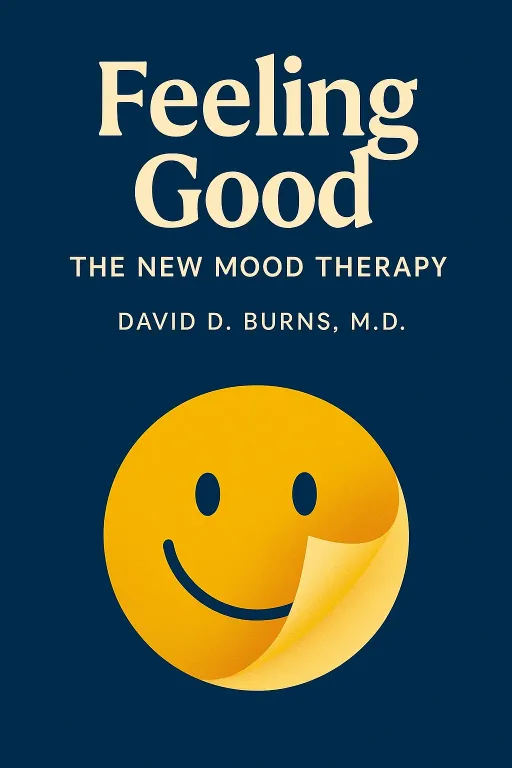
Nova: Exactly. And that's precisely what we're dissecting today, pulling from the groundbreaking work of Dr. David D. Burns in his classic, "Feeling Good: The New Mood Therapy," and also touching on Carol Dweck's insights from "Mindset."
Atlas: Oh, I’ve heard of "Feeling Good." It’s revered in the self-help space, isn't it?
Nova: Absolutely. Burns' work was revolutionary in showing how simply changing your thoughts can be as effective, sometimes even more effective, than medication for depression. It wasn't just a book; it was a movement in making cognitive behavioral therapy accessible to millions, a truly pioneering idea.
Atlas: That’s a bold claim, and it immediately makes me wonder about the nature of those thoughts. Like, are they really powerful?
Unmasking the Mind's Deceptions: Identifying Cognitive Distortions
SECTION
Nova: They are incredibly powerful, Atlas, because your thoughts aren't always facts. When you feel overwhelmed or anxious, it's often because your mind is playing tricks, magnifying problems or catastrophizing outcomes. Burns calls these 'cognitive distortions.'
Atlas: So you’re saying my internal critic isn't just being harsh; it's actually being? That's kind of a relief, but also, how do I spot the lies? They feel so convincing.
Nova: Precisely. He identified ten common ones that trip us up. Think of 'all-or-nothing thinking.' A student gets a B on an exam and immediately thinks, "I'm a total failure. My academic career is over." Not "I got a B, I can learn from this."
Atlas: Right, like one small error means the whole project is ruined.
Nova: Exactly. Or 'overgeneralization.' One bad date means "I'll always be alone." Or 'catastrophizing,' where you imagine the absolute worst-case scenario for every minor inconvenience.
Atlas: Oh, I’ve definitely been there. The 'one bad thing means everything is bad' trap. For our listeners who are managing high-pressure teams, this concept might feel impossible to implement, because sometimes the stakes all-or-nothing. How do they differentiate between a genuine high-stakes situation and a distorted thought?
Nova: That's a crucial distinction, Atlas. It's about proportionality. A true all-or-nothing situation, like "do I jump off this cliff or not?", is rare. Most of life operates in shades of gray. The distortion is when we a gray situation as black or white. Burns illustrates this beautifully with a patient named Sally.
Atlas: Tell me about Sally.
Nova: Sally was a dedicated professional who made a small, rectifiable mistake at work—a minor data entry error. Instead of seeing it as a simple oversight, her mind immediately jumped to: "I'm incompetent, I'll be fired, and I'll end up homeless." Her internal narrative catastrophized a minor event into a life-ending disaster. This triggered immense anxiety and panic attacks. The key insight was that her fear wasn't a fact; it was a distorted thought, a mental trick her brain was playing on her. The actual consequence of the error was a quick correction and a lesson learned, not destitution.
Atlas: Wow. That sounds rough, but I can definitely relate to that spiral. It’s like the brain has a built-in drama filter, always turning up the intensity on minor issues. So recognizing these patterns is the first step, but what then? How do you turn off that drama filter?
Reshaping Your Narrative: From Victim to Architect of Thought
SECTION
Nova: Exactly. Recognizing these patterns empowers you to challenge them directly. This is where we shift from a victim mentality—where we're at the mercy of our thoughts—to one of active problem-solving. This connects beautifully with Carol Dweck's work on 'mindset.'
Atlas: Okay, so how does Dweck fit into this? I know 'mindset' is a big buzzword, but what's the core idea here in relation to these distorted thoughts?
Nova: Dweck distinguishes between a fixed mindset and a growth mindset. A fixed mindset believes our abilities and intelligence are static – "I'm just not good at math." A growth mindset views abilities as something that can be developed through effort and learning – "I'm not good at math, but I can improve." Distorted thoughts often thrive in a fixed mindset, reinforcing perceived limitations and making us believe we're stuck.
Atlas: That makes sense. If you think you're inherently a 'failure,' then every small setback confirms that belief, right? It's like a self-fulfilling prophecy of negativity. But how does one actively a thought? It feels so ingrained, so.
Nova: It certainly feels real, which is why it's so insidious. But challenging it isn't about denial or pretending everything is fine. It's about conducting a mental investigation, a rigorous cross-examination of that thought. Burns provides specific techniques for this.
Atlas: Like what? Give me some of those practical tools.
Nova: One technique is called "The Triple-Column Technique." You write down the upsetting event, then the automatic negative thought, and then, in the third column, you write a rational response. For example, if your thought is "I'm a failure," you'd ask, "What's the evidence this thought? What's the evidence it? Is there another, more realistic way to look at this situation?"
Atlas: So it's not just dismissing it, it's actually gathering data and building a case against your own brain. I like that. It's very strategic.
Nova: Precisely. He talks about a patient, Mark, who was convinced he was unlikeable after a quiet party. His 'mind reading' distortion told him everyone thought he was boring. Challenging it meant asking, "Did anyone explicitly say I was boring? Did I try to engage? What's another explanation for people being quiet? Maybe were shy, or tired, or preoccupied." He realized his anxiety was projecting his own insecurity onto others, not reflecting their actual thoughts. The evidence for his thought was non-existent.
Atlas: That’s a practical tool right there. It’s like being a detective in your own head, and it’s especially powerful for our listeners who are self-mastery seekers. This isn't just about feeling better; it's about optimizing their internal operating system. So, what's a tiny step someone can take today to start this internal detective work?
Synthesis & Takeaways
SECTION
Nova: A perfect question, Atlas. For the next 24 hours, notice one thought that makes you feel bad. Just one. It could be about your performance, your relationships, anything. And then, once you've identified it, ask yourself: "Is this thought 100% true, or am I distorting something?" Don't judge it, just observe and question.
Atlas: That's incredibly actionable. It’s not about immediately fixing everything, but just building awareness. And that awareness, I imagine, is where the real power lies, breaking the cycle of those automatic, distorted reactions.
Nova: Absolutely. This isn't about eliminating negative thoughts entirely—that's unrealistic and often counterproductive. It's about recognizing their distorted nature and choosing not to be governed by them. It's about reclaiming your mental sovereignty, understanding that your interpretation of reality is often more impactful than reality itself. This powerful shift, from passively accepting mental noise to actively questioning it, is the true path to reshaping your internal narrative and achieving genuine peace.
Atlas: That gives me chills. It’s such a hopeful way to look at it, realizing you have more control than you think over your own inner world. What a powerful step towards true self-mastery for anyone listening.
Nova: Indeed. And we encourage all of you, our resilient explorers and practical strategists, to share your own insights and experiences with challenging distorted thoughts. Let's build a community around this journey of self-discovery and growth.
Atlas: This is Aibrary. Congratulations on your growth!









