

The 'Meaning' Trap: Why Purpose Isn't Found, But Built.
Golden Hook & Introduction
SECTION
Nova: We're often told to 'find our purpose,' to 'discover our passion.' We spend years, sometimes decades, on this quest, treating meaning like a hidden treasure waiting to be unearthed. But what if that very search is actually a trap?
Atlas: Oh, I like that. A trap. Because honestly, Nova, it like a trap sometimes. This relentless pressure to 'find your calling' can be utterly paralyzing. You hear people say, "I just haven't my thing yet," as if it's lost under the couch cushions.
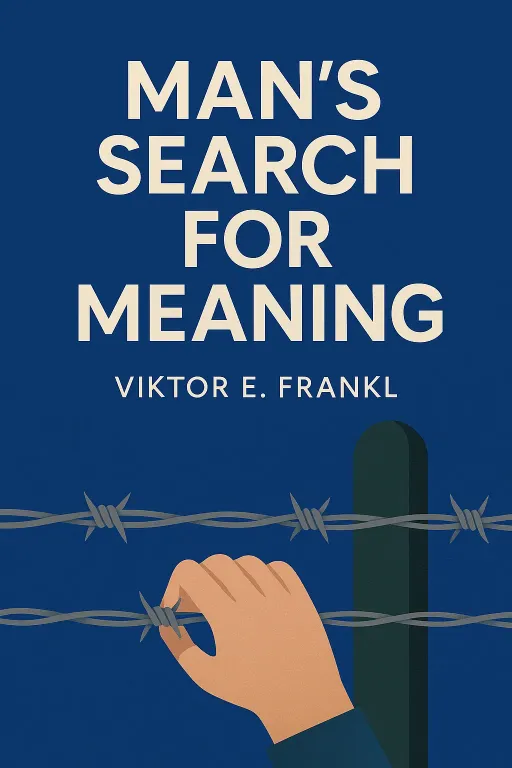
Nova: Exactly! It's a fundamental misunderstanding of what meaning truly is, and it keeps us stuck. Today, we're taking a deep dive into a powerful idea that challenges how most of us think about purpose. We’ll trace its origins through two philosophical titans to understand why meaning isn't a treasure hunt, but a meticulously built structure. And the first titan we need to talk about is Viktor Frankl, and his seminal work, "Man's Search for Meaning."
Atlas: Frankl… that name carries such weight. I know his book is legendary, but the context of its creation is just… it’s almost unimaginable.
Nova: It truly is. Frankl was an Austrian neurologist and psychiatrist, but his most profound insights came not from a lecture hall, but from the unspeakable horrors he endured as a prisoner in four different Nazi concentration camps, including Auschwitz, during the Holocaust. He lost his entire family – his wife, his parents, his brother – in those camps.
Atlas: Wow. That’s… that’s a deep well of suffering to draw from. It gives his ideas an almost unshakeable authority.
Nova: Absolutely. And that crucible of extreme suffering is precisely where his revolutionary concept of logotherapy was forged.
Frankl & Meaning in Suffering
SECTION
Nova: Frankl observed that even in the most dehumanizing, brutal conditions imaginable, where every shred of dignity was stripped away, some prisoners found a way not just to survive, but to maintain a sense of purpose and inner freedom. He argues that while we cannot control our external circumstances, we always, have the freedom to choose our attitude and our response to those circumstances.
Atlas: Wait, hold on. Choose your attitude in a concentration camp? That sounds… almost impossible. Like, a heroic, superhuman feat. How does that manifest in real life, in that kind of hell?
Nova: It wasn't about grand gestures, Atlas. It was often in the smallest, most profound acts. He tells stories of prisoners who, despite starvation and torture, would share their last crust of bread with another, finding meaning in that act of compassion. Or those who would find solace and purpose in simply observing a sunset, or remembering a loved one, or even in the internal commitment to finishing a manuscript they’d started before the war.
Atlas: So it’s like, even if your body is imprisoned, your spirit, your mind, your of how to respond, can remain free? That’s what he means by internal freedom?
Nova: Precisely. He saw that those who had a 'why' to live—a future task, a loved one to reunite with, a personal meaning to fulfill—were often the ones who survived. They didn't meaning in the camps; they to invest meaning into their suffering, into their acts, into their future. It wasn't about avoiding suffering, but finding a reason it.
Atlas: That’s actually really inspiring. I imagine a lot of our listeners, especially those in high-pressure roles, feel trapped by circumstances, even if they're not concentration camps. This idea of choosing your attitude, your response… it shifts the locus of control.
Nova: It does. It fundamentally shifts the burden from finding a pre-existing meaning out there to embracing the powerful, sometimes daunting, responsibility of creating it through every decision. And that naturally leads us to a philosopher who takes this idea of personal responsibility to an even more radical, and for some, daunting, level: Jean-Paul Sartre.
Sartre & Radical Freedom to Create Meaning
SECTION
Nova: Sartre, a key figure in existentialism, famously declared that "existence precedes essence." Now, that sounds academic, but it's incredibly powerful. It means we are born into the world without any pre-determined purpose, without an inherent 'essence' or destiny. We're just.
Atlas: So, basically, we’re born a blank slate? No divine plan, no cosmic blueprint for our lives? That sounds… terrifyingly free.
Nova: Exactly! It's radical freedom. Because if there's no pre-ordained purpose, then it's solely through our choices and actions that we define who we are and create our own values. We are condemned to be free, as he put it. Every choice we make, every action we take, builds our essence, builds our meaning. There’s no external authority to tell us what our life means. We have to invent it.
Atlas: That’s a stark contrast to the idea of searching for meaning, isn't it? It’s not about finding a puzzle piece that fits; it’s about drawing the entire puzzle yourself. But how does that even begin to manifest? For someone, say, navigating the ethical minefield of AI development, where do you even start 'creating' meaning?
Nova: Well, for Sartre, it’s in the conscious, deliberate choices. If you’re developing AI, you're not just building code; you're making decisions about its impact, its biases, its purpose in society. There isn't an instruction manual for 'ethical AI development' handed down from on high. You, as the developer, through your choices, are creating the meaning of your work, and indeed, helping to define the ethics of the field itself.
Atlas: So you're saying the meaning isn't the AI, it's in the of creating it responsibly and consciously? It’s the choices, the values you infuse into it?
Nova: Precisely. You are the author of your own values. And by extension, the author of your project's meaning. It’s not about waiting for a project to meaningful. It’s about consciously infusing it with meaning through your deliberate actions and ethical choices.
Synthesis & Takeaways
SECTION
Nova: So, when we bring Frankl and Sartre together, we see a powerful, unifying thread. Frankl, observing the absolute worst of humanity, found that meaning is an internal choice, a defiant act of will in the face of external control. Sartre, from a philosophical perspective, asserts that meaning is not given to us, but is actively constructed through our radical freedom and our choices.
Atlas: That’s a powerful synthesis. It really shifts the burden, as you said earlier, from a passive search to an active, conscious creation. It’s about agency, even when it feels like we have none.
Nova: Exactly. The 'Meaning' Trap is believing it's something external, something you stumble upon. The liberation comes from realizing it's an internal act of building, of infusing purpose into your life and your work, moment by moment, choice by choice. It’s about consciously injecting your own created meaning, rather than passively waiting for it to reveal itself.
Atlas: That gives me chills, actually. Because it means we have far more power than we often realize. That said, it’s also a huge responsibility. And that leads to a deep question for all of us: Where in your current projects, or even in your daily life, can you consciously inject your own created meaning, rather than waiting for it to reveal itself?
Nova: A profound question, Atlas. And one worth pondering. This is Aibrary. Congratulations on your growth!