

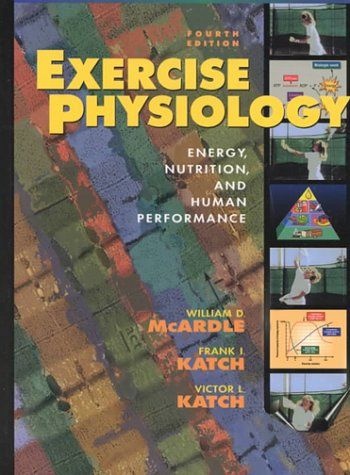
Exercise physiology
energy, nutrition, and human performance
Introduction
Nova: Have you ever wondered why some people can sprint like a lightning bolt for ten seconds but then look like they are about to collapse, while others can jog for hours without breaking a sweat? It is not just about willpower or having the right shoes. It is about the incredible, complex machinery of the human body and how it transforms food into movement.
Nova: That is exactly what we are diving into today. We are looking at the absolute gold standard in the field, the book Exercise Physiology: Nutrition, Energy, and Human Performance by William McArdle, Frank Katch, and Victor Katch. This book has been the bible for exercise scientists for over forty years.
Nova: It is the way it connects the dots. It does not just tell you that your heart beats faster when you run. It explains the molecular biology of energy transfer, the chemistry of the food you eat, and how your body literally rebuilds itself to meet the demands of training. It is the definitive guide to how we function under physical stress.
Key Insight 1
The Energy Currency
Nova: To understand exercise, we have to start with the concept of bioenergetics. McArdle and his co-authors describe the body as a biological engine. But unlike a car that just burns gasoline, we have three distinct energy systems that kick in depending on what we are doing.
Nova: Exactly. The first is the immediate energy system, or the ATP-PCr system. This is for high-intensity, explosive movements like a heavy lift or a hundred-meter dash. It relies on stored adenosine triphosphate, or ATP, which is the actual currency of the cell. But here is the catch: you only have enough stored for about five to ten seconds of work.
Nova: Precisely. Once that is gone, your body shifts to the short-term energy system, which is glycolysis. This is where you start breaking down glucose and glycogen. It is faster than the aerobic system but it produces lactic acid, or more accurately, lactate and hydrogen ions, which create that burning sensation in your muscles.
Nova: Right. The third is the long-term or aerobic system. This is where oxygen comes into play. It is much slower to ramp up, but it is incredibly efficient and can run almost indefinitely as long as you have fuel. McArdle explains that these systems are not like light switches that flip on and off. They all work together in a sort of overlap. Even when you are sitting still, you are using a mix, but the intensity of your movement determines which one takes the lead.
Nova: That comes down to the limits of oxygen transport and the depletion of fuel, which leads us right into the nutrition side of the book. McArdle is very clear that you cannot separate physiology from what you put on your plate.
Key Insight 2
Fueling the Machine
Nova: One of the most famous concepts in the book is the Crossover Concept. It describes how our body chooses between burning fat and burning carbohydrates as we exercise.
Nova: Sort of, but it is more nuanced. At low intensities, like a slow walk, your body primarily burns fat. Fat is a dense energy source, but it takes a lot of oxygen to break down. As you speed up and your intensity increases, your body crosses over to using more carbohydrates, specifically glycogen stored in your muscles and liver.
Nova: Because carbohydrates can be broken down much faster and even without oxygen for short bursts. When you are running hard, your body needs energy right now, and it cannot wait for the slow process of fat oxidation. This is why marathoners talk about hitting the wall. They have literally run out of their limited carbohydrate stores, and their body is forced to slow down and rely almost entirely on fat.
Nova: It emphasizes the importance of carbohydrate loading and mid-race fueling. But it also talks about the Thermal Effect of Food and the specific roles of micronutrients. For example, you need B-vitamins to actually process that energy. Without them, the whole metabolic chain breaks down.
Nova: McArdle points out that while protein is vital for tissue repair, it is actually a very poor fuel source for exercise. Your body only really turns to protein for energy in extreme cases of starvation or ultra-endurance events where everything else is gone. The book really focuses on the balance of macronutrients to support the specific type of training you are doing.
Key Insight 3
The Engine and the Pump
Nova: We have talked about the fuel, but we also have to talk about the delivery system. This is where the cardiovascular and respiratory chapters of the book really shine. McArdle explains that the ultimate limit for most athletes is not their muscles, but their heart's ability to pump blood.
Nova: It feels that way, but for a healthy person, the lungs are actually over-engineered. They are rarely the bottleneck. The real limit is usually your Cardiac Output, which is the amount of blood your heart can pump per minute. This is determined by your heart rate and your stroke volume, which is how much blood is squeezed out with every single beat.
Nova: Exactly. Training actually increases the size of the left ventricle and makes the heart muscle more elastic. This allows it to fill with more blood and pump it out more forcefully. This is why elite athletes have such low resting heart rates. Their pump is so efficient they only need forty beats per minute to do what a normal person's heart does in seventy.
Nova: You nailed it. VO2 max is the maximum volume of oxygen your body can consume and use per minute. It is the gold standard measurement of aerobic fitness. McArdle explains that it is a combination of how well your heart pumps that oxygen-rich blood and how well your muscles can actually pull that oxygen out of the blood to make ATP.
Nova: It is both. There is definitely a genetic ceiling, which McArdle acknowledges, but most people can improve their VO2 max by twenty to thirty percent through proper training. The book goes into detail about how the number of mitochondria, the power plants of the cell, actually increases in your muscles in response to endurance training. You are literally building more factories to handle the demand.
Key Insight 4
Adaptation and Environment
Nova: One of the most fascinating sections of the book deals with how our bodies adapt to extreme environments. Whether it is the thin air of the Himalayas or the sweltering heat of a desert marathon, our physiology is incredibly plastic.
Nova: It is a process called acclimatization. When you are at high altitude, there is less oxygen pressure. Your body senses this and starts producing more erythropoietin, or EPO, which tells your bone marrow to make more red blood cells. More red blood cells mean more oxygen-carrying capacity. When those athletes come back down to sea level, they essentially have a natural, legal form of blood doping.
Nova: Heat is a major stressor because your body has to compete for blood flow. It needs blood to go to the muscles to provide energy, but it also needs to send blood to the skin to dissipate heat through sweating. McArdle explains that in the heat, your stroke volume actually drops because you are losing fluid through sweat, which makes your heart work even harder to maintain the same pace.
Nova: Exactly. And the book outlines the principles of training to help manage these stresses. The three big ones are Overload, Specificity, and Individual Differences. Overload means you have to push the body beyond its normal limits to see change. Specificity means if you want to be a better runner, you have to run; swimming won't help your running economy as much. And Individual Differences is the reminder that two people can do the exact same workout and have totally different results based on their genetics and recovery.
Key Insight 5
The Katch-McArdle Legacy
Nova: We cannot talk about this book without mentioning body composition. The authors are actually famous for the Katch-McArdle formula. If you have ever used a high-end calorie calculator, you have probably used their work.
Nova: Most formulas, like the Mifflin-St Jeor, use your total weight, height, and age. But the Katch-McArdle formula focuses on Lean Body Mass. It argues that muscle is much more metabolically active than fat. So, if you have two people who both weigh two hundred pounds, but one is an athlete and the other is sedentary, the athlete needs significantly more calories just to exist.
Nova: Exactly. The book also dives into the clinical side of things. It was one of the first major textbooks to really push the idea of exercise as medicine. It details how physical activity can manage type 2 diabetes by improving insulin sensitivity and how it can actually reverse some of the markers of heart disease.
Nova: That is the core message. We evolved to move. Our entire physiology, from our enzymes to our heart valves, is designed for a level of activity that most of us just do not get anymore. McArdle, Katch, and Katch provide the scientific proof for why movement is not optional for health.
Conclusion
Nova: We have covered a lot of ground today, from the microscopic exchange of ATP to the way our hearts adapt to the thin air of mountain peaks. The biggest takeaway from Exercise Physiology is that the human body is not a static thing. It is a dynamic, adapting system that responds to every challenge we throw at it.
Nova: That is a great way to put it. If you want to truly understand the science of performance, this book is the place to start. It reminds us that while our genetics might set the floor, our nutrition and our training determine the ceiling.
Nova: It absolutely is. Thank you for joining us on this deep dive into the mechanics of the human machine. This is Aibrary. Congratulations on your growth!