

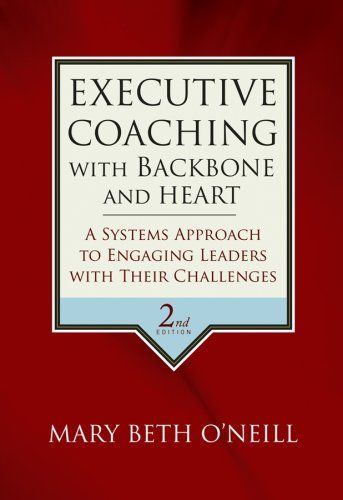
Executive Coaching with Backbone and Heart
A Systems Approach to Engaging Leaders with Their Challenges
The Leadership Paradox: Hard Results vs. Human Connection
The Leadership Paradox: Hard Results vs. Human Connection
Nova: Welcome back to The Growth Catalyst. Today, we are diving deep into a book that promises to solve the most persistent tension in modern leadership: how to be both fiercely effective and deeply human. We’re talking about Mary Beth A. O’Neill’s seminal work, Executive Coaching with Backbone and Heart.
Nova: Exactly. And O'Neill’s core premise, which reviewers consistently highlight, is that you don't have to choose. She brings what one reviewer called "form and structure to the art of executive coaching." It’s about moving beyond just giving advice to creating a sustainable, systemic change in how leaders operate.
Nova: It’s both, Alex. It’s structured like a workbook, designed to be practical, but the philosophy underpinning it is profound. It centers on two non-negotiable components: Backbone and Heart. We’re going to spend the next few chapters unpacking what those two words truly mean in the context of high-stakes leadership and coaching.
Nova: You are spot on. Let’s start by setting the stage for this systemic view, because that’s the foundation upon which Backbone and Heart are built. This isn't just about fixing one leader in a vacuum.
Key Insight 1: Context is Everything
The Systems Approach: Coaching Beyond the Individual
Nova: O'Neill frames this work as a "Systems Approach to Engaging Leaders with Their Challenges." Alex, when we talk about systems in leadership, what does that imply for the coach or the leader themselves?
Nova: Precisely. Research suggests that O'Neill pushes coaches to look beyond the immediate behavioral issue and map the entire ecosystem around the leader. For example, if a CEO is micromanaging, the system might be rewarding them for having all the answers, thus making them feel unsafe letting go.
Nova: Absolutely. O'Neill emphasizes that effective coaching must help the leader see how they are both a product of the system and an active creator of it. It’s a feedback loop. The leader’s actions maintain the system, and the system reinforces the leader’s actions. It’s a powerful, sometimes paralyzing, cycle.
Nova: That’s the danger. O'Neill’s methodology forces the coach to ask bigger questions: What is the organization implicitly asking this leader to do? What is the unspoken contract? This systemic view is what gives the Backbone and Heart concepts their necessary context.
Nova: It is. And that risk-taking is where the Backbone starts to come into play. Because once you see the system, you have a responsibility to address it, even if it means challenging the status quo that the executive is paying you to maintain.
Key Insight 2: Holding the Line with Clarity
The Backbone: Structure, Challenge, and Competence
Nova: It’s about bringing form, structure, and accountability. Think of it as the coach’s unwavering commitment to the leader’s stated goals, even when the leader tries to derail the process or retreat into comfort. It’s about challenging the executive to their own competence or learning edge, as one summary noted.
Nova: Exactly. If a leader comes in saying, "I need to be a better delegator," the Backbone ensures the coach doesn't just offer five tips on delegation. The Backbone asks: "What are you afraid will happen if you actually let go of that task? What belief about your own indispensability is preventing you from trusting your team?"
Nova: And this is where the structure comes in. The Backbone provides the framework for those tough conversations. It means setting clear expectations for the coaching engagement—what success looks like, what confidentiality means, and what the coach will and will not tolerate in terms of engagement.
Nova: It prevents the coaching relationship from devolving into mere therapy or executive babysitting. It ensures the engagement remains focused on measurable leadership growth. One reviewer noted that O'Neill brings form to the art, and the Backbone is that form—the container that holds the potentially messy, emotional work.
Nova: That is the million-dollar question, Alex, and it leads us perfectly into the second pillar. Because if you only have Backbone, you have a drill sergeant, not a coach. You have accountability without connection, and that rarely leads to sustainable change. You need the Heart to make the Backbone effective.
Key Insight 3: Connection as a Catalyst for Change
Embracing the Heart: Relationship Under Fire
Nova: Let's talk about Heart. The research snippets were very clear here: Heart refers to one's ability and willingness to stay in relationship, even when conflict arises. It’s about connection.
Nova: Exactly. The Heart is what allows the leader to hear the challenge. Imagine a leader who is brilliant but deeply insecure, constantly seeking validation. If the coach only delivers the Backbone—the direct challenge—that leader might hear, "You are failing," and retreat into defensiveness. The Heart says, "I see how hard you are working, and I know you are capable of more, which is why I need to press you on this specific point."
Nova: O'Neill suggests that this capacity to stay in relationship, especially when the leader is at their worst—when they are defensive, angry, or avoiding—is the true measure of a coach’s skill. It’s the dance of staying present.
Nova: Think about the leaders who inspire loyalty. They aren't just the ones who deliver results; they are the ones who show they genuinely care about their people’s development and well-being. The Heart in coaching models that exact behavior for the executive to internalize.
Nova: Beautifully put. And the real magic, the part that makes this book so highly regarded, is that these two elements are not sequential—they are simultaneous. You don't do Backbone for three months and then switch to Heart. They must be interwoven in every interaction.
Key Insight 4: The Continuous Balancing Act
The Integrated Practice: Dancing Between Structure and Humanity
Nova: This brings us to the integration. The book isn't just about defining Backbone and Heart; it’s about the continuous dance between them. How does a coach actually execute this in real-time?
Nova: That’s right. O'Neill’s systemic view helps here. The coach must constantly assess: Does this situation require me to hold the line more firmly because the leader is avoiding a necessary confrontation, or does it require me to slow down and build trust because the leader feels unsafe to be vulnerable?
Nova: Let’s look at a concrete example. A leader is consistently missing deadlines because they are over-promising to their board. The Backbone says: "We agreed that delivering on your commitments is non-negotiable. What specific action will you take this week to stop over-promising and start under-promising?"
Nova: Perfect. The Backbone sets the accountability standard, and the Heart explores the underlying emotional or systemic reason why the leader is failing to meet that standard. The leader walks away feeling both held accountable understood.
Nova: And this integration is what leads to sustainable change. When leaders develop both their Backbone and their Heart, they become leaders who can drive results develop great working relationships, which is the ultimate goal praised in the book’s testimonials.
Key Insight 5: Practical Tools for Implementation
From Theory to Practice: The Workbook Approach
Nova: We’ve established the philosophy, but as we noted, this book is often described as a workbook. For our listeners who are coaches, or leaders looking to self-coach, what practical elements does O'Neill provide to make this theory actionable?
Nova: Beyond the formatting, O'Neill structures the content around essential ingredients and key principles, often breaking the coaching process down into distinct phases. While the exact number varies depending on the summary, the focus is on creating a repeatable, reliable methodology.
Nova: It often starts with establishing the relationship and the system context—that’s where the initial Heart work is crucial to build trust. But the Backbone quickly comes in to define the scope. It’s about establishing the "contract" for change. For a leader, this translates to clearly defining their own leadership goals and the metrics they will use to judge their own success, independent of quarterly earnings.
Nova: Precisely. And a key practical takeaway that resonates across reviews is that this methodology helps coaches move from being reactive problem-solvers to proactive capacity builders. Instead of just solving the current crisis, they are building the leader’s capacity to handle the crisis without the coach.
Nova: It’s a holistic toolkit. It gives coaches the language to articulate what they are doing—moving from vague concepts like 'being present' to concrete actions like 'applying Backbone to challenge avoidance behavior while maintaining Heart connection.' It validates the messy, intuitive work coaches already do, but gives it a robust, defensible structure.
Conclusion: Leading with Integrated Strength
Conclusion: Leading with Integrated Strength
Nova: We’ve covered a lot of ground today, Alex, moving from the systemic view of leadership challenges to the dual requirements of Backbone and Heart.
Nova: The key takeaway for any leader listening is this: Examine your default setting. Are you naturally leaning toward results and structure—your Backbone—but neglecting the human element, the Heart, that builds lasting loyalty and psychological safety?
Nova: O'Neill gives us the language to diagnose that imbalance. The goal isn't to become a perfect blend, but to become adept at the dance—knowing when to lean into structure and when to lean into relationship, often within the same five-minute conversation.
Nova: This book is a vital resource for anyone serious about developing leaders who can navigate complexity without sacrificing their humanity, or their results. It’s structure married to soul.
Nova: My pleasure, Alex. We hope this deep dive into Executive Coaching with Backbone and Heart inspires you to examine the structure and the soul of your own leadership practice.
Nova: This is Aibrary. Congratulations on your growth!