

The 'Execution Gap' Trap: Why Great Ideas Fail Without Consistent Action.
Golden Hook & Introduction
SECTION
Nova: What if I told you that having a groundbreaking, world-changing strategy is actually what separates the wildly successful from the perpetually struggling? What if, in fact, your brilliant vision is subtly setting you up for failure?
Atlas: Whoa. That’s a bold claim, Nova. Most of us are taught that strategy is paramount, the North Star for any endeavor. Are you saying we've been looking at this all wrong?
Nova: Not entirely wrong, Atlas, but perhaps incompletely. We often champion the visionary, the one who crafts the brilliant plan. But the cold, hard fact is, a great strategy is only half the battle. The real challenge, the silent saboteur, lies in consistent execution. This is the 'execution gap,' and it can derail even the best-laid plans.
Atlas: Okay, so it sounds like we’re not talking about a lack of good ideas, but more about a lack of good follow-through, especially for those of us who possess strategic foresight and want to build legacies.
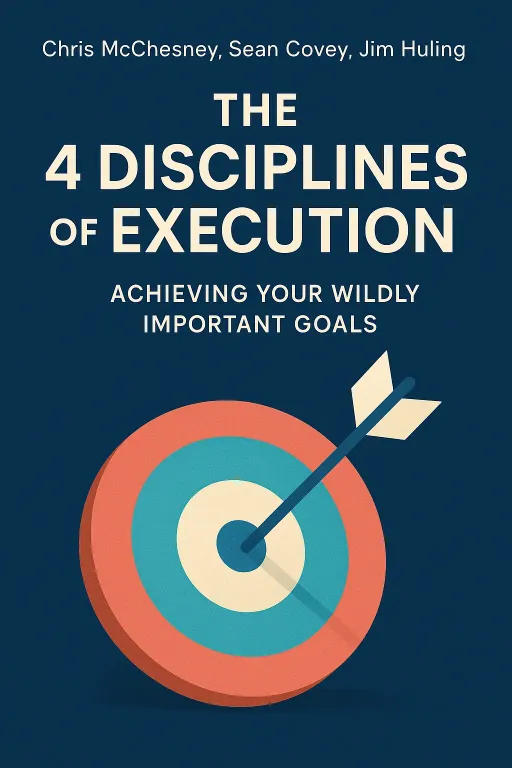
Nova: Exactly. And that's precisely what we're dissecting today, drawing insights from two seminal works: by Chris McChesney, Sean Covey, and Jim Huling, and by Larry Bossidy and Ram Charan. What's fascinating about these authors is their deep, practical roots. The team behind 4DX spent years applying these principles within FranklinCovey, consulting with countless organizations to turn theory into concrete results. And Larry Bossidy? He was a CEO, leading giants like Honeywell and AlliedSignal, while Ram Charan is a renowned business advisor. These aren't ivory tower academics; these are people who've been in the trenches, getting things done.
Atlas: That's a powerful combination of real-world experience. It immediately grounds the discussion, making me think this isn't just theory, but something truly applicable for leaders. So, if strategy isn’t enough, what this execution gap, and why does it trip up so many?
The Silent Saboteur: Unmasking the Execution Gap
SECTION
Nova: Well, picture an architect. They design a magnificent skyscraper – perfect blueprints, stunning renders, every detail meticulously planned. But then, the construction crew either doesn't show up, or they get distracted building a shed instead. The vision is flawless, but the building never gets built. That's the execution gap. It’s the chasm between having a brilliant strategy and consistently translating that intent into measurable, effective action.
Atlas: That’s a perfect analogy. So, it's not about a lack of good ideas, but more about a lack of good follow-through. I imagine a lot of our listeners, especially those in high-stakes environments, feel this pull. They have these grand visions, but the daily grind just… grinds them down.
Nova: Precisely. The authors of call it the "whirlwind." It's the urgent, everyday demands of running a business or even managing your life. Emails, meetings, unexpected crises, a client call that runs long – all these things are necessary, but they constantly pull our attention away from the "wildly important goals" that drive long-term strategic growth.
Atlas: That sounds rough, but isn't that just part of running a business? How do you even begin to fight against that constant current? It feels almost inevitable when you're driven by impact but constantly reacting.
Nova: It's not about avoiding the whirlwind entirely, Atlas, because that's impossible. It's about how you it, how you intentionally carve out space and discipline to execute on what truly matters. Let me give you a vivid, hypothetical example: Imagine a tech startup, full of brilliant minds, that secures incredible funding for a revolutionary new social platform. They have the vision, the talent, the investor backing – everything looks perfect. But then, after launch, the founders get bogged down. One spends all day answering customer support emails, another is constantly in HR meetings dealing with team disputes, and the third is troubleshooting unexpected technical glitches.
Atlas: So, the revolutionary product slowly becomes the "almost revolutionary product" while competitors, who might have had an inferior initial idea but better execution, start to catch up.
Nova: Exactly. The founders are working incredibly hard, but they're not working on the priorities that will truly move the needle. Their brilliant vision is slowly being eroded by the tyranny of the urgent. They’re stuck in the day-to-day, and their growth, their legacy, stalls.
Atlas: I totally know that feeling. It's like you're constantly putting out fires instead of building the structure that would prevent those fires. So, it's not about working harder, but working smarter with a specific, disciplined focus?
Blueprint for Action: Disciplined Frameworks to Close the Gap
SECTION
Nova: Exactly. And that naturally leads us to the frameworks designed to do just that – to bridge that execution gap. Let's start with, or 4DX. Their first discipline is to focus on 'Wildly Important Goals,' or WIGs. This means cutting through all the noise and identifying one or two goals that, if achieved, will make all the difference. It's about extreme focus.
Atlas: Wildly Important Goals. I like that. It sounds like it cuts through the noise. But how do you pick when everything feels important, especially for a visionary catalyst who sees opportunities everywhere?
Nova: That's where their second discipline comes in: acting on 'lead measures.' Most people track 'lag measures' – the results, like sales revenue or weight lost. But lag measures are historical; you can't influence them directly. Lead measures, however, are predictive and influenceable. Think about weight loss: the lag measure is the number on the scale. The lead measure might be 'exercise 3 times a week for 30 minutes' or 'track calorie intake daily.' You can directly on those lead measures, and they predict the lag measure.
Atlas: That’s a perfect example. So, it's about finding the lever you can actually pull daily, the small, consistent actions that contribute to the bigger picture. It gives you a sense of agency, rather than just waiting for results. What’s next after you've got your WIG and your lead measures?
Nova: Then comes the third discipline: keeping a compelling scoreboard. This isn't just a spreadsheet; it's a visible, engaging way to track your lead and lag measures so everyone knows if they're winning or losing. Imagine a team seeing their progress on a big screen, not just a monthly report no one reads. And finally, the fourth discipline: creating a cadence of accountability. This means regular, frequent meetings – weekly, 15-minute WIG sessions – where team members report on their lead measures, address challenges, and make commitments for the next week. No agenda, just WIGs.
Atlas: I can see how that creates momentum, especially for a resilient leader. It builds trust and shared responsibility. So, 4DX is about clarity, focus, and micro-accountability. Now, where does Bossidy and Charan's fit in? Does it build on this, or offer a different angle for that strategic architect?
Nova: It absolutely complements it, Atlas, but from a broader, more systemic perspective. Bossidy and Charan argue that execution isn't just a tactical activity; it's a in itself, deeply embedded in a company's culture and leadership. They emphasize linking strategy, people, and operations. It's about having the right people in the right jobs, with the right skills, and aligning their incentives with the strategic goals.
Atlas: So, it’s about making sure the entire organization is singing from the same hymn sheet, from the boardroom to the factory floor, and that the sheet is actually what the conductor wants.
Nova: Precisely. Let's revisit our manufacturing company example. They have a clear market strategy, but they're consistently missing production targets. Bossidy and Charan would look beyond just the production line. They'd ask: Is the CEO's vision clearly translated into operational goals for the plant managers? Do the managers have the skills to lead those teams effectively? Are the incentives for the employees tied to meeting those strategic production targets? Often, the execution gap isn't just about effort, it's about systemic misalignment.
Atlas: That makes me wonder, for a leader trying to build a legacy, how do these two frameworks complement each other? One seems very focused on specific goals, the other on the entire organizational architecture.
Synthesis & Takeaways
SECTION
Nova: They're two sides of the same coin, Atlas. 4DX gives you the operational playbook for actually achieving your wildly important goals. It's the engine that drives specific outcomes. Bossidy and Charan provide the blueprint for building the itself – the organizational structure, the leadership, the culture – that enables consistent execution across the board. It's about creating an environment where 4DX can thrive.
Atlas: That’s actually really inspiring. So, it’s not just about you do, but you embed that doing into the very fabric of your organization and leadership style. It’s about cultivating a culture where action is not just encouraged, but systematized.
Nova: Absolutely. The core message here is that great ideas are a fantastic start, but consistent, disciplined action is the differentiator. It's what turns a visionary catalyst into a leader who truly builds legacies and achieves sustainable growth.
Atlas: Honestly, that sounds like my Monday mornings, trying to keep the strategic vision alive amidst a sea of emails. What’s one tiny step for our listeners who are feeling that pull between strategy and the daily grind?
Nova: Just one. Identify one 'wildly important goal' for the next week. What's that single thing that, if you achieve it, will make the biggest difference? And then, tomorrow, what's the single most important action you can take towards it? Just one.
Atlas: Just one. I can handle that. That’s a powerful challenge to bridge that execution gap. It’s about taking that first, tiny, deliberate step.
Nova: Indeed. It’s about building those legacies, one consistent action at a time.
Atlas: Absolutely. This is Aibrary. Congratulations on your growth!