

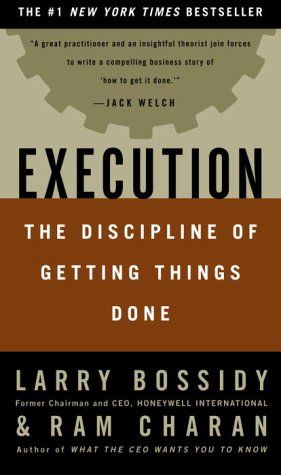
Execution
The Discipline of Getting Things Done
Introduction
Nova: Imagine you have the perfect blueprint for a house. The architecture is stunning, the materials are top-tier, and the location is prime. But when the builders show up, they do not know how to read the plans, the foreman is nowhere to be found, and the plumbing ends up in the ceiling. That is exactly what happens in thousands of businesses every single day.
Atlas: It is the classic case of a great idea that just goes nowhere. We see it all the time with New Year resolutions or tech startups that have a billion-dollar concept but vanish in six months. But in the corporate world, this gap between a plan and reality is actually a multi-billion dollar problem.
Nova: Exactly. And that is the core premise of the book we are diving into today: Execution: The Discipline of Getting Things Done by Larry Bossidy and Ram Charan. When this book came out, it completely flipped the script on what it means to be a leader. It argued that execution is not just a tactical detail you delegate to the people downstairs. It is a discipline and a system that the leader has to own.
Atlas: I remember when this first hit the shelves. People were obsessed with the visionary leader, the person who sits on a mountain and thinks of the next big thing. Bossidy and Charan basically said, if that visionary cannot actually get the work done, they are useless. That is a pretty bold stance to take.
Nova: It really was. They pointed out a shocking statistic: about 70 percent of strategic failures are not due to a bad strategy, but because the strategy was never executed. Today, we are going to break down how to bridge that gap. We will look at the three core processes of execution and the seven behaviors every leader needs to master if they actually want to see results.
Atlas: I am ready. Let us see if we can figure out why so many smart people fail to cross the finish line.
Key Insight 1
The Discipline of Execution
Nova: One of the biggest misconceptions the book tackles right away is that execution is just the boring, tactical stuff. You know, the checklists and the status updates. But Bossidy and Charan define it as a systematic process of rigorously discussing the hows and whats, questioning, following through, and ensuring accountability.
Atlas: So it is not just a to-do list. It is more like the operating system of the company? Like, if the strategy is the software, execution is the hardware that actually makes it run?
Nova: That is a great way to put it. And they emphasize that execution is a discipline. You have to practice it. It is not something you do once a quarter during a board meeting. It has to be baked into the culture. They talk about this concept of the Social Operating System. It is the way people interact, the way they talk to each other, and how they hold each other's feet to the fire.
Atlas: That sounds intense. I can imagine some people might hear that and think it sounds like micromanagement. Is there a difference between being an execution-focused leader and just being a control freak?
Nova: There is a massive difference. A control freak wants to do the work for you. An execution leader wants to make sure you have the capability to do the work and that you are aligned with the reality of the situation. Bossidy says a leader has to be deeply involved. You cannot just say, I am the big picture guy, you guys figure out the details. If you do not know the details of your business, you do not really know your business.
Atlas: That reminds me of that old saying, the devil is in the details. But Bossidy is saying the success is in the details too. He was the CEO of Honeywell, right? He must have some real-world battle stories about this.
Nova: He does. He talks about how he would spend a huge amount of his time on the three core processes: people, strategy, and operations. He would personally lead reviews and ask the tough questions. He would not just accept a slide deck that said everything is on track. He would dig into why a certain project was lagging or why a specific manager was not hitting their numbers.
Atlas: It sounds like it requires a lot of emotional energy. You can't just coast. You have to be constantly engaged and, honestly, a bit of a truth-seeker.
Nova: Realism is actually one of their seven essential behaviors. You have to insist on realism. Most people in organizations want to hide the bad news or sugarcoat the problems. An execution leader creates an environment where the truth can be told without fear. If you are not looking at the world as it actually is, your strategy is basically a fairy tale.
Atlas: I love that. Insist on realism. It is so easy to get caught up in the hype of your own marketing. But if the product is breaking or the customers are leaving, no amount of vision is going to save you. What are some of the other behaviors they mention?
Nova: Well, there are seven in total. Knowing your people and your business is the first. Then insisting on realism. Third is setting clear goals and priorities. You cannot have twenty priorities; if everything is a priority, nothing is. Fourth is following through. This is where most people fail. They have a great meeting, everyone agrees on a plan, and then... nothing happens for three weeks.
Atlas: Follow-through is the silent killer of productivity. We have all been in those meetings where everyone is nodding, but nobody is actually taking notes on who is doing what by when.
Nova: Exactly. The fifth behavior is rewarding the doers. You have to make sure the people who actually execute are the ones getting the bonuses and the promotions. If you reward the people who are just good at talking, you are signaling that execution does not matter. The sixth is expanding people's capabilities through coaching. And the seventh is knowing yourself. You need the emotional fortitude to deal with conflict and give honest feedback.
Atlas: That last one is huge. Giving honest feedback is uncomfortable. It is much easier to just be the nice boss and let things slide, but that is how execution dies. It sounds like these behaviors are the foundation for everything else in the book.
Key Insight 2
The People Process
Nova: If you ask Larry Bossidy which of the three processes is the most important, he will tell you without hesitation: it is the People Process. He argues that if you do not get the right people in the right jobs, your strategy and your operations are doomed from the start.
Atlas: That seems obvious on the surface, but I bet the way they approach it is different than your typical HR department. Most companies treat hiring like a checkbox. You need a body in a seat, you find someone with the right resume, and you move on.
Nova: That is exactly the trap. Bossidy says that the People Process is the most important because it is the one that provides the talent to execute the other two. He spent up to 40 percent of his time as CEO on people issues. Think about that. A CEO of a massive global company spending nearly half his time on hiring, promoting, and evaluating talent.
Atlas: Forty percent? That is wild. Most CEOs I know are lucky if they spend five percent on that. They usually delegate it to HR and only get involved for the C-suite hires. Why did he think it deserved so much of his personal attention?
Nova: Because he believed that the quality of the people determines the quality of the execution. He looked for what he called the A players. But here is the twist: an A player is not just someone with a high IQ or a fancy degree. An A player is someone who gets things done. They have that hunger for results. They are the ones who can take a vague goal and turn it into a concrete reality.
Atlas: So it is about the "how" as much as the "what." I have seen brilliant people who are absolute disasters at execution because they get paralyzed by analysis or they cannot work with a team. Does the book talk about how to spot those people?
Nova: It does. They talk about looking for people with a track record of follow-through. They also emphasize the importance of the job-person match. Sometimes you have a great person in the wrong role. You might have a brilliant innovator in a role that requires strict operational discipline. That person is going to fail, and it is not because they are a bad employee; it is because the match is wrong.
Atlas: That makes a lot of sense. It is like putting a world-class sprinter in a marathon. They are still a great athlete, but they are going to lose that race. How does a leader actually manage this process without getting bogged down in every single hire?
Nova: It is about creating a rigorous appraisal system. They talk about the Leadership Assessment Summary. It is not just a yearly review. it is a deep dive into a person's performance, their potential, and their behavior. And it is done in a group setting with other leaders. This prevents one manager from protecting a favorite or being too harsh on someone they do not like. It brings that realism we talked about into the people process.
Atlas: I can see how that would create a lot of accountability. If I have to defend my assessment of an employee to a room full of my peers, I better have my facts straight. It also helps align the whole leadership team on what a good performer actually looks like.
Nova: Precisely. And they are very clear about what to do with non-performers. If someone cannot execute, they have to be moved or let go. Keeping a non-performer in a key role is a betrayal of the people who are actually doing the work. It lowers the bar for everyone. Bossidy says that the hardest part of his job was often moving people out of roles they had outgrown, but it was necessary for the health of the company.
Atlas: It sounds tough, but it is fair. If the goal is execution, you cannot have weak links in the chain. It seems like the People Process is really about building a culture of high performance where everyone knows that results are what matter most.
Key Insight 3
Strategy and Operations
Nova: Now that we have the right people, we need to talk about the Strategy Process. This is where a lot of companies go off the rails. They create these massive, 200-page strategy documents that look beautiful but are completely disconnected from reality.
Atlas: I have seen those. They are full of buzzwords like synergy and paradigm shift, but they do not actually tell you what to do on Monday morning. It is like a map that shows you the destination but does not show any of the roads to get there.
Nova: Exactly. Bossidy and Charan argue that a good strategy has to be simple and concrete. It needs to answer a few basic questions: Who is the competition? What is our capability to execute this strategy? And most importantly, how are we going to make money doing this? They insist that the people who have to execute the strategy should be the ones who help build it.
Atlas: That is a huge point. If the strategy is handed down from on high by consultants who have never worked on the front lines, the people on the ground are going to be skeptical. They will find a million reasons why it won't work. But if they are involved in the planning, they have skin in the game.
Nova: Right. And the strategy process has to be linked to the third process: Operations. This is the bridge. The operations process takes the long-term strategy and breaks it down into short-term goals. It is the budget, the monthly targets, and the specific projects. It is where you decide exactly how you are going to allocate your resources to make the strategy happen.
Atlas: So if the strategy says we want to expand into Asia, the operations process says we are going to hire ten sales reps in Singapore by March and spend five million dollars on local marketing. It turns the vision into a set of marching orders.
Nova: Precisely. And the key here is synchronization. You have to make sure that all the different parts of the company are working together. If sales is promising a new product in June, but engineering says it won't be ready until October, you have an execution failure. The operations process is where you find those gaps and fix them before they become disasters.
Atlas: This sounds like it requires a lot of communication. You can't have departments working in silos. Everyone has to be looking at the same data and working toward the same goals.
Nova: That is where the Social Operating System comes back in. You need those regular, rigorous reviews where people from different departments have to talk to each other. Bossidy describes these as intense sessions where people are challenged on their assumptions. It is not about being mean; it is about being thorough. You want to find the flaws in the plan while it is still on paper, not when you are halfway through the year and over budget.
Atlas: It is like a stress test for the business. You are trying to break the plan in the meeting room so it does not break in the real world. I can see how this would be incredibly effective, but it also sounds like it could be exhausting if the culture is not right.
Nova: It can be. That is why the leader's behavior is so important. If the leader is just attacking people, they will shut down. But if the leader is coaching and asking questions to help the team see the reality, it becomes a powerful learning tool. It builds the organization's collective intelligence. You are not just getting things done; you are getting better at getting things done.
Case Study
The Reality of Results
Nova: To really understand how this works, we should look at some of the examples they give in the book. They contrast companies that got it right with those that struggled. One of the big ones they mention is Xerox back in the late 90s.
Atlas: Oh, I remember that. Xerox was a giant, but they almost went under. What happened there from an execution perspective?
Nova: They had a great brand and great technology, but they lost their way in the execution. They had a strategy to move into the digital office, but they did not have the people or the operations to back it up. They were plagued by internal politics and a lack of accountability. Leaders were making promises to Wall Street that the organization simply could not deliver on.
Atlas: So they had the vision, but the hardware was broken. They were trying to run a high-speed digital strategy on a slow, analog operating system.
Nova: Exactly. Compare that to Honeywell under Bossidy. When he took over, the company was a bit of a mess. It was a collection of different businesses that were not talking to each other. He implemented these three processes with a vengeance. He spent his time in the factories, talking to the engineers, and leading the talent reviews himself. He turned it into an execution machine.
Atlas: It is interesting that he did not come in with some revolutionary new product. He just came in and made the existing business work better. He focused on the fundamentals. It is like a sports team that has all the talent but keeps losing because they do not practice the basics. He came in and made them do the drills.
Nova: That is a perfect analogy. He focused on the blocking and tackling of business. And it worked. Honeywell's stock price and profits soared during his tenure. But the book also warns that you cannot stop. Execution is not a destination; it is a continuous process. As soon as you stop paying attention to the details, the gap starts to open up again.
Atlas: That is a sobering thought. You can never really relax. But I guess that is the price of excellence. If you want to be a top-tier organization, you have to maintain that discipline every single day.
Nova: They also talk about the importance of follow-through in a very specific way. They suggest that every meeting should end with a clear summary of who is doing what and when it will be done. And then, most importantly, there has to be a follow-up meeting to check on the progress. If people know that no one is going to check on them, they will naturally prioritize other things.
Atlas: It is the old management adage: you get what you inspect, not what you expect. If you do not inspect the progress, you are basically saying it is not important.
Nova: Right. And that applies to the leader too. If the leader does not follow through on their own commitments, the whole system collapses. Execution starts at the top. If the CEO is not disciplined, no one else will be either.
Conclusion
Nova: As we wrap up our look at Execution, it is clear that this book is more than just a business manual. It is a call to action for leaders to get back into the arena. It reminds us that the best strategy in the world is worthless if you cannot make it happen.
Atlas: It is a very grounding message. In a world where we are constantly bombarded with the next big thing or the latest management fad, Bossidy and Charan bring us back to the fundamentals. Get the right people, build a realistic strategy, and then work like crazy to make sure the operations support it.
Nova: The key takeaways are simple but profound. First, execution is a discipline that must be learned and practiced. Second, the leader must be deeply involved and cannot delegate the responsibility for results. And third, you have to build a culture of realism and accountability where the truth is valued above all else.
Atlas: I think the most important lesson for me is that execution is actually a form of respect. It is respecting your customers by delivering what you promised. It is respecting your employees by giving them clear goals and the resources to achieve them. And it is respecting yourself by having the discipline to see your vision through to the end.
Nova: That is a beautiful way to put it. Whether you are leading a Fortune 500 company or just trying to get a personal project off the ground, the principles of execution apply. Stop dreaming about the finish line and start focusing on the steps it takes to get there.
Atlas: Well, I am definitely feeling more motivated to go check on my own follow-through for the week. This has been an eye-opening deep dive.
Nova: I am glad to hear it. Remember, the gap between where you are and where you want to be is filled with execution. This is Aibrary. Congratulations on your growth!