

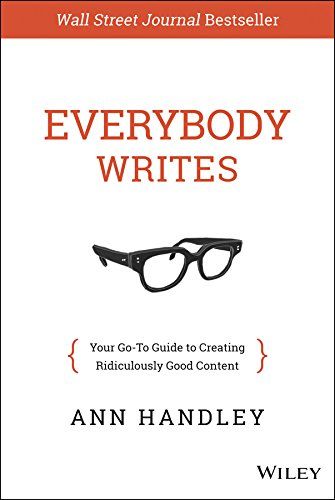
Everybody Writes
Your Go-To Guide to Creating Ridiculously Good Content
Introduction
Nova: Did you know that the average business professional spends about thirteen hours every single week just writing and responding to emails? That is nearly a third of the standard work week spent entirely on one form of writing.
Atlas: Thirteen hours? That is basically a part-time job where the only tool you have is a keyboard. And that is not even counting Slack messages, LinkedIn posts, or reports. It feels like we are all drowning in words.
Nova: Exactly. And that is the core premise of the book we are diving into today: Everybody Writes by Ann Handley. She argues that in our digital-first world, everyone is a writer. Whether you think of yourself as one or not, your writing is often the only way people experience your brand, your ideas, or even your personality.
Atlas: It is a bit intimidating, honestly. Most people do not wake up thinking they are the next Hemingway. They just want to get through their inbox without sounding like a robot or accidentally offending a client.
Nova: And that is why Handley wrote this. It is not a textbook on literature; it is a survival guide for the modern communicator. She wants to turn that intimidation into confidence by showing us that writing is a craft you can learn, not a mystical gift you are born with.
Atlas: So, we are going to look at how to stop being afraid of the blank screen and actually start producing what she calls ridiculously good content. I am ready to see if she can actually make me a better writer by the end of this episode.
Key Insight 1
The Writing Mindset
Nova: One of the biggest hurdles Ann Handley identifies right away is what she calls the Big Fat Writing Myth. It is this idea that writing is some kind of divine spark that only hits a chosen few while they are staring at a sunset.
Atlas: I definitely fall for that. I always feel like if the perfect sentence does not just pop into my head immediately, then I am just not a writer. I should just stick to spreadsheets.
Nova: Handley says that is nonsense. She views writing as a habit, not a gift. It is a muscle. If you wait for the muse to show up, you are going to be waiting a long time. Instead, she says you have to show up for the muse.
Atlas: So, it is more like going to the gym? You just have to put in the reps even when you do not feel like it?
Nova: Precisely. She points out that we are all content creators now. Every time you post on social media or write a product description, you are publishing. The barrier between the writer and the audience has completely vanished. Because of that, the quality of your writing has become a proxy for the quality of your thinking.
Atlas: That is a heavy thought. If my email is messy and full of jargon, people assume my ideas are messy too?
Nova: That is her point. Good writing is a mirror of good thinking. But the good news is that because it is a skill, you can improve it through specific frameworks. She even updated the book recently in a second edition to account for how much faster the digital world moves now, but the core philosophy remains: clarity over cleverness.
Atlas: I like that. Clarity over cleverness. It takes the pressure off trying to be funny or profound and just focuses on being understood.
Nova: And she emphasizes that being a writer today means being a person who communicates well. It is about having a voice that sounds human. In a world of AI-generated text and corporate speak, sounding like a real person is actually a competitive advantage.
Atlas: So, step one is just accepting the title. I am a writer. You are a writer. We are all writers. Now, how do we actually do it without staring at a blinking cursor for three hours?
Key Insight 2
The Ugly First Draft
Nova: This is probably the most famous piece of advice from the book. Handley calls it TUFD, which stands for The Ugly First Draft. The goal is to just show up and throw up.
Atlas: Show up and throw up? That is a very graphic way to describe writing.
Nova: It is meant to be! The idea is that the biggest enemy of writing is the internal critic that tries to edit while you are still drafting. You cannot create and criticize at the same time. It is like trying to drive with the emergency brake on.
Atlas: I do that all the time. I will write one sentence, delete it, rewrite it, change a comma, and twenty minutes later, I still have one sentence. It is exhausting.
Nova: Handley says you have to give yourself permission to be terrible. Write the ugliest, messiest, most disorganized version of your idea first. Just get the clay on the table. You cannot sculpt anything if you do not have the clay.
Atlas: Okay, so I have my pile of clay. It looks like a mess. What is the next step in her process? She has a whole framework for this, right?
Nova: She calls it the Writing GPS. It is a twelve-step process, but do not let the number scare you. It starts with identifying your goal. What are you trying to achieve? Then, you find your data and your examples. Only after you have done that research do you start the TUFD.
Atlas: So, the research happens before the writing? That makes sense. It is hard to write when you do not actually know what you are talking about yet.
Nova: Exactly. And once you have that ugly draft, you walk away. That is a crucial step. You need distance so you can come back with fresh eyes. When you return, you start the editing phase, which she breaks down into two parts: editing for the big picture and then editing for the details.
Atlas: I usually skip the big picture and go straight to typos. What does she mean by big picture editing?
Nova: She means looking at the structure. Does the logic flow? Did you put the most important information at the top? She suggests a test called the Wall of Text test. If you look at your draft and it is just one giant block of words, you are going to lose your reader. You need to break it up with subheads, bullets, and shorter paragraphs.
Atlas: It is almost like you are designing the reading experience, not just writing words. You are making it easy for the reader to scan and digest the information.
Nova: Spot on. She says that in the digital age, we do not just read; we scan. If your writing is not scannable, it is invisible.
Key Insight 3
Empathy and the So What Test
Nova: If there is one golden rule in Everybody Writes, it is this: writing is not about you. It is about the reader. Handley talks a lot about empathy.
Atlas: Empathy in business writing? That sounds a bit soft. Usually, business writing is about features, benefits, and why our company is the best.
Nova: And that is exactly what she wants us to stop doing. She says most marketing is just a company shouting about itself. Instead, you need to put the reader at the center of the story. She uses a tool called the So What? test.
Atlas: How does that work?
Nova: For every sentence or claim you make, you have to ask yourself, So what? Why does this matter to the person reading it? If you say, Our software has a new cloud-based architecture, the reader is thinking, So what? You have to answer that: So you can access your files from anywhere and never worry about losing data again.
Atlas: Ah, so you are translating features into actual human value. You are answering the question, What is in it for me?
Nova: Exactly. She calls this being a customer-centric writer. You are not the hero of the story; your customer is the hero, and your product or service is just the light saber that helps them defeat the monster.
Atlas: I love the Star Wars analogy. It makes it very clear. But how do you do that in something boring, like a technical manual or a corporate update?
Nova: By finding the human connection. Handley suggests using the word you more than the word we. It shifts the focus. She also talks about brand voice. Your voice is your personality, but your tone can change depending on the situation. Think of it like this: you are the same person at a funeral and a birthday party, but your tone is very different.
Atlas: So, a brand should have a consistent personality, but it needs to be empathetic to where the reader is at that moment. If they are frustrated with a bug in the software, don't be bubbly and cheerful.
Nova: Right. Be helpful and direct. Handley says that good writing is essentially good manners. You are respecting the reader's time by being clear, being brief, and being useful. If you can do those three things, you are already ahead of ninety percent of the content out there.
Atlas: It sounds like writing is less about being a literary genius and more about being a decent human being who knows how to listen.
Key Insight 4
The Mechanics of Ridiculously Good Content
Nova: Now, we have to talk about the actual nuts and bolts. Handley has some very specific rules for making your sentences punchier. One of my favorites is: swap your verbs.
Atlas: Swap them for what?
Nova: Swap weak verbs for strong ones. Instead of saying, We are a provider of solutions, say, We solve problems. Instead of, He walked quickly, say, He sprinted. Strong verbs do the heavy lifting so you do not need as many adverbs.
Atlas: I am definitely guilty of using too many adverbs. I feel like I need them to add emphasis, but I guess they just clutter things up.
Nova: She actually quotes Stephen King on this, saying the road to hell is paved with adverbs. Another big tip is to cut the fluff. She suggests looking for words like very, really, and just. Most of the time, you can delete them and the sentence becomes stronger.
Atlas: What about jargon? In my industry, we love our acronyms and buzzwords. It makes us feel like we know what we are talking about.
Nova: Handley calls jargon the enemy of clarity. It is a barrier. If you use words like leverage, synergy, or deep dive, you are often just hiding a lack of specific meaning. She challenges writers to explain things so simply that a sixth-grader could understand the concept, even if the topic is complex.
Atlas: That is the Einstein approach, right? If you can't explain it simply, you don't understand it well enough.
Nova: Exactly. She also has a great tip for the beginning and end of sentences. She says the most important words should go at the very start and the very end. Do not bury your lead in the middle of a long, rambling sentence. Give the reader the punchline immediately.
Atlas: I have noticed she also talks about the visual side of writing. Things like using white space and choosing the right fonts. Is that really a writer's job?
Nova: In the digital world, yes. She says writing and design are two sides of the same coin. You should write before you design, but you have to keep the design in mind. Use lists. Use bold text for emphasis. Make it easy for a tired person on a mobile phone to get the gist of your message in ten seconds.
Atlas: That is a great mental image. Write for the tired person on a mobile phone. That really forces you to be concise.
Nova: It really does. And her final mechanical tip is to read your work out loud. If you run out of breath before you hit a period, your sentence is too long. If it sounds clunky when you say it, it will feel clunky when they read it.
Conclusion
Nova: We have covered a lot of ground today, from the mindset shift that everyone is a writer to the practical magic of the Ugly First Draft and the So What? test.
Atlas: It is a lot to take in, but it feels manageable. The biggest takeaway for me is that writing is not this scary, elite club. It is just a tool for connecting with people. If I can focus on empathy and clarity, I am already halfway there.
Nova: That is the heart of Ann Handley's message. Ridiculously good content is not about being perfect; it is about being useful and human. Whether you are writing a tweet or a white paper, your goal is to help your reader. If you keep that at the center of your process, your writing will naturally improve.
Atlas: I am actually looking forward to my next email now. I am going to try the So What? test and see if I can cut out a few verys and reallys.
Nova: That is the spirit! Remember, writing is a practice. You do not get better by reading about it; you get better by doing it. So, go out there and write your own ugly first draft today.
Atlas: And then edit it ruthlessly tomorrow.
Nova: Exactly. Thank you for joining us on this deep dive into Everybody Writes. We hope these insights help you find your voice and connect more deeply with your audience.
Atlas: This is Aibrary. Congratulations on your growth!