

Navigating the Moral Compass: Foundations for Ethical Leadership
Golden Hook & Introduction
SECTION
Nova: Atlas, I want you to imagine a leader who faces a truly impossible choice. They can save their company from bankruptcy by laying off a thousand loyal employees, or they can keep everyone employed, knowing the company will inevitably collapse in six months, leaving everyone jobless anyway. What's the 'right' thing to do there?
Atlas: Oh, man, that’s a brutal one. My gut says you have to make the hard choice for the greater good, but my heart aches for those thousand people. It feels like a no-win scenario, doesn't it? Like you're stuck between a rock and a hard place, and both options feel ethically compromised.
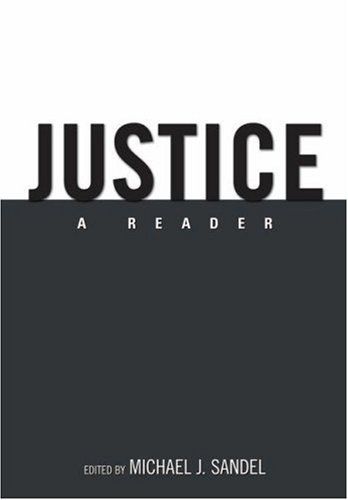
Nova: Exactly! And that's precisely the kind of moral labyrinth we're often navigating, not just in boardrooms, but in everyday life. Today, we're diving into a fascinating exploration of how to build an unshakeable moral compass, drawing insights from two incredibly profound books: Michael J. Sandel's "Justice: What's the Right Thing to Do?" and the Dalai Lama XIV's "Ethics for the New Millennium."
Atlas: Ah, Sandel! He's known for making philosophy feel like a courtroom drama, right? I've heard he's brilliant at taking these massive, abstract concepts and grounding them with real-world dilemmas that make you rethink everything you thought you knew about justice.
Nova: Absolutely. Sandel, a renowned Harvard professor, has this incredible knack for using compelling case studies and thought experiments to challenge our preconceived notions about justice and rights. His work isn't about giving you answers; it's about sharpening your moral reasoning, pushing you to articulate you believe what you believe. It's no wonder his courses are legendary and his book has become a touchstone for ethical debate worldwide.
Atlas: And then you pair that with the Dalai Lama. That's quite a contrast – Western intellectual rigor meets Eastern spiritual wisdom. What an intriguing combination. I imagine his approach is more about inner transformation than legalistic arguments.
Nova: Precisely. The Dalai Lama's "Ethics for the New Millennium" offers a universal approach to ethics rooted in compassion and interdependence. He argues for a secular ethics, one based on shared human values, to tackle global challenges. It’s a beautifully simple yet profound perspective that complements Sandel's intellectual gymnastics perfectly. He’s not talking about religion, but about a foundational human decency.
Atlas: That’s a thoughtful blend. So, it’s not just about understanding what justice, but also about cultivating the inner qualities to act justly. It sounds like these two books together give us a holistic toolkit for ethical thinking.
The Dual Pillars of Ethical Leadership: Western Philosophy Meets Eastern Wisdom
SECTION
Nova: They truly do. Let's start with Sandel. He pulls us into these incredible moral dilemmas, forcing us to confront the different ethical frameworks we implicitly use. Think about the famous "trolley problem." A runaway trolley is headed for five workers on the track. You can pull a lever to divert it to another track, where it will kill only one worker. What do you do? Most people say pull the lever.
Atlas: Right, sacrifice one to save five. That’s utilitarianism in action, isn't it? The greatest good for the greatest number. It feels logical, almost mathematical.
Nova: Exactly. That's one framework. But then Sandel twists it. What if you're on a bridge overlooking the track, and there's a very large man next to you. You can push him onto the track to stop the trolley, saving the five, but killing him. Do you do it?
Atlas: Whoa, hold on. That feels fundamentally different. My gut recoils at pushing someone. Even if it saves five, it feels like I'm directly harm, actively taking a life. That's not just diverting a lever. That changes everything.
Nova: You've hit on the core distinction. Sandel uses these scenarios to highlight the tension between utilitarianism – focusing on outcomes and maximizing overall happiness – and deontology, which emphasizes duties and rights, arguing that certain actions are inherently right or wrong, regardless of their consequences. Pushing the man feels like a violation of his fundamental rights, a direct act of murder, which most deontological views would forbid.
Atlas: I can see how that pushes you to examine your own moral reasoning. It's not just about what you'd do, but you'd do it. And the 'why' reveals your underlying ethical framework, even if you hadn’t articulated it before. It’s like discovering the hidden operating system of your moral brain.
Nova: Precisely. And Sandel doesn't stop there. He delves into questions of affirmative action, same-sex marriage, even cannibalism and consensual murder, always pushing us to see the philosophical underpinnings of our societal debates. He makes it clear that many of our public arguments aren't just about policy; they're about deeply held, often unexamined, moral philosophies.
Atlas: That makes me wonder, how does this intellectual dissection of justice, rights, and the common good connect with the Dalai Lama's focus on compassion and interdependence? They seem like different languages, almost.
Nova: They are, but they speak to the same ultimate goal: how to live a good life and create a just society. While Sandel challenges our, the Dalai Lama cultivates our for ethical action. He argues that genuine happiness and a peaceful society stem from compassion. Not just compassion for those close to us, but universal compassion, extending to all beings.
Atlas: So, Sandel gives us the intellectual tools to analyze a situation, and the Dalai Lama gives us the internal motivation and framework to respond with empathy. It's like having a brilliant strategist and a wise, compassionate mentor.
Nova: Exactly! The Dalai Lama emphasizes that our interconnectedness means our actions inevitably affect others. Therefore, a truly ethical life, and by extension, ethical leadership, must be rooted in understanding this interdependence and acting with altruism. He’s saying that a purely self-interested approach, even if it seems rational in the short term, ultimately leads to suffering for all.
Atlas: That’s a powerful idea, especially in a world that often prioritizes individual gain. It reminds me of the concept of "enlightened self-interest," where you realize that helping others ultimately benefits you too, in a deeper, more sustainable way.
Nova: And what's remarkable is that the Dalai Lama presents this as a secular ethics. It's not tied to any specific religion, but to fundamental human values that resonate across cultures. He argues that virtues like kindness, patience, and forgiveness are essential for individual and collective well-being, irrespective of one's spiritual beliefs. This universality is why his work has garnered such widespread acclaim, reaching far beyond religious communities.
Atlas: So, whether you're grappling with a complex policy decision, like in Sandel's examples, or trying to foster a compassionate culture within your team, the underlying principle is a recognition of our shared humanity and interconnectedness.
From Theory to Practice: Grounding Leadership in Moral Action
SECTION
Nova: Precisely. And this brings us to the practical application for leaders. The ethical strategist, the resilient thinker, the purposeful achiever – our listeners – they're not just looking to understand these ideas; they want to know how to them, how to with them.
Atlas: That makes me wonder, if you're a leader, how do you even begin to apply these deep philosophical insights? It’s one thing to debate the trolley problem, but another to decide on a product launch that could have ethical implications for millions.
Nova: That’s where the "Tiny Step" and "Deep Question" from our content really come into play. The first step for a leader is self-reflection. When you made a recent decision, what ethical framework were you implicitly using? Were you focused on the greatest good? Were you adhering strictly to rules or principles? Or were you thinking about what a virtuous person would do?
Atlas: Oh, I see. It's about becoming aware of our default settings. We often just make decisions based on instinct or habit, without realizing there's a whole philosophical framework operating in the background. That's a powerful insight.
Nova: Exactly. And once you recognize your default, you can then ask: could another framework have led to a different, perhaps more impactful, outcome? This isn't about second-guessing, but about expanding your ethical toolkit. Imagine a leader who always defaults to utilitarianism. They might make tough choices for the 'greater good' but overlook the individual rights or dignity of a minority group.
Atlas: That’s a critical point. A leader who's too focused on the numbers might miss the human cost. So, understanding deontology would force them to consider the inherent rights and duties involved, even if it doesn't maximize the overall outcome.
Nova: Or, consider a leader who always operates from a rigid deontological stance – always adhering to rules, no matter what. They might miss opportunities for compassion or flexibility when a situation calls for a more nuanced, outcome-focused approach. Sandel's work perfectly illustrates these tensions.
Atlas: So, a deeper understanding of diverse moral philosophies isn't just academic; it's about developing a more flexible, more robust moral lens. It helps you see the blind spots in your own ethical framework and consider multiple perspectives.
Nova: And that directly addresses the "Deep Question": How can a deeper understanding of diverse moral philosophies enhance your ability to lead a diverse team with integrity and empathy? If you understand that your team members might implicitly be operating from different ethical frameworks, you can anticipate conflicts and facilitate more nuanced discussions.
Atlas: That’s brilliant. If I understand that one team member prioritizes individual autonomy while another prioritizes collective well-being, I can frame discussions in a way that acknowledges both perspectives, rather than just dismissing one as 'wrong.' It fosters empathy and better decision-making.
Nova: Absolutely. And when you blend this intellectual understanding with the Dalai Lama's emphasis on compassion and interdependence, you cultivate a leadership style that's not only principled but also deeply human. Integrity isn't just about following rules; it's about aligning your actions with a genuine concern for others.
Atlas: That’s a powerful combination. It’s about leading with both your head and your heart, understanding the complexities of ethical reasoning while also being guided by a fundamental sense of kindness and interconnectedness. It's the kind of leadership that truly makes a meaningful difference.
Synthesis & Takeaways
SECTION
Nova: So, in essence, what these two profound thinkers offer us is not a simple checklist for ethical behavior, but a profound toolkit for ethical. Sandel sharpens our critical faculties, pushing us to interrogate our assumptions and understand the philosophical underpinnings of justice. The Dalai Lama, on the other hand, reminds us that at the heart of all ethical action must be compassion and a recognition of our shared humanity.
Atlas: It's a journey of self-discovery, really. Reflecting on our own ethical frameworks, as the books prompt, builds that inner strength our listeners are seeking. It’s about trusting your inner compass, but also continuously calibrating it with rigorous thought and genuine empathy.
Nova: Precisely. True ethical leadership isn't about having all the answers, but about cultivating the wisdom to ask the right questions, the courage to confront difficult truths, and the compassion to lead with integrity and make a lasting, positive impact. It’s about moving beyond simply 'doing good' to truly understanding 'the good.'
Atlas: And that, I think, is the ultimate purpose-driven achievement. It's not just about what you achieve, but how you achieve it, and the moral foundation you build along the way.
Nova: This is Aibrary. Congratulations on your growth!