

Navigating Morality: Christian Ethics in a Complex World
Golden Hook & Introduction
SECTION
Nova: Forget everything you think you know about Christian ethics as a set of rigid rules. What if true morality isn't about following a checklist, but about cultivating a profound imagination?
Atlas: Whoa, profound imagination? That's a bold claim, Nova. My initial thought goes straight to "rules" when I hear "ethics," especially "Christian ethics." Are you saying it's more art than science?
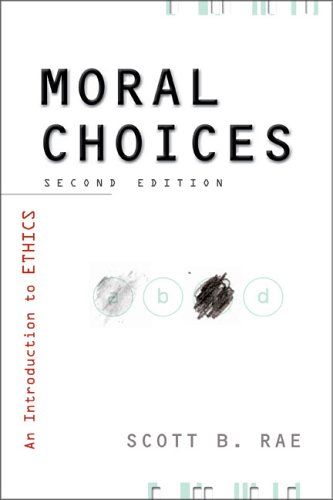
Nova: Exactly, Atlas! It’s less about a rigid checklist and much more about developing a robust moral imagination. It’s about equipping seekers, scholars, and stewards like our listeners with the intellectual tools to navigate a world that rarely offers easy answers. That's why today, we're diving into two pivotal works: Scott B. Rae's "Moral Choices: An Introduction to Ethics" and Arthur F. Holmes' "Ethics: Approaching Moral Decisions."
Atlas: Ah, Rae and Holmes. I know both of these are highly regarded for bringing intellectual rigor to faith-based decision-making. They don't shy away from the complexity, which I appreciate. So, this isn't just about finding the 'right' answer, it's about understanding the 'right' questions and the frameworks to ask them?
Nova: Precisely. Rae, for instance, provides such an accessible entry point, demystifying ethical theories from a distinctly Christian worldview. He offers practical tools, making it less abstract and more applicable for anyone wrestling with difficult moral decisions in their daily lives.
Laying the Ethical Foundation: Practical Frameworks for Faith-Driven Decisions
SECTION
Atlas: Okay, so "practical tools." That's the part that really resonates with me, and I bet with many of our listeners who are constantly making decisions, whether in their careers or communities. What does that actually look like in action? Can you give us a scenario where these frameworks truly shine?
Nova: Absolutely. Let's imagine a Christian business owner, let's call her Sarah, who runs a small manufacturing company. Sarah is deeply committed to her faith, but she's facing a huge ethical tightrope. Her biggest client is demanding a significant price reduction, threatening to take their business elsewhere if she doesn't comply. If she agrees, she’ll have to cut corners, either by using cheaper, less environmentally friendly materials, or by reducing her employees' wages and benefits.
Atlas: Oof. That's a classic no-win situation. Maximizing profit is a business imperative, but fair labor and environmental stewardship are core Christian values. Where does she even begin?
Nova: This is where Rae’s accessible frameworks come in. Sarah could approach this through several lenses. She might first consider a approach, focusing on her duties and rules: "What are my absolute moral obligations, regardless of outcome?" This would highlight her duty to her employees, her duty to the environment, and her duty to uphold business integrity, even if it costs her the client.
Atlas: So, it's about the inherent rightness or wrongness of the action itself, not the result. But what if losing the client means the whole company goes under, and everyone loses their job? That's a pretty severe outcome.
Nova: Excellent point, Atlas! That's when she might also consider a approach, asking: "What action will produce the greatest good for the greatest number?" Here, she'd weigh the negative impact of job losses against the negative impact of environmental damage or unfair wages. It’s about calculating the overall impact.
Atlas: I see. And it's not just about her, but the ripple effect on her employees, their families, the local community, and even the planet. That's a heavy calculation.
Nova: It really is. And then, Rae would also encourage her to think about: "What kind of person should I be in this situation? What virtues should I embody?" This shifts the focus from actions or outcomes to character. Is she acting with integrity, compassion, justice, and wisdom?
Atlas: I like that a lot. It brings it back to her core identity as a Christian. But how does someone, especially a "Steward" managing resources and people, actually choose which framework takes precedence? It sounds like they could lead to different answers.
Nova: That's the beauty and the challenge. Rae isn't giving simple answers. He's providing a toolkit. The choice often comes from a deeper theological conviction, which Holmes explores. But for Sarah, it means not just reacting, but thoughtfully analyzing the situation through these different ethical lenses. It's about making a decision, not just a pragmatic one, even if it means sacrificing short-term gain for long-term moral coherence.
Atlas: So you're saying it's never truly black and white. It's more about understanding the shades of grey and having the tools to navigate them with integrity. That's a powerful shift from just "following the rules."
Deepening the Moral Compass: Theological & Philosophical Roots of Christian Ethics
SECTION
Nova: Precisely. And that naturally leads us to the second key idea we need to talk about, which often provides the bedrock for those frameworks matter to a Christian. While Rae gives us the practical 'how,' Arthur F. Holmes delves into the philosophical and theological 'why,' helping us understand the historical development of ethical thought and how Christian principles inform a coherent moral framework.
Atlas: Okay, so Rae is the practical guide, and Holmes is the philosophical anchor. For our listeners who are scholars and seekers, diving into the 'why' is crucial for mastering complex ideas. What kind of deep roots are we talking about here?
Nova: Holmes takes us on a journey through ethical history, showing how thinkers from Aristotle to Kant grappled with morality, and then demonstrates how Christian thought uniquely shapes and reframes these discussions. He argues that foundational Christian principles—like the concept of the, the inherent dignity and worth of every human being because they are created in God’s image—are not just religious doctrines, but powerful ethical premises.
Atlas: The. That's a profound concept. How does that translate into, say, a modern ethical dilemma where conventional wisdom might falter? Give me an example where this deep theological conviction truly challenges the status quo.
Nova: Consider the historical debate around slavery. For centuries, it was an accepted economic and social norm, even justified by some interpretations of scripture. Conventional wisdom, economic expediency, and societal structure all supported it. But a deeply informed Christian ethic, grounded in the and the command to love one's neighbor as oneself, profoundly challenged that.
Atlas: So, the theological conviction that every person bears the image of God fundamentally undermined the very idea of owning another human being as property. That's a radical reorientation of conventional thought.
Nova: Exactly. It wasn't about a simple rule, but about a deep, systematic understanding of human dignity that demanded a complete dismantling of the practice. Or, in a contemporary context, consider debates around bioethics – for example, the sanctity of life. While secular ethics might focus on quality of life or individual autonomy, a Christian ethic, deeply rooted in the, often argues for the intrinsic value of life from conception to natural death, regardless of condition or perceived utility.
Atlas: That's a profound distinction. It means core theological convictions aren't just personal beliefs; they inform an entire framework for how we view the world and make moral decisions, sometimes in direct opposition to prevailing societal views. So, how does one cultivate this "robust moral imagination" that Nova's Take mentions? It sounds like it goes beyond just reading books.
Nova: It absolutely does. Holmes would argue it's a lifelong process of integrating faith and reason. It's about immersing oneself in Scripture, engaging with theological truth, and then consciously applying those truths to the complex realities of the world. It’s about developing a sensitivity to moral issues, a clarity of thought, and the courage to act on those convictions. It’s not just about knowing what's right, but about seeing the world through a moral lens shaped by divine truth.
Atlas: So, it's a continuous journey of discovery and application, constantly challenging our own assumptions and conventional wisdom? That really speaks to the "Seeker" and "Scholar" in our audience, who value that ongoing intellectual and spiritual growth.
Synthesis & Takeaways
SECTION
Nova: Precisely. What we've discussed today, from Rae’s practical frameworks to Holmes’s deep theological grounding, emphasizes that Christian ethics isn't about simple answers. It's about developing a robust moral imagination, one that is deeply grounded in theological truth and equips us to be thoughtful stewards in a complex world. It's about engaging our intellectual rigor and purpose to integrate faith and knowledge into wise decisions.
Atlas: That's a powerful synthesis. It transforms ethics from a potentially daunting list of do's and don'ts into an empowering process of discovery and principled action. So, for our listeners who are asking, "How do my core theological convictions inform my approach to complex ethical dilemmas, and where might they challenge conventional wisdom?" – what's one tiny step they can take right now?
Nova: Here’s a tiny step: Choose a current social issue you care about. Then, try to analyze it using at least three different ethical frameworks, perhaps drawing from the ideas Rae and Holmes present. Don't just look for the "right" answer, but explore how different perspectives, especially those rooted in theological conviction, illuminate the complexities.
Atlas: That’s a brilliant way to put these ideas into practice. It encourages that deep thinking and analytical approach our listeners crave, moving from theory to thoughtful engagement with the world.
Nova: It’s truly about embracing the journey of discovery; your questions are gifts that lead to deeper understanding.
Atlas: This is Aibrary. Congratulations on your growth!