

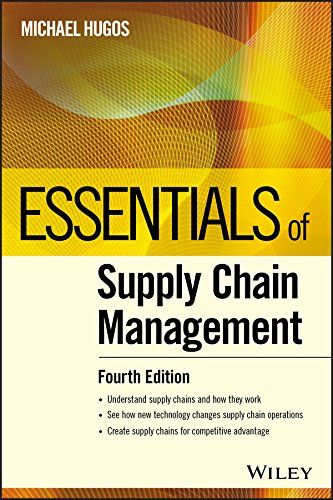
Essentials of supply chain management
Introduction: Mapping the Modern Maze
Introduction: Mapping the Modern Maze
Nova: Welcome to the show. Imagine this: A single container ship gets stuck sideways in a major canal, and suddenly, shelves across the globe are empty, stock prices wobble, and lead times double. That's the power, and the fragility, of the modern supply chain.
Nova: : That image is terrifyingly real, Nova. It shows that supply chain management isn't just about trucks and warehouses anymore; it's the central nervous system of global commerce.
Nova: Exactly. And navigating that system requires a map. Today, we're diving deep into the essential guide that busy professionals turn to: Michael H. Hugos's "Essentials of Supply Chain Management."
Nova: : Hugos promises the core tenets, the crucial concepts. For listeners who think SCM is just glorified logistics, why is this book considered foundational for understanding modern business?
Nova: Because Hugos strips away the jargon and presents a clear, actionable framework. He argues that mastering the essentials is the only way to build resilience against those very disruptions we just mentioned. It’s about strategy, not just execution. We're going to break down the framework he built to help companies gain that competitive edge.
Nova: : I'm ready to get schooled on the essentials. Let's start by defining what Hugos means when he says 'supply chain.' Is it just the chain of suppliers?
Nova: Not even close. That’s where most people get it wrong. Let's jump into Chapter One.
Key Insight 1: Defining the Integrated Network
Beyond Logistics: The Concept of Flows
Nova: Hugos is very clear that supply chain management is primarily concerned with the efficient and effective integration of suppliers, manufacturers, distributors, and customers. It’s a network, not a line.
Nova: : So, if it’s a network, what are the actual things flowing through it that we need to manage? I always assumed it was just the product itself.
Nova: That's the most visible flow, the material flow, but Hugos emphasizes three critical flows. First, the material flow—getting the physical goods from raw material to the end consumer. Second, the information flow—data, orders, forecasts, and status updates moving back and forth.
Nova: : And the third flow? That must be where the real complexity hides.
Nova: It is. The third is the financial flow—the movement of money, payments, credits, and ownership documentation. Hugos stresses that if you can’t manage the information flow quickly and accurately, the material and financial flows will inevitably stall or become costly.
Nova: : That makes sense. If my order data is slow, the manufacturer might overproduce or underproduce, leading to waste or lost sales. It sounds like visibility is baked into the definition.
Nova: Precisely. He frames it as a system where the goal is to maximize the value created while minimizing the total cost across the entire chain. It’s a holistic view. He wants people at all levels of the company to use this framework to organize and improve operations, not just the folks in the shipping department.
Nova: : That’s a key distinction. It moves SCM from a tactical function to a strategic imperative that touches procurement, production, sales, and finance.
Nova: Absolutely. And this integration is what allows modern businesses to respond to disruption. When you know where the information is, you can pivot faster than a competitor who only tracks the physical product once it leaves the dock.
Nova: : So, if we’re integrating all these flows, how do we know if we’re actually doing a good job? Hugos must have a section on measurement, right?
Nova: He does. That leads us perfectly into our next core concept: the metrics that define success in this integrated world.
Key Insight 2: Measuring What Matters for Speed and Cash
The Language of Performance: Metrics and Competitive Advantage
Nova: Hugos’s book is popular because it’s practical, and practicality demands measurement. He dedicates significant attention to the metrics involved in supply chain management.
Nova: : I’ve heard of on-time delivery, but what kind of metrics does Hugos highlight as being essential for gaining that competitive edge he talks about?
Nova: He focuses heavily on metrics that directly impact cash flow and responsiveness. For instance, one major goal is speeding up product flows to customers. The CSCMP notes that firms value SCM managers because they accelerate this process.
Nova: : Speeding up cash flow sounds like music to a CFO's ears. How does SCM directly influence that?
Nova: Think about the cash-to-cash cycle. By optimizing inventory levels—not having too much sitting on shelves, not having too little causing stockouts—you reduce the amount of working capital tied up in goods that aren't yet sold. Hugos shows how better forecasting, driven by better information flow, shortens that cycle.
Nova: : So, if I can turn my raw materials into cash in 45 days instead of 70 days, that’s a massive, measurable win that Hugos’s framework helps achieve.
Nova: Precisely. Another key area is cost-effectiveness. Effective SCM is vital for cutting costs by optimizing everything from sourcing to final delivery. Hugos presents examples where streamlining operations leads directly to lower landed costs per unit.
Nova: : Are there any specific examples or case studies he uses to illustrate this? I need to see this in action, not just as a concept.
Nova: While the book is a broad overview, the later editions integrate real-world examples showing how companies use these metrics to benchmark against competitors. He emphasizes that you must measure performance across the entire chain, not just your internal silos. If your supplier is slow, your perfect internal process is irrelevant.
Nova: : That’s a tough pill for many departments to swallow—realizing their efficiency gain is negated by a weak link upstream or downstream.
Nova: It is. And this brings us to the modern evolution of the book. Hugos has consistently updated his text to reflect new realities, especially technology. The next chapter looks at how digital tools are no longer optional but fundamental to achieving these essential metrics.
Key Insight 3: Leveraging Real-Time Data for Agility
The Digital Thread: Technology as the Integrator
Nova: In the latest editions of "Essentials," Hugos doesn't just talk about the theory; he talks about the tools that make the theory possible in the 21st century. He highlights technologies like cloud computing and real-time data analytics.
Nova: : That’s a huge shift from older SCM texts. It sounds like he views technology not as an add-on, but as the connective tissue for the entire network.
Nova: Exactly. He sees technology as critical for enhancing visibility and coordination. Think about the information flow we discussed earlier. Real-time data analytics allows managers to see patterns, predict bottlenecks, and react instantly, rather than waiting for monthly reports.
Nova: : So, instead of looking in the rearview mirror at last month’s inventory count, I’m looking through a live dashboard that tells me where every component is right now?
Nova: That’s the goal. This visibility is what allows for true agility. When disruptions hit—like a port closure or a sudden demand spike—the companies with strong data analytics can reroute, reallocate, and communicate changes almost immediately.
Nova: : I read somewhere that data and visibility now define the entire strategy. Is that what Hugos is pushing for?
Nova: It is. He’s moving the conversation from simply managing transactions to managing relationships and risk through data. He discusses how leveraging big data allows businesses to hone in on current patterns and make proactive decisions, which is far superior to reactive management.
Nova: : It sounds like the core concept of integration is now technologically enforced. If you don't have the tech, you can't truly integrate.
Nova: That’s the modern reality he outlines. Furthermore, Hugos integrates discussions around sustainability strategies. He connects the dots between efficient operations—reducing waste, optimizing routes—and achieving corporate sustainability goals. It’s efficiency meeting ethics.
Nova: : So, the essential supply chain today is lean, fast, data-driven, and responsible. That’s a lot to absorb for a book titled 'Essentials.'
Nova: It is, but that’s the genius of Hugos’s approach. He distills these complex, modern requirements into a manageable framework. He’s providing the roadmap for executives who need to implement these changes without going back to school for four years.
Key Insight 4: A Guide for the Busy Practitioner
The Professional's Playbook: Actionable Strategy
Nova: Let’s talk about the audience. Hugos specifically designed this series for busy business advisory and corporate professionals. This isn't a dense academic textbook; it’s a concise paperback meant to deliver knowledge quickly.
Nova: : That’s a crucial point. When you’re running a department, you don't have time to wade through 800 pages of theory. You need actionable techniques.
Nova: Exactly. Hugos prioritizes actionable strategies over abstract theory. He uses clear language and relatable examples to ensure that concepts like inventory optimization or supplier relationship management can be immediately applied.
Nova: : Can you give an example of the kind of practical advice he offers that a manager could use tomorrow?
Nova: He often breaks down complex decision-making into simple frameworks. For instance, when discussing sourcing, he provides techniques for evaluating supplier risk and performance that move beyond just price negotiation. It’s about building resilient partnerships.
Nova: : So, it’s less about the 'what' and more about the 'how-to' for organizing and improving the supply chain at every level of the organization.
Nova: Precisely. He wants people at all levels to understand their role in the overall flow. A warehouse supervisor reading Hugos should understand how their cycle count accuracy directly impacts the financial flow metrics the CFO cares about.
Nova: : That cross-functional understanding is invaluable. It breaks down the silos that plague so many large organizations. It forces everyone to speak the same language of efficiency and value creation.
Nova: And that language is built on the foundation he lays out. He’s essentially saying: If you master these core concepts—the flows, the metrics, the technology integration—you have the essential toolkit to navigate almost any supply chain challenge thrown at you, whether it’s a pandemic or just a normal Tuesday.
Nova: : It sounds like the book serves as a necessary translation layer between high-level strategy and ground-level execution. It bridges the gap.
Conclusion: Mastering the Essentials for Future Proofing
Conclusion: Mastering the Essentials for Future Proofing
Nova: So, what’s the final takeaway from dissecting Michael Hugos's "Essentials of Supply Chain Management"?
Nova: : The core message is that supply chain management is the strategic integration of material, information, and financial flows, measured rigorously to drive cash flow and responsiveness. It’s not optional; it’s the competitive battleground.
Nova: And that integration is now technologically dependent. The modern essential supply chain must be visible in real-time through data analytics to handle the accelerating pace of disruption we see every year.
Nova: : For our listeners, the actionable takeaway is this: Don't just manage your piece of the puzzle. Understand the entire framework Hugos provides. Look at your operations through the lens of flows and metrics, and identify where technology can bridge your visibility gaps.
Nova: It’s about moving from being reactive to being predictive. By mastering these essentials, you future-proof your operations against the next inevitable global shock.
Nova: : A fantastic deep dive into the foundational text that keeps the world moving. Thank you for guiding us through Hugos's essential roadmap, Nova.
Nova: My pleasure. Remember, in a world of constant change, the fundamentals are your strongest anchor. This is Aibrary. Congratulations on your growth!