

The Multitasker's Illusion: Why Focused Depth Unlocks More.
Golden Hook & Introduction
SECTION
Nova: Here's a radical thought, Atlas: What if the very thing you've been told makes you successful – multitasking and constant busyness – is actually sabotaging your deepest impact?
Atlas: Whoa, that's a bold claim, Nova! I mean, for so many of us, myself included, busyness feels like a badge of honor. It feels productive, right? Like you're getting so much done, juggling all the plates. Isn't that just how the world works now?
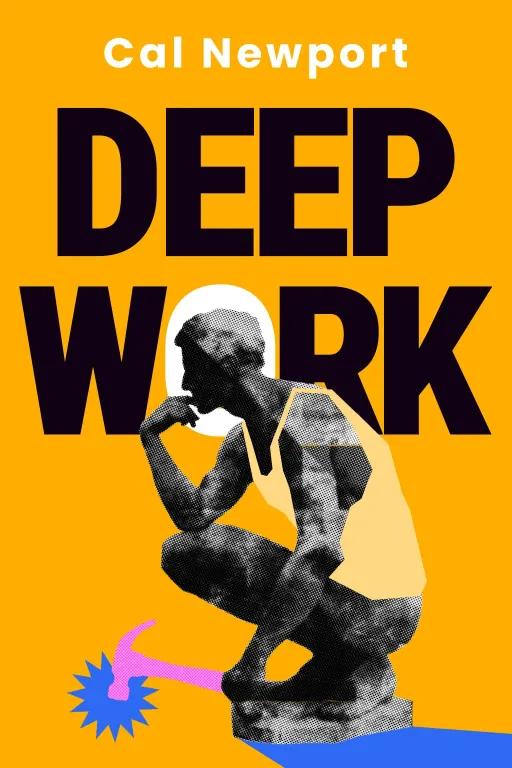
Nova: It certainly that way, doesn't it? But that feeling, that illusion of productivity, is precisely what we're challenging today. We're diving deep into what we call 'The Multitasker's Illusion,' drawing insights from two incredibly influential books: "Deep Work" by Cal Newport and "Essentialism" by Greg McKeown. These authors, in their own unique ways, argue for a complete paradigm shift in how we approach our work and our lives.
Atlas: Cal Newport, the author of "Deep Work," he's fascinating. I remember reading that he wrote these incredibly detailed, research-heavy books and maintained a thriving academic career as a computer science professor, all without ever having a social media account. He literally practices what he preaches, which gives his arguments a lot of weight. Not many authors can say that.
Nova: Exactly! He lives and breathes this philosophy. And that's why his work resonates so deeply. So, let's dive into what 'deep work' actually is and why it's so revolutionary for anyone aiming to make a significant impact.
The Power of Deep Work: Escaping the Multitasker's Illusion
SECTION
Nova: Cal Newport defines 'deep work' as professional activities performed in a state of distraction-free concentration that push your cognitive capabilities to their limit. These efforts create new value, improve your skill, and are hard to replicate. In essence, it's about focused, undistracted concentration.
Atlas: But wait, for someone juggling a dozen roles – a leader, a communicator, an integrator with a full plate – isn't multitasking just a necessary evil? How do you even begin to find 'undistracted concentration' when your inbox is a warzone, your phone is buzzing, and you have three different projects demanding immediate attention? It sounds almost… luxurious, like something only a monk or a tenured professor could achieve.
Nova: I love that you call it a luxury, Atlas, because it speaks to the core of the illusion. We've been conditioned to believe that constant switching, that feeling of being perpetually 'on,' is productive. But Newport argues that this constant context switching, this shallow work, is actually incredibly costly. Every time you switch tasks, your brain leaves behind an 'attention residue' from the previous task. It’s like trying to listen to a new song while the last one is still faintly playing in the background. You’re never fully present.
Atlas: Oh, I know that feeling! It’s like trying to write an important email while half-thinking about an upcoming meeting, and then getting a notification that pulls you into something else entirely. You finish the email, but it feels like it took three times longer, and you're not even sure it's any good.
Nova: Precisely. That's the cost of shallow work. And the impact for someone who needs to master complex information – like designing a curriculum, or crafting a powerful sermon – is enormous. Deep work allows you to quickly master complicated information and produce at an elite level. It’s the difference between skimming the surface and truly understanding, between assembling existing ideas and creating groundbreaking new ones.
Atlas: Can you give us a vivid picture of what deep work like in practice, especially for someone who feels constantly pulled in different directions? Like, how does a curriculum designer or a sermon preparer actually this, rather than just aspiring to it?
Nova: Absolutely. Imagine a curriculum designer, facing the daunting task of creating an entirely new course. Instead of checking emails every ten minutes, or allowing themselves to be interrupted by team chats, they block out a three-hour window. They turn off all notifications, put their phone in another room, and dive into the research. They immerse themselves in pedagogical theory, student psychology, and content sequencing. They might even use a specific framework or tool, but the key is the. In that three hours, they might accomplish what would take an entire day of fragmented, multitasking effort. The ideas flow, connections are made, and the resulting curriculum is not just adequate, but truly innovative and cohesive. They’re not just building lessons; they’re building a coherent, impactful learning journey.
Atlas: That sounds incredibly powerful, but also incredibly difficult to achieve in our always-on culture. It's like trying to swim against a very strong current. So, what's stopping us from doing more of it? Is it just a lack of discipline, or is there something else at play?
Nova: It's more insidious than just a lack of discipline. Our culture often busyness. We equate being busy with being important, being productive. The person who says they're "swamped" or "crazy busy" is often seen as dedicated and successful. But this creates an illusion. You can be incredibly busy with shallow work – responding to emails, attending unnecessary meetings, jumping from one urgent, but not important, task to another – and feel productive, but have very little actual impact. Deep work, by contrast, might feel slow or even isolating at first, but it's where true value is created and real growth happens. It's where you genuinely enrich your impact, whether you're a communicator, a leader, or an integrator.
Essentialism: The Disciplined Pursuit of Less for Greater Impact
SECTION
Nova: And that constant feeling of being 'swamped' that you mentioned, Atlas, often comes from simply having too much on our plate, or rather, too much onto our plate. Which naturally leads us to our second big idea today: 'Essentialism' by Greg McKeown.
Atlas: Ah, the disciplined pursuit of less. I imagine a lot of our listeners, who are constantly trying to connect, understand, and foster growth, might find 'less' a bit counter-intuitive. Aren't we supposed to to have? Isn't saying 'yes' to opportunities a sign of ambition and commitment, especially when you're trying to integrate diverse roles and lead effectively?
Nova: That's a brilliant point, and it's precisely where McKeown challenges conventional wisdom. He argues against the idea that more is always better. Essentialism is about identifying your highest point of contribution – that unique thing only you can do, or do best – and then ruthlessly eliminating everything else that doesn't align with that. It's not about doing less for the sake of it; it's about doing the right things, and then doing them exceptionally well. It’s about making deliberate choices, rather than passively reacting to the demands of others or the perceived needs of your many roles.
Atlas: But for a leader, an integrator, someone who feels responsible for so many different facets of their work and community – how do you even what's essential? Isn't saying 'no' to things that seem good, or even important, a huge risk? You don't want to miss an opportunity, or let someone down.
Nova: That's the challenge, and it requires courage. McKeown offers a compelling perspective: if you don't prioritize your life, someone else will. He tells stories of executives who felt overwhelmed, constantly saying yes to every request, only to find themselves spread thin and ineffective. One powerful example might be a community leader who was involved in a dozen different initiatives, all good causes, but none truly flourishing because their attention was so fragmented. They felt a deep sense of purpose, but their impact was shallow.
Atlas: So, they were busy, but not productive in the way that truly mattered.
Nova: Exactly. Through essentialism, this leader might step back, identify their unique gift – let's say, inspiring local youth – and then gracefully decline roles on other committees or projects that, while worthwhile, didn't directly amplify their highest contribution. They then poured their full energy, their deep work, into the youth initiative, transforming it from a struggling program into a thriving movement that had a profound, measurable impact. It's about recognizing that saying 'no' to ten good things allows you to say a resounding 'yes' to one great thing. It's about gaining control over your choices and achieving more meaningful results across your diverse interests.
Atlas: So it's not about being lazy, it's about being incredibly strategic with your energy. It's almost like a superpower for people who have a deep sense of purpose, to ensure that purpose actually translates into action, rather than just scattered effort. It's about protecting that valuable time and focus.
Nova: That's it. It allows you to reclaim your choices, to ensure your actions are truly aligned with your deepest values and goals. For someone who integrates diverse roles – teaching, writing, leading – essentialism provides the framework to ensure each of those roles gets the focused attention it deserves, preventing burnout and maximizing impact.
Synthesis & Takeaways
SECTION
Nova: So, when you combine Newport's deep work with McKeown's essentialism, you get an incredibly powerful strategy. It's about first identifying the few things that truly matter most, and then giving those chosen few things your absolute, undistracted best.
Atlas: That sounds like the ultimate cheat code for anyone who feels overwhelmed but still driven to make a significant impact. It's about quality over quantity, for sure. This isn't just about time management; it's about life management. But where do our listeners, juggling all these roles – the communicator, the leader, the integrator – even begin to implement such a profound shift? It feels like a mountain to climb.
Nova: It can feel like a mountain, but the beauty is you don't have to conquer it all at once. Here's a tiny step for this week, something anyone can do: Block out just 90 minutes for 'deep work' on a single, high-leverage task. Completely free of distractions. No phone, no email, no social media. Just 90 minutes. And then, observe the difference in your focus, your output, and even your energy levels.
Atlas: Just 90 minutes? That's actually doable, even for the busiest among us. It's not a full day, it's not a week. I imagine that small investment could yield disproportionate returns, almost like compound interest for your focus. It’s about protecting that time, as our growth recommendations suggest for our multi-faceted listeners. That’s a truly actionable insight.
Nova: Exactly. It's not about doing less overall; it's about doing what truly matters, deeply and effectively. It’s how you move beyond mere activity to truly impactful work, allowing you to thrive in your multi-faceted life. It's how you unlock that deeper sense of purpose and translate it into tangible results.
Atlas: And that, for our listeners who are communicators, leaders, and integrators, is how you amplify your message, deepen your influence, and master your time. It’s all about intentionality and focus, not just busyness. That’s a powerful message.
Nova: Absolutely. This is Aibrary. Congratulations on your growth!









