

The Constant Hustle is a Trap: Why You Need Mindful Productivity.
Golden Hook & Introduction
SECTION
Nova: Atlas, I've got a challenge for you today. Five words. Describe your typical Monday morning. Go.
Atlas: Oh, man. Coffee. Emails. Chaos. More emails. Survive.
Nova: Survive. I feel that in my soul. That one word perfectly encapsulates the modern dilemma many of us face, doesn't it? That feeling of constantly battling to stay afloat, just to get through the day.
Atlas: Absolutely. It's like I'm swimming through quicksand, and every notification is another brick tied to my ankle. You know, I imagine a lot of our listeners feel that exact same way, especially when they're trying to juggle work, family, and maybe even a personal project or two.
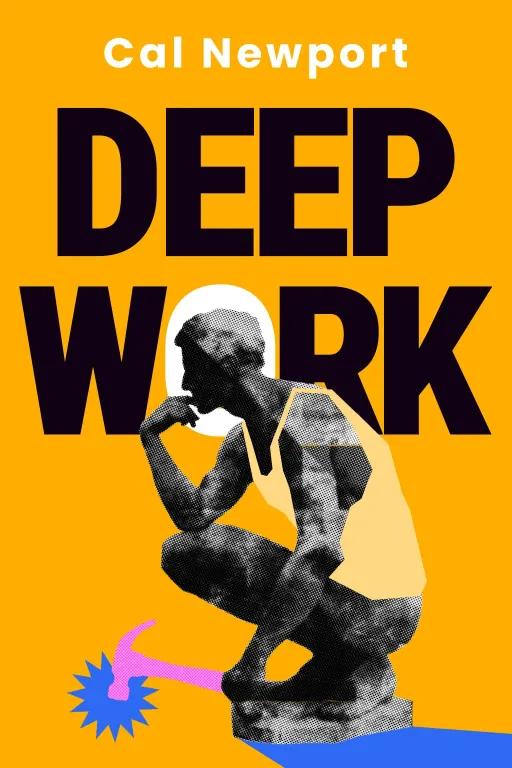
Nova: You've hit on the core of what we're dissecting today. We’re diving into two incredibly insightful books that challenge this very notion of busyness as a virtue: and Newport, a computer science professor, brings a rigorous, almost scientific approach to how we focus, and McKeown, a leadership consultant, offers a strategic framework for clarity. They both argue that this constant pressure to be "on" is actually a trap.
Atlas: A trap. That’s a strong word. I mean, for a lot of people, myself included, being busy often feels like progress. Like you’re making things happen, right? So you’re saying that feeling is… deceptive?
Nova: Precisely. It's a blind spot, a pervasive illusion. That rush you feel? It’s often just the adrenaline of context-switching, not the satisfaction of true accomplishment. And for those of us who are deeply connected to our inner circles, who are actively pursuing self-improvement, and who crave balance and well-being, this trap is particularly insidious. It promises progress but delivers burnout.
The Blind Spot – Busyness vs. Productivity
SECTION
Nova: Let's unpack this blind spot. In our always-on world, there’s this unspoken agreement that being busy is synonymous with being productive. We wear our exhaustion like a badge of honor. You see it everywhere: the overflowing inbox, the back-to-back meetings, the late-night emails.
Atlas: Oh, I know that feeling. It's like if you're not constantly doing something, you're not trying hard enough. And for someone who's trying to build something meaningful, whether it's a career or a better life for their family, that pressure can be intense. But wait, isn't being "available" and responsive a sign of dedication, especially in a high-stakes environment?
Nova: That’s a great point, Atlas, and it highlights the societal conditioning we're up against. We've conflated responsiveness with effectiveness. But here’s the rub: constant availability leads to fragmented attention. You might be working hard, but not on the things. Think of a knowledge worker who wakes up with a clear goal in mind – say, designing a crucial system. But their day gets hijacked by a barrage of emails, urgent but not important requests, and unexpected meetings.
Atlas: So they spend eight hours at their desk, feel completely drained, but that big, impactful project barely moved forward. That’s a gut punch.
Nova: Exactly. They've been busy, performing what Newport calls "shallow work" – non-cognitively demanding tasks often performed while distracted. Replying to emails, coordinating logistics, attending status updates. All necessary, perhaps, but rarely the tasks that move the needle. The real breakthroughs, the truly valuable work, requires what he terms "deep work."
Atlas: Deep work. So, intensely focused. But how does that even happen when you’re constantly pulled in a million directions? I mean, I imagine a lot of our listeners are thinking, "That sounds great, Nova, but my boss expects instant replies, and my kids need dinner, and I have a hundred other things pulling at me."
Nova: That's the challenge, and it's why these books are so vital. Newport shows that this constant context-switching isn't just inefficient; it actually to be more easily distracted. We lose our capacity for sustained focus. It’s like trying to fill a bucket with a sieve. You're pouring in effort, but it’s leaking out everywhere. And for someone who values personal growth and a healthier, more fulfilling life, this diluted focus is a direct impediment. It prevents you from truly engaging with your learning, your relationships, your creative pursuits.
Atlas: That's kind of heartbreaking, actually. To be putting in so much effort, driven by good intentions—to provide, to grow—only to find that the very method you’re using is sabotaging the outcome. It sounds like a treadmill you can’t get off.
The Shift – Cultivating Mindful Productivity with Deep Work & Essentialism
SECTION
Nova: It can feel like a treadmill, Atlas. But here’s where the shift comes in, and it’s a powerful one. If busyness is a trap, how do we escape it? This is where Newport and McKeown offer a powerful roadmap, a radical alternative to the hustle.
Atlas: Okay, so if I’m feeling that treadmill effect, what’s the first step to getting off?
Nova: It starts with reclaiming your focus, which is where comes in. He argues that true, valuable work requires intense, distraction-free concentration on a single task, pushing your cognitive capabilities to their limit. Think of a craftsman meticulously carving wood, or a musician composing a symphony – they’re fully immersed, creating something of profound value. Newport, himself a prolific academic and author, exemplifies this. He blocks out large chunks of time, often early in the morning, to produce his most impactful work without any digital interruptions.
Atlas: So, it's not just about you do, but you do it. Like a software engineer who dedicates a specific block of time, say, from 9 AM to 12 PM, to just coding, no emails, no Slack, no phone. Just pure, unadulterated problem-solving.
Nova: Exactly. And the results are transformative. Not only do they produce higher quality work, but they also find professional fulfillment in the process. You feel a sense of mastery, of truly something. This is a stark contrast to the scattered, reactive days we just talked about.
Atlas: That makes sense. But then, how do you decide which one thing deserves that deep work? Because I have a list of twenty "most important" things. That's where I imagine a lot of people like me, who are trying to balance multiple priorities, get stuck.
Nova: That’s where becomes the perfect complement. McKeown introduces the disciplined pursuit of. He shows that by saying no to almost everything, you can say yes to the few things that truly make a difference. It’s about discerning the vital few from the trivial many. He himself, as a leadership consultant, saw countless executives overwhelmed by commitments. His philosophy isn't about time management; it's about.
Atlas: Come on, Nova. "Saying no to almost everything" sounds extreme. How does that apply to someone who feels deeply connected to their inner circle? I mean, if I'm trying to be a supportive family member, or a dedicated team player, "no" isn't always an option, is it? It feels like it could conflict with being a "Nurturer" or a "Builder."
Nova: That's a common misconception, Atlas. Essentialism isn't about being selfish or shirking responsibility. It's about being about where you invest your finite time and energy. McKeown's point is that if you don't intentionally choose what to say "yes" to, others will choose for you. Imagine a leader who stopped attending all optional meetings and instead focused on 2-3 critical strategic initiatives for their team. Their team's impact skyrockets because the leader is now focused on what truly matters. For someone who wants to be present for their family, it might mean saying no to a social commitment that doesn't truly energize you, so you can say a more enthusiastic "yes" to an evening with your kids.
Atlas: So it's not about being less engaged, but being engaged in the things that truly align with your values and goals. That’s a great way to put it. It’s about creating boundaries, even for yourself, so you can actually give your best to the vital few, rather than spreading yourself thin across the trivial many. That's actually really inspiring, especially for someone who's trying to find calm in their busy life and discover their true professional passion.
Synthesis & Takeaways
SECTION
Nova: Exactly. Both Newport and McKeown challenge the modern work ethic. They guide us to prioritize focused effort over fragmented busyness, leading to less stress and more meaningful output. It’s a radical shift from "how can I fit everything in?" to "what are the few things I absolutely do, and how can I do them exceptionally well?"
Atlas: That gives me chills, honestly. It’s a complete reframing of what success and fulfillment actually look like. The constant hustle isn't just inefficient; it actually robs us of our capacity for profound connection and personal growth. The real value is in creating space for what truly nourishes our lives and the lives of those we care about.
Nova: Couldn't have said it better, Atlas. It’s about reclaiming our most precious resource – our attention – and directing it towards what truly matters. And that leads us to our deep question for you, our listeners, this week:
Atlas: What is one activity you can eliminate or delegate this week to create more space for truly essential work? Think about it, and share your answers with the Aibrary community. We'd love to hear how you're making that shift.
Nova: This is Aibrary. Congratulations on your growth!









