The 'Busy Trap' is a Trap: Why Focused Execution Delivers Real Agent Value.
Golden Hook & Introduction
SECTION
Nova: You know, Atlas, there's this pervasive myth in our culture, especially in high-tech fields, that equates constant busyness with actual value creation. We wear exhaustion as a badge of honor. We see a packed calendar and think, "Ah, productivity!" But what if that's not just wrong, but actively sabotaging our ability to create anything truly meaningful?
Atlas: Oh man, Nova, that hits close to home for so many of our listeners. I can almost hear the collective sigh of recognition out there. It’s like if you're not juggling ten things at once, you're somehow not pulling your weight. For our listeners who are full-stack engineers, architects, building complex Agent systems, the pressure to be 'on' and 'doing' all the time is immense. How do you even begin to challenge that mindset?
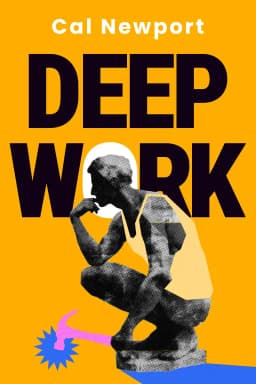
Nova: Exactly! And that's precisely what we're dissecting today, pulling insights from two profound books: Cal Newport's "Deep Work" and Greg McKeown's "Essentialism." It's about recognizing that the 'busy trap' is, in fact, a trap, and focused execution is where real Agent value lies.
Atlas: So, we’re not just talking about personal time management, but something bigger, right? Like, how does this translate into building better, more stable, more scalable Agent systems?
Nova: Absolutely. Cal Newport, for example, is a computer science professor at Georgetown, and it's fascinating that he advocates for deep focus while famously abstaining from social media and even owning a smartphone. He literally lives the philosophy he preaches, providing a unique, almost monastic perspective on creating in a distracted world. And Greg McKeown, an essentialism expert, has advised major corporations on how to apply these principles to achieve clarity and impact in high-pressure business environments. Their combined wisdom fundamentally shifts your approach from a reactive, busy mindset to a proactive, focused strategy for impactful Agent engineering. It really is about creating new business value.
Atlas: I see. So, it's not just about getting more done, but getting the things done, and doing them with unparalleled focus. That's going to resonate with anyone trying to merge cutting-edge Agent tech with existing business needs.
Deep Dive into Core Topic 1: Cal Newport's Deep Work - Cultivating Uninterrupted Focus
SECTION
Nova: Precisely. Let's start with Newport's concept of "Deep Work." He defines it as the ability to focus without distraction on a cognitively demanding task. He calls it a superpower in our increasingly fragmented economy. Think about it: when was the last time you had a truly uninterrupted block of time, say, three or four hours, to tackle a complex problem without glancing at Slack, checking email, or getting pulled into a 'quick' meeting?
Atlas: Oh, man, that sounds like a dream for many of our listeners. For an engineer architecting an Agent's decision-making logic, or optimizing its performance, those interruptions aren't just annoying; they break the entire mental model. It's like trying to debug a complex system with a constant stream of pop-up ads. How is that even possible for someone in a high-stakes tech environment, constantly dealing with alerts, urgent requests, and the sheer velocity of development?
Nova: It requires a deliberate shift, Atlas. Imagine an Agent engineer, let's call her Sarah, who was constantly context-switching. She'd spend an hour on a complex algorithm, get pulled into a sprint review, then try to jump back, losing precious time re-establishing her mental state. Her output was high in quantity – lots of small tasks completed – but low in quality for the critical, innovative work.
Nova: Sarah decided to implement deep work. She scheduled non-negotiable "deep work blocks" every morning, turning off all notifications, closing unnecessary tabs, and even putting a "do not disturb" sign on her virtual door. At first, it felt uncomfortable, almost unproductive because she wasn't 'responsive.' But within weeks, she wasn't just fixing bugs; she was designing elegant, scalable solutions for the Agent's core architecture. She tackled a particularly thorny issue of integrating a new data stream that had been a bottleneck for months. By dedicating two uninterrupted hours each morning to just that problem, she designed a robust, performant solution in a fraction of the time it would have taken with fragmented attention. The cause was clear: eliminating distractions and creating a ritual for focus. The process was disciplined commitment to those blocks. The outcome? A breakthrough in Agent performance and a significant reduction in future technical debt.
Atlas: Wow, that's actually really inspiring. I can definitely relate to that feeling of constantly trying to re-establish your mental state after an interruption. So, what you're saying is it’s not about finding more time, but about protecting the quality of the time you have for those critical, cognitively demanding tasks. What are some immediate, actionable steps listeners can take to start cultivating these deep work habits, especially if they're looking for fast mastery of Agent engineering techniques?
Nova: It starts small. Identify one hour, just one, this week where you can truly go dark. No email, no chat, no meetings. Dedicate that hour to the single most complex, high-leverage problem on your Agent project. Treat it like a sacred appointment. Newport also suggests creating "deep work rituals" – a specific location, a specific time, even a specific type of coffee – to signal to your brain that it's time to focus.
Deep Dive into Core Topic 2: Greg McKeown's Essentialism - Doing Less, But Better
SECTION
Nova: And that naturally leads us to the second key idea, which often acts as a vital counterpoint to deep work: Greg McKeown's "Essentialism." Because, Atlas, what if you're doing deep work, but you're doing deep work on the things?
Atlas: Oh, I see where you’re going with this. That’s a common pitfall, isn't it? For our listeners building Agent systems, it's easy to get caught up in adding features, chasing every new framework, or optimizing aspects that don't actually move the needle for business value. So, is Essentialism just about saying 'no' more often? That feels almost impossible when you're trying to deliver business value and integrate new tech, where everything feels important.
Nova: It's much deeper than just saying 'no.' McKeown advocates for the "disciplined pursuit of less." It's about distinguishing the vital few from the trivial many. It's not about how to get more things done; it's about how to get the things done. He talks about exploring, eliminating, and executing.
Nova: Consider an Agent engineering team that was struggling with system stability and scalability, despite working long hours. They were building a fantastic array of features, but the core infrastructure was creaking under the weight. Every new request felt essential. The cause was a lack of clear prioritization, leading to feature bloat and technical debt. They were essentialists in reverse. When they adopted an essentialist mindset, they held a "ruthless prioritization" workshop. They asked: "What is the we need to build for this Agent to deliver its core value?" They eliminated half the planned features, not because they were bad ideas, but because they weren't right now. The process involved tough conversations and letting go of good ideas for the sake of great ones. The outcome? They freed up significant engineering capacity. They could then apply deep work to fortifying the Agent's core architecture, leading to vastly improved stability and scalability, and ultimately, a more robust, valuable product for the business. They achieved more by doing less.
Atlas: That's a perfect example. I imagine a lot of our listeners, especially those acting as architects, are constantly grappling with feature creep versus core stability. It's easy to get distracted by the shiny new thing, or to feel obligated to build everything asked for. How do you identify those 'non-essential' activities in a dynamic Agent development environment where everything feels important? How do you decide what truly matters for stability and scalability?
Nova: McKeown suggests a few filters. First, "If you don't say yes with a hell yeah, say no." Second, ask: "What problem are we trying to solve?" This helps cut through superficial requests. Third, consider the long-term impact: "Will this contribute to the Agent's fundamental stability and future scalability, or is it a short-term fix?" It requires constantly evaluating trade-offs and being brave enough to prune. It's about designing your work, not just default reacting to it.
Synthesis & Takeaways
SECTION
Nova: So, bringing "Deep Work" and "Essentialism" together, they’re really two sides of the same coin, aren't they? Essentialism helps you identify the vital few projects, the truly impactful Agent features, the critical architectural decisions. And Deep Work gives you the superpower to execute those vital few tasks with unparalleled focus and quality.
Atlas: That's a fantastic way to put it, Nova. For our listeners building complex Agent systems, this isn't just about personal productivity hacks; it's about architectural clarity, strategic focus, and ultimately, delivering breakthrough value that truly integrates technology with business goals. It's about ensuring your Agent systems aren't just 'busy' processing data, but creating intelligence.
Nova: Exactly. It's about moving beyond the superficial appearance of activity to the profound reality of impact. And that brings us to our deep question for this week: What is one 'shallow work' activity you could eliminate this week to create more time for deep, concentrated effort on your Agent projects? This isn't just about clearing your calendar; it's about reclaiming your capacity for innovation.
Atlas: That’s a powerful challenge. For our listeners who are driven to become domain experts and turn cutting-edge tech into concrete results, this is the kind of insight that helps break boundaries between technology and business. Nova, how can we, as value creators, apply this to ensure our Agent systems aren't just busy, but truly transformative, pushing the limits of what's possible in AI?
Nova: By understanding that true transformation doesn't come from relentless activity, but from relentless focus on the essential. It’s about building with intent, not just with speed. It's recognizing that the greatest breakthroughs often emerge from quiet, undistracted thought.
Nova: This is Aibrary. Congratulations on your growth!