

Strategic Focus & Sharpened Decisions
Golden Hook & Introduction
SECTION
Nova: The secret to achieving more isn't doing more. It's doing. And not just less, but better. But why is that so incredibly hard for us to actually do?
Atlas: Oh, I love that. Because it flies in the face of everything our culture tells us, right? We're constantly chasing the next thing, adding to the to-do list, feeling like if we're not busy, we're not productive. But deep down, I think a lot of us feel that overwhelm. So, what's the magic trick here, Nova?
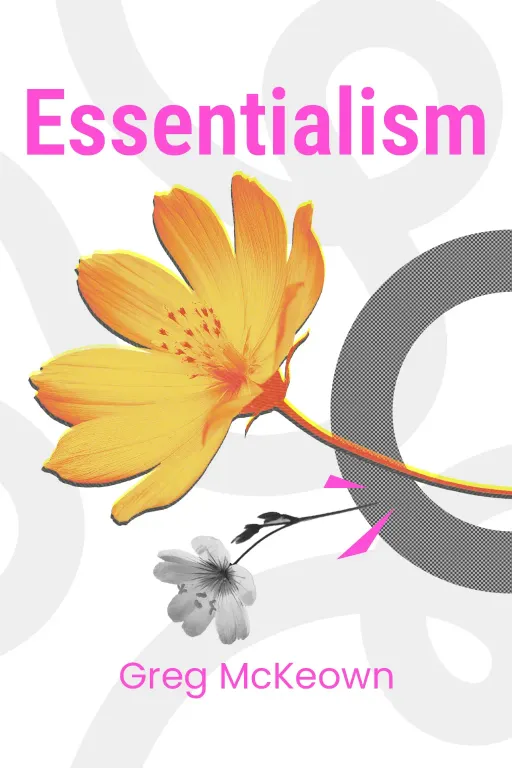
Nova: Well, it's less magic and more profound clarity, Atlas. Today, we're diving into two foundational texts that, when combined, offer a powerful antidote to that overwhelm and a blueprint for truly strategic decision-making. First up, we have Greg McKeown's widely acclaimed book, "Essentialism: The Disciplined Pursuit of Less." McKeown, a brilliant leadership and design consultant, distilled years of working with overwhelmed executives into a philosophy that has resonated with millions seeking focus and impact.
Atlas: I can definitely see how that would speak to visionary leaders. It’s a constant battle against distractions.
Nova: Exactly. And then, providing the psychological bedrock for we actually make those choices, we have Daniel Kahneman’s groundbreaking work, "Thinking, Fast and Slow." Kahneman, a Nobel laureate in Economic Sciences, revolutionized our understanding of human judgment and decision-making, showing us the hidden forces at play in our minds.
Atlas: Ah, the Nobel Prize-winning insights. That’s the kind of deep analysis our listeners crave. So, how do these two titans of thought connect to help us make sharper decisions?
The Power of Less: Essentialism and Ruthless Prioritization
SECTION
Nova: They connect beautifully, Atlas. Essentialism, at its core, is about a disciplined pursuit of less. McKeown argues that most of us are stuck in the "nonessentialist" trap, constantly saying yes to everything, spreading ourselves thin, and ultimately achieving less meaningful progress.
Atlas: That sounds rough, but it's incredibly relatable. For anyone developing future leaders, or trying to steer a strategic plan, there's this inherent drive to be responsive, to seize every opportunity. How do you say "no" without feeling like you're letting your team down or missing a crucial pivot?
Nova: That's the tension, isn't it? McKeown isn't advocating for laziness; he's advocating for action. He talks about the difference between the "undisciplined pursuit of more" and the "disciplined pursuit of less." Think of it like this: a nonessentialist's life is a cluttered attic, full of things they need someday, while an essentialist's life is a curated art gallery, where every piece is intentionally chosen and adds immense value.
Atlas: That’s a great analogy. So, it's not about emptying the attic, but about transforming it into a gallery. But how do you that, especially when the "stuff" in your attic might be important projects, team initiatives, or even personal commitments?
Nova: It requires ruthless prioritization. McKeown famously suggests a simple yet profound filter: "If it's not a clear 'hell yes!', it's a clear 'no.'" This isn't just about time management; it's about discerning what truly aligns with your highest contribution and strategic objectives. He provides frameworks for evaluating opportunities, asking questions like, "What is the absolute core problem I'm trying to solve?" or "What is the one thing I can do that would make everything else easier or unnecessary?"
Atlas: Okay, so it’s about making conscious trade-offs, not just passively letting things pile up. But wait, for a strategic navigator, someone who's constantly evaluating potential outcomes and aligning vision with action, how do you even begin to apply that "hell yes" filter to something as complex as a long-term strategic initiative? There are so many moving parts, so many unknowns.
Nova: That's where the discipline comes in. It means actively creating space to think, to explore, to question. It means having the courage to eliminate projects that are merely "good" in favor of those that are "great." It might involve challenging assumptions about what success even looks like, or what your team truly needs to focus on for development. It’s about being a gatekeeper for your time and energy, and for your team's collective focus.
Atlas: It sounds like it requires a certain level of clarity and confidence to stand firm against the gravitational pull of "more."
Navigating the Mindfield: Cognitive Biases in Decision-Making
SECTION
Nova: Absolutely. And that clarity and confidence can often be undermined by something we're largely unconscious of: our own minds. This is where Daniel Kahneman's work becomes indispensable. He delves into our two systems of thinking: System 1 and System 2.
Atlas: So you're saying our brains have different operating modes? Like a default setting and a manual override?
Nova: Exactly! System 1 is our fast, intuitive, emotional, automatic mode. It's what lets you recognize a friend's face instantly, or slam on the brakes without thinking. It's incredibly efficient, but it's also prone to biases. System 2 is slower, more deliberate, logical, and requires effort. It's what you use to solve a complex math problem or plan a detailed itinerary.
Atlas: I guess that makes sense. We can’t consciously analyze every single piece of information all the time. But how does System 1 trick us, especially when we're trying to make those essentialist choices?
Nova: System 1 is fantastic for quick judgments, but it loves shortcuts. These shortcuts are what Kahneman calls cognitive biases. For example, confirmation bias: we tend to seek out and interpret information that confirms our existing beliefs. So, if a leader a certain project to be a "hell yes," System 1 might unconsciously highlight all the data that supports it and downplay anything contradictory.
Atlas: Oh, I've been there! I imagine a lot of our listeners, especially those in strategic planning, have seen that play out. You get invested in an idea, and suddenly, every piece of data seems to confirm its brilliance. How does a strategic navigator even begin to spot these biases, not just in themselves, but in their team when they're trying to foster a culture of objective decision-making?
Nova: It requires a conscious effort to engage System 2. Kahneman illustrates how biases like the availability heuristic—overestimating the likelihood of events that are easily recalled—can sway our decisions. If a leader just heard about a competitor's successful new product, they might overestimate the importance of launching a similar product, even if their own core strategy suggests otherwise. Or anchoring bias, where an initial piece of information, even if arbitrary, heavily influences subsequent judgments.
Atlas: That makes me wonder about negotiations or setting budget targets. If someone throws out a big number first, it probably anchors everyone's perception. So, it sounds like the "fast" thinking, while efficient, can actually be a liability if we're not aware of its pitfalls.
Nova: Precisely. The goal isn't to eliminate System 1; it's essential for survival. The goal is to recognize when big decisions require System 2 to step in and apply that deliberate, logical scrutiny. It’s about pausing, questioning your immediate gut reaction, and actively seeking out disconfirming evidence.
Synthesis & Takeaways
SECTION
Nova: So, bringing it all together: Essentialism gives us the framework for identifying what truly matters, what deserves our "hell yes." Kahneman's work then equips us with the self-awareness to make sure our "hell yes" decisions aren't hijacked by unconscious biases.
Atlas: That’s actually really inspiring. For our listeners who are developing future leaders, trying to align their vision with action, and communicate effectively, this is incredibly powerful. It’s about not just you choose, but you choose it. So, what's that tiny step we can take to start applying these profound insights?
Nova: It’s a three-part process for your next significant decision. First, list every single factor and potential outcome you can think of—get it all out. Second, apply an 'essentialist' filter to that list. Ruthlessly identify the absolute core elements, the non-negotiables, and the true priorities. And finally, and this is crucial, pause. Consciously consider any System 1 biases—like confirmation bias or anchoring—that might be influencing your quick judgment. Are you seeing what you to see, or what's truly there?
Atlas: That's a practical roadmap for clarity and impact. It transforms decision-making from a reactive scramble into a deliberate, informed act of leadership. It truly embraces the journey of growth, knowing that every step forward counts, especially when it’s a focused, unbiased step.
Nova: Exactly. It's about making choices that are not just efficient, but profoundly effective.
Atlas: Thank you, Nova. That's a powerful combination of insights for anyone looking to navigate the complexities of leadership and life.
Nova: My pleasure, Atlas.
Nova: This is Aibrary. Congratulations on your growth!









