

Stop Drifting, Start Steering: The Guide to Intentional Living.
Golden Hook & Introduction
SECTION
Nova: What if I told you that the secret to achieving more, to making a truly significant impact, isn’t about adding more tasks to your plate, but about ruthlessly cutting things away?
Atlas: Whoa. That sounds almost… heretical in our always-on, always-doing culture. My first instinct is, “But I have to do all these things!” What are you even talking about, Nova?
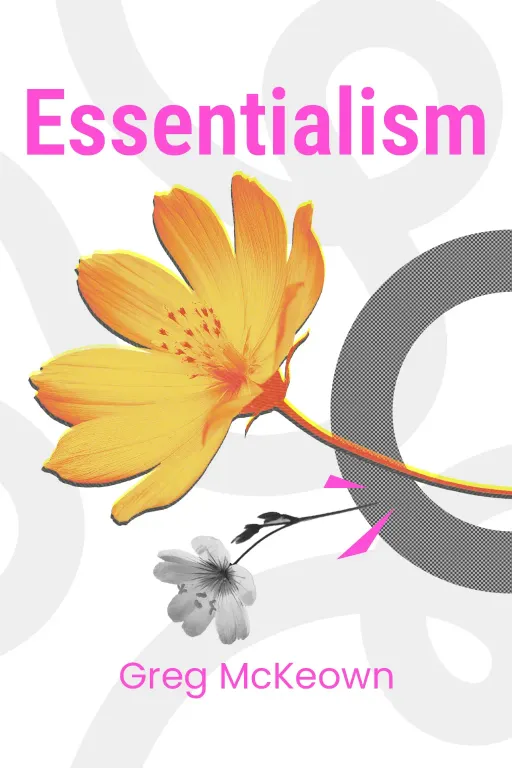
Nova: I know, right? It feels counter-intuitive. But today, we’re diving into the powerful philosophy behind. And at its heart are two incredible books that champion this idea: by Greg McKeown and by Gary Keller and Jay Papasan. McKeown, a high-level consultant for tech giants like Apple and Google, realized even the most brilliant minds were burning out from diffused effort. And Gary Keller, who built one of the largest real estate companies in the world, along with Jay Papasan, saw firsthand how singular focus was the secret to extraordinary results.
Atlas: Right, because I think a lot of our listeners, especially those building the future and striving for impact, often feel like they’re running on a treadmill. They’re busy, they’re working hard, but there’s this nagging feeling that they’re not actually moving the needle as much as they could be. It's like a constant state of productive anxiety.
The Myth of Busyness as Productivity
SECTION
Nova: Exactly! That’s the cold, hard fact we need to confront. We often mistake constant activity for meaningful progress. It’s like a spinning top: lots of motion, lots of energy, but it ultimately stays in the same place. True impact, true steering, comes from focused action, like a directed arrow.
Atlas: That’s a great analogy. But in our fast-paced world, especially if you're an innovator or strategist, if you're not constantly doing something, you feel like you're falling behind. How do we even begin to break that cycle? Because there's this pressure to say 'yes' to every opportunity, every meeting, every new initiative.
Nova: Absolutely. Society often rewards visible effort over actual, measurable results. We get caught in this trap of "busyness for busyness' sake." McKeown points out that many people feel pulled in a million directions precisely because they haven't explicitly chosen their direction. They’re reacting, not designing. They’re drifting.
Atlas: Okay, but isn't there value in exploring many avenues, especially for someone who needs to innovate and see the future? How do you maintain that foresight and breadth of vision if you're constantly narrowing your focus? That sounds a bit restrictive.
Nova: That’s a crucial distinction. It's not about exploring; it's about exploration, not accidental drifting. It's about choosing your explorations carefully. Think of a leader I once observed – brilliant mind, but he had five major initiatives all running concurrently, each demanding significant resources. He was incredibly busy, constantly in meetings, but none of the initiatives ever gained real traction. They were all under-resourced and diluted.
Atlas: So, it’s about the silent cost of diffused effort, where we're busy but not truly moving the needle. It's not just about time, it's about the mental and emotional toll of feeling spread too thin. That's going to resonate with anyone trying to sustain peak performance.
The Power of Intentional Focus: Essentialism & The One Thing
SECTION
Nova: Precisely. And that silent cost is exactly what both McKeown and Keller & Papasan tackle head-on. They offer a powerful antidote: intentional focus. McKeown’s is all about identifying the few things that are truly vital—the absolute essentials—and then ruthlessly eliminating everything else. It’s about doing less, but better. Like the story of a tech company that was struggling with too many product lines. They decided to cut 90% of their offerings and poured all their energy into the remaining 10%. Within a year, their market share for those core products doubled.
Atlas: But how do you even to decide what's essential when everything feels important, especially for someone trying to nurture growth in others and strategically lead? That’s where the rubber meets the road, isn’t it? The choices can feel impossible.
Nova: That’s where by Keller and Papasan offers a brilliant, almost deceptively simple framework. They introduce what they call the "focusing question": "What's the ONE Thing I can do such that by doing it everything else will be easier or unnecessary?" It forces you to prioritize, to see the domino effect of a single, crucial action. Imagine a CEO faced with a complex organizational restructure. Instead of tackling 20 different issues, her ONE Thing was to clearly define the new leadership roles. Once that was done, all the other decisions about team structure and responsibilities became incredibly clear.
Atlas: That sounds almost too simple. Like, if it were that easy, everyone would be doing it. Are there real-world pitfalls to this extreme focus? Because I can imagine some people thinking, "What if I miss out on something important?" or "What if my 'one thing' is wrong?"
Nova: Oh, the challenge isn't in understanding the concept; it's in the discipline required to execute it. It demands courage to say 'no' to good opportunities for the sake of great ones. And it links directly to our own "Nova's Take" on this: by deliberately choosing what to focus on, you don't just work harder, you amplify your efforts. You achieve meaningful progress without feeling overwhelmed. It’s why we always recommend scheduling intentional unplugged time – that's often a "one thing" for recharging your genius.
Atlas: I love that. So, it's not just about saying 'no' to things, but saying 'yes' with extreme conviction to the absolute best thing. It's about being a sculptor, not just a collector. You're chiseling away the non-essentials to reveal the masterpiece underneath.
Synthesis & Takeaways
SECTION
Nova: Exactly! It’s about making deliberate choices, understanding that every 'yes' to something non-essential is a 'no' to your most important work. It's about steering your ship, not letting the currents of endless demands push you wherever they may. It's a profound shift from a reactive life to a proactive one.
Atlas: This isn't just a productivity hack; it's a fundamental shift in how we approach impact. It’s about optimizing our cognitive load to sustain peak performance, which is crucial for deep work and mindful leadership. For those of us who possess foresight and are driven by impact, this is how we truly build the future.
Nova: So, for our listeners, here’s your tiny step: identify one area where you feel overcommitted. What is one non-essential activity you can remove this week? Just one.
Atlas: And trust your instincts on that. Your vision for impact is clear; embracing this journey of intentionality is how you build the future you envision. You’re an innovator, a nurturer, a strategist – it’s time to truly steer.
Nova: This is Aibrary. Congratulations on your growth!









