5 Books on Curing "Hustle Culture" Burnout
Signs You Are Burnt Out, Not Lazy
Golden Hook & Introduction
SECTION
Cassidy: Okay, confession time—I tried to “optimize” my morning routine last week and somehow ended up scheduling breathing. Michelle: Wait—like “inhale at 8:03, exhale by 8:04”? That’s not mindfulness, that’s cardio with paperwork. Cassidy: Exactly. I was meditating like I was trying to win gold at the Olympics of calm. That’s when it hit me: I wasn’t relaxing. I was performing relaxation. Michelle: Oh, I know that one. The kind of self-care where you need a spreadsheet just to track your self-care. Cassidy: Exactly! And that’s what today’s episode is about—the trap of trying to out-work exhaustion. Because you can’t. You have to out-recover it. Michelle: Which sounds lovely until you realize recovery isn’t something our culture really respects. We applaud overwork, then treat rest like a guilty secret. Cassidy: True. So today, we’re exploring how to step out of that trap. We’ve got five thinkers to help us do it—Greg McKeown, Devon Price, Emily and Amelia Nagoski, Cal Newport, and Tim Ferriss. Michelle: That’s a serious lineup. It’s like we gathered every author who’s ever looked burnout in the eye and said, “Nope, not today.” Cassidy: Exactly. Together, they help us rebuild what ambition could mean—without losing our sanity, sleep, or sense of humor. Michelle: So instead of “work smarter, not harder,” we’re talking “live slower, feel deeper, choose better.” Cassidy: Beautifully put. Let’s get into it before someone turns this episode into another productivity hack.
Dive into key insights and ideas
SECTION
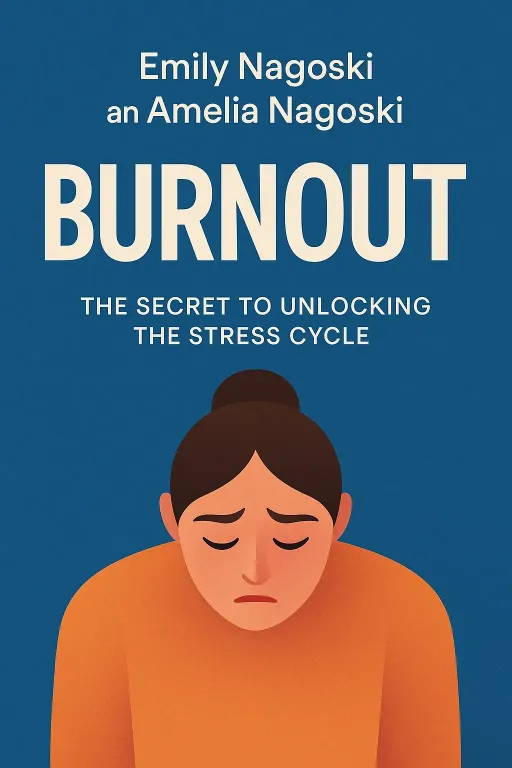
Michelle: All right, take me to the root. Why do we keep confusing exhaustion with success? Cassidy: That’s where Devon Price comes in, with Laziness Does Not Exist. Price argues that the idea of laziness isn’t real—it’s a social invention. We’ve been conditioned to believe our value depends on how much we produce. Michelle: So when we’re tired, instead of resting, we panic about not doing enough. Cassidy: Exactly. Price traces this “laziness lie” back centuries—rooted in Protestant work ethic and industrial capitalism. The moral logic went: if you’re not working, you’re wasting. And that’s seeped into everything. We feel guilt even when we’re off the clock. Michelle: Yeah, that guilt hits the second you sit down to rest. It’s like the ghost of capitalism whispering, “Shouldn’t you be doing something?” Cassidy: Exactly. But here’s the kicker: what we call laziness is often just our body saying, “Hey, I’m done.” Price’s point is that exhaustion isn’t a moral failure—it’s data. It’s your system reporting low battery. Michelle: Which is wild, because culturally, we ignore that data until the battery explodes. Cassidy: And that leads us straight into Emily and Amelia Nagoski’s Burnout. They take Price’s social argument and bring in biology. Their big idea? Stress is a physical cycle, not a psychological glitch. Michelle: Right—the “complete the stress cycle” thing. Emotions are tunnels; you’ve got to go through them, not around them. Cassidy: Exactly. Our bodies have a built-in stress response system. When it’s triggered—heart rate up, adrenaline spiking—we need a physical signal to tell the body the danger’s over. The problem? Modern life doesn’t provide that closure. We’re stuck in perpetual “fight-email-flight” mode. Michelle: Which explains why I can finish twelve meetings and still feel like I’ve been chased by a bear all day. Cassidy: Exactly. We never complete the tunnel. The Nagoskis say recovery isn’t just psychological; it’s physiological. Things like movement, laughter, affection, even deep breathing—those aren’t luxuries. They’re how your body closes the loop. Michelle: So rest isn’t just nice—it’s survival. That’s humbling. Cassidy: Totally. And if Price shows us why we feel guilty resting, the Nagoskis show us what happens when we don’t. Burnout isn’t just mental; it’s biochemical gridlock. Michelle: Okay, so we’ve got social guilt and biological backlog. Where does Greg McKeown fit in? Cassidy: McKeown’s Essentialism tackles the structural side. His philosophy is “do less, but better.” If you don’t prioritize your life, someone else will. He says most of us don’t need time management—we need boundary management. Michelle: So it’s not about squeezing more into the day. It’s about deciding what actually deserves space in the first place. Cassidy: Exactly. McKeown argues that saying no is an act of clarity, not cruelty. Every “yes” is a silent “no” to something else. He reframes trade-offs as strategic, not tragic. Michelle: That’s powerful. But it’s also terrifying, because saying no means risking disappointment—especially if you’ve been raised to be the reliable one. Cassidy: That’s exactly what the Nagoskis call “Human Giver Syndrome.” We’ve been taught that our worth comes from giving endlessly. Especially for women and caretakers, saying no feels almost like rebellion. Michelle: So in a way, Essentialism is the antidote to Human Giver Syndrome—it gives us permission to protect our energy without apology. Cassidy: Yes. McKeown gives language to what the Nagoskis describe emotionally. Price says “you’re not lazy.” The Nagoskis say “you’re trapped in survival mode.” McKeown says “here’s how you build a gate around your time so you can heal.” Michelle: And then comes Cal Newport with Slow Productivity, who kind of rebuilds the whole system around that gate. Cassidy: Exactly. Newport’s argument is that we’ve mistaken “busyness” for productivity. He calls it “pseudo-productivity”—being constantly visible rather than meaningfully effective. Michelle: Yeah, like when your boss equates fast email replies with good performance. “Thanks, I answered in three seconds, but I forgot how to think.” Cassidy: Precisely. Newport’s alternative is “slow productivity.” Do fewer projects, at a natural pace, and focus on quality. He points to people like John McPhee, who would lie on a picnic table for days thinking before writing—and still built a legendary career. Michelle: So slowing down isn’t lazy; it’s actually a performance enhancer for the long game. Cassidy: Exactly. He redefines slowness as a professional virtue. You’re not procrastinating—you’re incubating. Newport says craftsmanship takes time, and rushing kills quality. Michelle: Which makes me wonder—how did we ever think “speed” was the only measure of skill? Cassidy: Because speed is easy to measure. Depth isn’t. Companies can count tasks, not insight. So we start optimizing for what’s countable instead of what’s valuable. Michelle: And that’s how we end up mistaking activity for achievement. Cassidy: Exactly. Which brings us to Tim Ferriss’s The 4-Hour Workweek. Ferriss isn’t saying we should all quit working; he’s saying we should question the rules entirely. His framework—Define, Eliminate, Automate, Liberate—is a way to decouple income and identity from hours worked. Michelle: So he’s not the “escape everything and live in Thailand” guy; he’s the “design your systems so your energy goes where it matters” guy. Cassidy: Exactly. His message resonates because it’s about autonomy. Ferriss asks: if you could remove 80 percent of the busywork, what would you do with what’s left? That’s where life starts to expand again. Michelle: I like that. It’s not anti-work—it’s anti-waste. But he does assume a level of privilege. Not everyone can outsource tasks or redesign their job overnight. Cassidy: Totally fair. Ferriss’s model isn’t universal, but his spirit is. It’s about refusing to live reactively. In that sense, he’s the practical expression of McKeown’s philosophy—systematizing what Essentialism preaches. Michelle: So if I’m hearing this right, each book solves a piece of the burnout puzzle. Price breaks the guilt. The Nagoskis teach recovery. McKeown builds boundaries. Newport rewires how we measure work. And Ferriss designs the escape hatch. Cassidy: Perfectly summarized. They converge on one truth: you can’t heal in the same system that burned you out. You have to rebuild the operating system. Michelle: Okay, but here’s the skeptic in me—how does all this survive in the real world? Deadlines still exist. Bills still exist. Slack notifications definitely still exist. Cassidy: True. That’s where the “experiment” part comes in. None of these are instant fixes. They’re daily disciplines. Start by noticing your burnout triggers. Price would say: when you feel lazy, ask, “What am I avoiding because I’m tired?” not “What’s wrong with me?” Michelle: The Nagoskis would add: move your body to complete the stress cycle. Even a quick walk, dancing in your kitchen, hugging someone for twenty seconds—it all helps. Cassidy: McKeown would have you identify your top three priorities, then eliminate one. It sounds extreme, but that’s how you make room for depth. Michelle: Newport would tell you to guard your deep-work hours like sacred ground—no multitasking, no email tab lurking in the background. Cassidy: And Ferriss would ask: what can you automate or delegate so your brain’s bandwidth is freed for things that actually matter? Michelle: So we’re not quitting work—we’re curating it. Cassidy: Exactly. And neuroscience backs this up. Studies show that after intense focus, stepping away—literally resting—reactivates the default mode network, the part of the brain linked to creativity and insight. The “aha!” moments happen in recovery, not grind. Michelle: Which makes “rest” sound less like indulgence and more like a creative tool. Cassidy: Yes! Recovery isn’t a reward for work—it’s part of the work. Without it, the system collapses. It’s like running a marathon and refusing to drink water because you’re too busy running. Michelle: And then we wonder why we collapse at mile 15. Cassidy: Exactly. Hustle culture turns exhaustion into a status symbol. But evolution didn’t design us for endless output. It designed us for rhythm—effort and renewal, stress and release. Burnout happens when we delete the “release.” Michelle: So we’re basically rediscovering an ancient truth in a modern crisis: slowness isn’t regression—it’s wisdom. Cassidy: Beautifully said. The new ambition isn’t to do it all—it’s to last long enough to enjoy what we do. Michelle: That hits deep. Because most of us are sprinting through lives we never paused to design. Cassidy: Exactly. These books are blueprints for redesign—one emotional, one philosophical, one structural, one neurological, one strategic. Together, they teach that recovery isn’t quitting. It’s recalibration. It’s how we return to being fully human. Michelle: So what does recovery look like for you this week? Cassidy: I’m trying a “single-task day.” One meaningful project, then rest, without guilt. And if that means closing my laptop at 3 p. m., so be it. Michelle: I’m going to experiment with what I’m calling “joyful underachievement.” I’ll let one thing be delightfully imperfect and see if the world still spins. Cassidy: Spoiler: it will. And maybe it’ll spin a little more kindly.
Key takeaways
SECTION
Michelle: So if someone’s listening right now, sitting at their desk with twelve tabs open and a half-cold coffee, what’s the first step out of the burnout loop? Cassidy: Stop. Literally stop. Take thirty seconds and breathe—not to optimize it, not to track it—just to notice it. That’s where recovery begins. Michelle: That pause is terrifying for a lot of us, though. It’s like silence after a concert—you realize how loud your mind’s been. Cassidy: True. But that silence is where your real self speaks. Price would tell you: your worth isn’t conditional. The Nagoskis would say: your body knows when it’s safe again—trust it. McKeown would say: cut what doesn’t serve the mission. Newport would say: protect the craft. Ferriss would say: design the life, not just the schedule. Michelle: So the through line is ownership—owning your energy, your focus, your time. Cassidy: Exactly. The biggest myth of hustle culture is that control comes from doing more. But recovery is where real control begins. It’s when you stop reacting and start choosing. Michelle: And that’s when life starts to feel like yours again. Cassidy: Yes. Because you can’t out-work exhaustion. You can only out-recover it. Michelle: So let’s take the walk. Close the laptop. Say no to the extra meeting. Laugh longer. Rest harder. Cassidy: And remember, balance isn’t the finish line—it’s the foundation. Michelle: This is Aibrary, signing off.