

Mastering English: From Words to Worldviews
Golden Hook & Introduction
SECTION
Nova: You know, Atlas, I was thinking about the sheer audacity of expecting words to just… work. Like, you learn a few hundred vocabulary terms, slap some grammar rules on them, and suddenly you're a linguistic maestro. It’s like buying a set of fancy paintbrushes and expecting to churn out a Rembrandt.
Atlas: Oh, I love that! Because it’s exactly how so many of us approach language, especially English. We collect the tools, but we don't understand the architecture. We grasp at words, hoping they’ll magically connect into something meaningful, something that truly expresses what’s happening inside.
Nova: Exactly! And that’s why today, we're diving into a trio of books that don’t just teach you English; they teach you how to build a mental framework for articulate expression, transforming mere words into entire worldviews. We’re talking about Raymond Murphy’s, Norman Lewis’s, and William Zinsser’s timeless guide,.
Atlas: That’s a powerful combination! Because it’s not just about getting the grammar right, or having a big vocabulary, right? It’s about the confidence to express yourself, to truly connect, which is what so many aspiring linguists out there are really chasing. It’s about building a bridge between what you think and what you say.
The Architecture of Articulate Expression
SECTION
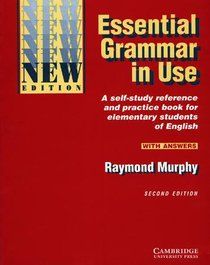
Nova: Absolutely. And let's start with the foundation, the very bedrock: grammar. Raymond Murphy's is a phenomenon. It's been around for decades, translated into countless languages, and it's practically a bible for intermediate to advanced English learners. What's fascinating is Murphy's approach – it’s not about rote memorization. He created this book almost like a self-study guide, making complex rules feel intuitive. It’s widely acclaimed for its clarity and practical exercises.
Atlas: Right? I mean, when I hear "grammar," my eyes usually glaze over. It sounds so… academic. But you’re saying Murphy makes it accessible, almost like a puzzle you actually want to solve? How does he manage to make something so potentially dry feel engaging?
Nova: He does it by focusing on. Each unit is a two-page spread: explanation on the left, exercises on the right. It’s immediate application. He doesn't just list rules; he shows you they exist and they function in real sentences. It's like learning to build with LEGOs – you get the instructions, then you immediately try to build something. It solidifies those foundations because you're actively constructing.
Atlas: That makes sense. Because if you just learn the rule without applying it, it just sits there, an abstract concept. But when you’re building, you’re understanding the purpose. So, it’s not just about avoiding mistakes, but about understanding the of structure?
Nova: Precisely. It’s about understanding that grammar isn't a cage; it’s the scaffolding that allows your ideas to stand tall and be understood. It’s the difference between a pile of bricks and a beautifully constructed building. It enables clarity.
Atlas: Okay, so we’ve got the structure. But a building needs more than just a frame; it needs character, detail, the materials themselves. That’s where Norman Lewis’s comes in, right? Because a strong grammatical foundation with a limited vocabulary is like a sturdy house with no furniture.
Nova: Exactly! And Lewis's book is a masterclass in vocabulary building that goes far beyond memorizing lists. has been transforming vocabularies since the 1940s, and it’s still incredibly relevant because it taps into a fundamental truth about language: its etymology. Lewis teaches you root words, prefixes, and suffixes.
Atlas: Oh, I’ve heard about this! So, instead of learning 10,000 individual words, you learn, say, 50 root words, and suddenly you can decipher hundreds of words you’ve never seen before? It’s like learning the DNA of language.
Nova: That’s the magic! For example, take the root "bene," meaning "good." Suddenly, "benevolent," "benefactor," "benefit" all make sense. Or "mal," meaning "bad": "malice," "malfunction," "malignant." It's a systematic approach that equips you with a mental toolkit to unlock new words. It’s about understanding the behind words, not just the.
Atlas: That’s actually really inspiring. Because for someone who’s focused on improving their English, the sheer volume of vocabulary can feel overwhelming. But this approach offers a pathway to expand expression, not just through brute force, but through understanding the underlying system. It gives you confidence in deciphering the unknown.
Nova: It’s empowering. And Lewis's book is highly rated because it makes learning vocabulary an intellectual detective game. You don't just learn words; you understand their lineage, their family tree. You start seeing connections everywhere.
Your Daily Dialect Practice
SECTION
Atlas: So we’ve got the grammar, we’ve got the vocabulary building. We’re constructing this incredible linguistic architecture. But a building, no matter how well-designed, needs to be inhabited, to be used. That’s where William Zinsser’s steps in, isn’t it? To make sure that beautiful structure is filled with clear, simple, human expression.
Nova: That’s the perfect analogy. Zinsser’s book, first published in 1976, became an instant classic and is still considered essential reading for anyone who wants to write non-fiction effectively. He wasn't a literary theorist; he was a journalist and editor who believed writing was a craft to be honed, not an innate talent. He emphasizes clarity, simplicity, and humanity. It’s widely praised for its directness and timeless advice.
Atlas: Clarity and simplicity. For someone who’s aspiring to speak and write with confidence, that sounds like a beacon. Because often, we think complex ideas require complex language, but Zinsser argues the opposite, right?
Nova: He absolutely does. He famously said, "Clutter is the disease of American writing." He argues that good writing is lean, clean, and direct. It’s about stripping away unnecessary words, avoiding jargon, and making sure every sentence serves a purpose. He also champions the idea that writing is thinking. If your writing is unclear, your thinking is likely unclear.
Atlas: Wow. That’s a profound insight. It’s not just about the words on the page; it’s about the mental process behind them. So, understanding the structure of a language, building a robust vocabulary, and then learning to write clearly—how does all of that fundamentally change your perception of communication itself?
Nova: It transforms it from a chore to an art form. You start to see language not just as a tool, but as a lens through which you perceive and shape reality. When you master grammar, you gain precision. When you build vocabulary, you gain nuance. And when you learn to write well, you gain impact. It’s about moving from simply being understood, to being. It’s about articulating your worldview, not just relaying information.
Atlas: That’s actually really inspiring. Because for our listeners, who are focused on growth, on making informed choices, on connecting with new worlds, this isn't just about English. It’s about intellectual empowerment. It’s about having the confidence to express that unique perspective they’re developing.
Nova: Exactly. It's about moving beyond just learning the rules to understanding the of the language. It’s building a robust mental framework that allows for articulate expression, not just for passing a test, but for engaging with the world with depth and clarity.
Atlas: So, for our aspiring linguists, for the future seekers, the empathetic explorers out there, what’s the tiny step they can take today to start building this linguistic architecture?
Nova: Dedicate just 15 minutes. Pick one grammar rule from Murphy, or one root word from Lewis, or one simplicity principle from Zinsser. Actively practice it. Use it in a sentence, try to write a short paragraph. Don’t just read it; it. And remember, every mistake is a stepping stone, not a failure.
Atlas: I love that. Embrace the mistakes. Because that’s how you learn, that’s how you grow, and that’s how you build confidence. It’s about the journey, not just the destination.
Synthesis & Takeaways
SECTION
Nova: So, what we’ve really explored today is more than just language learning. It’s about crafting a worldview. It’s about understanding that English, or any language for that matter, isn't just a collection of arbitrary rules and words. It's a living, breathing system for thought and connection.
Atlas: And it’s a system where clarity and simplicity, as Zinsser teaches, are paramount. Because if your goal is to express yourself, to genuinely communicate, then being understood without ambiguity is the ultimate power. It allows you to build bridges, explore careers, and connect with cultural narratives more deeply.
Nova: It’s the difference between speaking someone and speaking someone, truly making yourself heard. And that resonates with anyone who’s ever struggled to articulate a complex idea or felt limited by their vocabulary. It's about finding that clear, confident voice within.
Atlas: Absolutely. It’s about taking those practical steps, embracing every mistake, and understanding that each word mastered, each grammatical structure understood, is a step towards a more articulate, more confident, and ultimately, a more impactful you.
Nova: This is Aibrary. Congratulations on your growth!