

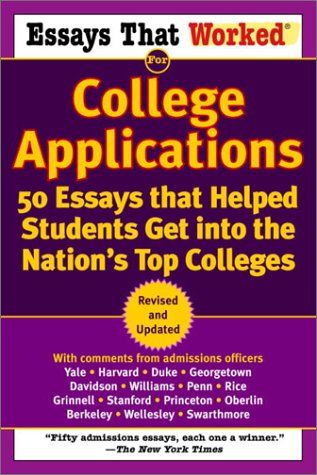
Essays that worked for college applications
Introduction
Nova: Picture this. An admissions officer at a top college is staring down a stack of a hundred essays. He has until 6 p. m. to finish. He rubs his eyes and mutters something you would never expect to hear from the gatekeeper of an elite institution. He says: Please, no more essays about being student council president.
Nova: According to the admissions officer interviewed in the book we are diving into today, there are four essay types that make his eyes glaze over. The class president essay, the I-lost-but-learned sports essay, the I-went-to-Europe-and-discovered-the-world-is-complex essay, and the being-yearbook-editor-is-hard-work essay.
Nova: You and about five hundred other applicants every single year. Which is exactly why the book "Essays that Worked for College Applications," edited by Boykin Curry and Brian Kasbar, became such a phenomenon. It collects fifty real essays that actually helped students get into the nation's top colleges. And it does not just show them, it explains why they worked.
Nova: Not at all. It is a playbook for authenticity. The book opens with a candid interview with an admissions officer who shares exactly what makes an essay stand out like, and I am quoting here, diamonds in a coal bin. And it closes with a sharp warning about plagiarism in the internet age. In between, you get essays that made admissions officers laugh, cry, and most importantly, remember a name.
The Origin Story
Two Yale Juniors and a Vegetable Stand
Nova: The origin story of this book is almost as good as the essays inside it. It is 1986. Boykin Curry and Brian Kasbar are juniors at Yale, hometown friends from Summit, New Jersey, and three-year roommates. Curry's younger sister is starting her college applications and she has no idea how to write the essay.
Nova: Essentially, yes. Curry thought, hey, I wonder what kinds of essays my friends wrote to get in here. So he and Kasbar started collecting them. They reached out to students at top schools, gathered fifty standout essays, and compiled them into a book. They called it "Essays That Worked."
Nova: They had Mustang Publishing, a smaller press based in New Haven. The first printing was 25,000 copies and it sold out in four months. The publisher called it "unbelievably" successful. This was not some slow-burn academic title. This was a book that high school students and their parents were desperate for.
Nova: The back of the shirt read, "In any language, Harvard sucks." These guys had a knack for identifying a market need and filling it with something clever and useful. The essay book was just their biggest and most enduring idea.
Nova: Exactly. After the college application book took off, they produced "Essays That Worked for Business Schools" and "Essays That Worked for Law Schools." The original has been revised and updated multiple times, with Emily Angel Baer joining as a third editor. Curry went on to become a partner at Eagle Capital, a major hedge fund, and co-founded Democrats for Education Reform. Kasbar co-founded a company providing video modeling therapy for special education students. Not bad for two guys who started by selling vegetables.
What Really Makes an Essay Work
The Admissions Officer Tells All
Nova: Let's get to the heart of the book. The very first section is a composite interview with an admissions officer, stitched together from multiple real conversations. And it is brutally honest.
Nova: The officer admits that when he reads one of those cliché essays, it takes amazing willpower just to reach the third paragraph. The implication is clear: he sometimes does not finish them. He is narrowing ten thousand applicants down to a freshman class of nine hundred. He does not have time for boring.
Nova: But here is the flip side. The officer says that great essays, and I quote, "stick out like diamonds in a coal bin." When they are down to the last few hundred applications, the essay someone remembers is the one that tips the scale.
Nova: The officer lists six qualities: honesty, brevity, risk-taking, self-revelation, imaginativeness, and fine writing. But here is the crucial insight. He says those are exactly the qualities that get edited out when you ask too many people for feedback on your essay.
Nova: And the officer can tell. He says too many essays have been "read, proofread, and reproofread until all the life has been sucked out." His advice? Write as you would in a diary or a letter to a friend. If you read your essay before submitting and think, "this sounds like me," you have probably written the best essay possible.
Nova: But it is backed up by one of the most powerful stories in the book. The officer recalls the best essay he ever read. It was by a football recruit with a perfect application: all-American quarterback, class president, 3.8 GPA, a mile-long list of extracurriculars. And his essay was about his stuttering. He wrote about the loneliness, the girls who laughed at him, the wall he built around himself, the hours in front of the mirror practicing words so he would not embarrass himself on the field.
Nova: Exactly. The officer says, "When you put an essay like that beside one of those self-absorbed recitals of high school achievements, there is just no comparison." The lesson is not that you need a struggle to write about. It is that vulnerability beats bragging every single time.
The Essays That Dared to Be Different
Elephants, Cranberry Bread, and J.D. Salinger
Nova: Now let's talk about the essays themselves. The book organizes them into categories, and one of the most memorable sections is called "Off-Beat Essays." These are the ones that took real creative risks.
Nova: There is an essay by a student named Gregg Shapiro applying to Rice University. It begins like this: "I'm glad you gave this opportunity to express a personal concern. Since I'm going off to college next year, my mom says that I've got to get rid of my pet elephant. She's tired of him tracking mud into the house, and he's getting too big for the bathtub."
Nova: A fictional pet elephant named Renaldo who got fired from the car wash, no less. The essay goes on to ask Rice if Renaldo can attend with him. It is absurd, charming, and it got him in.
Nova: Then there is Ingrid Geerken, who wrote her essay as if she were J. D. Salinger struggling to fill out his own college application. Her Salinger voice rants about how phonies are always asking what your name is and what your permanent mailing address is, "so that they can send you a goddamn letter saying that you're not good enough for them."
Nova: Another student compared herself to a recipe for cranberry bread. Another wrote a "Wizard of Oz" parody for Brown University, ending with Dorothy clicking her heels and whispering, "There's no place like Brown." And one Harvard-bound student, Eric Kaplan, submitted something called "Development of an Idea," a semi-parody of dense philosophical writing that traces an idea he first had at age twelve.
Nova: That is exactly what Curry and Kasbar's book teaches you. The admissions officer they interviewed said being offbeat or daring is usually a plus, as long as you stay in control of your writing. He even shared a remarkable story: a Palestinian student wrote an essay endorsing Yasser Arafat and the PLO, arguing Israel was a criminal state. The admissions officer covering the Middle East was an Orthodox Jew. The student got in and graduated with honors in political science.
Nova: The officer put it this way: too many applicants treat their essay like a minefield, walking on tiptoe, avoiding anything controversial. The result is two-dimensional, flat, and boring. The students who succeed are the ones who seize a topic with confidence and imagination.
Nova: Arrogance and pretentiousness top the list. But the officer saves his real frustration for students who do not put any personality into the essay at all. He says parents and students always complain that colleges only look at scores and grades, yet when given the one place in the application to express individuality, so many applicants leave it blank of anything personal.
Why Bragging Does Not Work
The Hard Sell Backfires
Nova: Here is another surprising lesson from the book: the hard sell does not work. The admissions officer makes a point that has stuck with me for years. He says, "We enroll people, not cars, and I want more than a list of added features."
Nova: He explains that every year they have enough valedictorians, class presidents, and team captains to fill the freshman class five times over. Listing your glorious achievements does not impress anyone because everyone applying has achievements. What the officer wants to know is why you do what you do, not just what you have done.
Nova: Exactly. And the officer shares a cautionary tale. A student wrote an angry, passionate essay about social injustice and how the world should feed and clothe the poor. It was powerful. Then the officer checked her activities list. She had never been involved in a single charity or community service program.
Nova: It added what the officer called "a large negative factor." The lesson is brutal but fair: if your essay does not match the rest of your application, you look like a hypocrite. And that is worse than being boring.
Nova: The officer draws a careful line here. He prefers an essay that is amusing because of its insight over one where the student is just stringing together one-liners. He specifically warns against trying to write a "funny" essay because there is a fine line between humorous and obnoxious. The wit should come from authentic observation, not from a stand-up routine.
Nova: And one more piece of advice that feels especially relevant: the officer says he loves essays where the author realizes they are writing for an audience of real human beings. Not a faceless committee, not a machine. Actual tired people reading a hundred essays before dinner. When a student writes with that awareness, it changes the whole tone.
Nova: That is exactly the right way to put it.
Plagiarism and the Death of Voice
The Internet Trap
Nova: The later editions of the book include a section called "Using and Abusing the Internet," and it tells a story that feels like an admissions thriller.
Nova: It starts with an admissions officer reading his forty-ninth essay of the day and experiencing déjà vu. He has read this essay before. Same punctuation, same paragraphing, same wording. Two applicants from different states submitted the exact same essay about a solo flight in a small airplane.
Nova: Both somebodies. The officer goes online, finds a website selling pre-written essays, and within thirty minutes locates the original. Both students are rejected immediately. He also unofficially alerts admissions colleagues at the other schools on their SAT reports.
Nova: Every single application. The book emphasizes that submitting a bad essay probably will not get you rejected on its own. Submitting a plagiarized essay will get you rejected everywhere, instantly. There is even a case mentioned where Stanford rescinded an acceptance after a student had already started classes.
Nova: The book reports finding nearly a thousand websites guaranteeing a winning application essay. Some charge up to five hundred dollars. Some claim to "maintain your unique voice" while editing, which the authors point out is logically impossible. How can a stranger preserve a voice they have never heard?
Nova: Not at all. It points students toward legitimate resources, especially the colleges' own websites, where you can learn what makes a particular school unique. The point is that good research is smart. Outsourcing your voice is self-destructive. Admissions officers are trained to spot it, and they have software like plagiarism detectors and networks like the NACAC forum where they compare notes.
Nova: That is the tragedy. The book's central message, reinforced by every admissions officer quoted, is that the best essay is the one that sounds like you. It does not need to be a Pulitzer Prize winner. It just needs to be honest. And when you buy an essay, you are paying someone to erase the one thing admissions officers actually want to see.
Conclusion
Nova: So what do we take away from "Essays that Worked for College Applications"? I think there are three big ideas that have held up remarkably well since 1986.
Nova: First, the essay is the only place in your application where you get to be a human being, not a set of numbers. Seize that. Do not waste it on a generic recap of your résumé. Second, vulnerability beats bragging. The football player who wrote about stuttering left a stronger impression than any valedictorian listing achievements. Third, trust your own voice. The admissions officer's clearest advice was that an essay feels right when you read it and think, "this sounds like me."
Nova: And that is what makes this book timeless. Curry and Kasbar were college juniors when they put it together. They were not admissions experts. They just had the insight that students needed to see real examples of what works, paired with frank advice from the people who actually read these essays. The book has been in print for decades, through multiple editions, while spawning spinoffs for business school and law school. Money magazine called it "inspiration on what makes a memorable essay." Library Journal called it "the best sort of teaching tool."
Nova: And the core message has not changed one bit. Write about something that matters to you. Write it in your own voice. Do not try to guess what the admissions committee wants to hear. Be honest, be brief, take risks, reveal yourself. If your essay sounds like you, it will work.
Nova: Could not agree more. And on that note, here is something to sit with: the admissions officer in the book pointed out that the qualities that make an essay great are exactly the ones people edit out when they ask too many opinions. So maybe the secret to a great college essay, and maybe to a lot of things in life, is having the courage to stop over-polishing and just be yourself.
Nova: This is Aibrary. Congratulations on your growth!