The Unseen Threads: Connecting Emotion to Effective Leadership
12 minGolden Hook & Introduction
SECTION
Nova: Alright, Atlas, let me hit you with something. Many people, especially those wired for strategy and analysis, believe that truly effective leadership means keeping your emotions firmly under wraps. That showing any 'feeling' is a sign of weakness, a distraction from pure logic.
Atlas: Oh, I know that feeling. The idea that you need to be this stoic, unflappable figure. Like a perfectly designed machine, executing with cold precision. It’s almost a badge of honor in some high-stakes environments.
Nova: Exactly! But what if that very belief, that quest for emotional suppression, is actually the biggest barrier to becoming the most impactful, influential leader you could possibly be? What if the unseen threads of emotion are not a weakness to be managed, but the most powerful lever you have for deep connection?
Atlas: That's a provocative claim. For someone who designs with purpose and seeks foundational principles, it makes me wonder if we’ve been designing our leadership blueprints with a crucial blind spot.
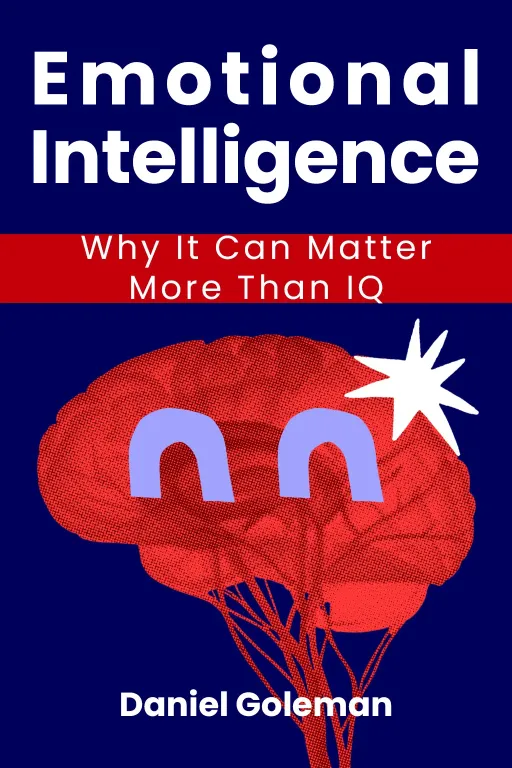
Nova: Well, today we’re diving into that precise blind spot, drawing inspiration from two groundbreaking books that fundamentally shifted how we understand leadership. First up, we have Daniel Goleman's seminal work,. Goleman, surprisingly, started his career as a science journalist, which gave him this incredible knack for translating complex psychological research into language accessible to everyone. He essentially took the academic world's findings on emotion and made them relevant to boardrooms and everyday life.
Atlas: Ah, so not some ivory tower academic, but someone who could bridge the gap between science and the street. That’s vital for our listeners who value understanding foundational principles but need them to be applicable. And then, we're pairing that with Brené Brown's. Her work, grounded in decades of research on shame and vulnerability, almost single-handedly brought these deeply human, often uncomfortable topics into the mainstream leadership conversation. She challenged the very definition of strength.
Nova: Precisely. Together, these books provide a compelling case that your capacity to understand and manage emotions – both your own and others' – is not just a 'nice-to-have' but a cornerstone of impactful leadership and genuine influence. It's about designing leadership with a full understanding of the human operating system.
Emotional Intelligence: The Unseen Foundation of Leadership
SECTION
Nova: So, let's start with Goleman. His big idea, emotional intelligence, isn't just about being 'sensitive.' He breaks it down into five key components: self-awareness, self-regulation, motivation, empathy, and social skills. Think of it like this: traditional IQ gets you in the door, but EQ determines how far you actually go and how well you lead once you're there.
Atlas: Okay, so it’s not just about raw intellect. I imagine a lot of our listeners, the strategists and architects, are used to valuing pure processing power. But how does this 'emotional intelligence' manifest in a way that’s measurable or strategically valuable? Like, what does self-awareness actually for a project manager or an entrepreneur trying to secure funding?
Nova: That’s a brilliant question, because it’s anything but soft. Take self-awareness. It's the bedrock. It's knowing your own internal states, preferences, resources, and intuitions. A leader with high self-awareness understands their own triggers, their strengths, their blind spots. They know when they’re stressed, what kind of feedback they resist, or even what environments make them most productive.
Atlas: So, it’s not just introspection for introspection’s sake. It's about understanding your own internal 'system' so you can optimize it. Like an architect understanding the load-bearing walls of their own personality.
Nova: Exactly! And this isn't some abstract concept. Imagine a CEO, let's call her Sarah, who's brilliant with numbers but extremely reactive to critical feedback. If she lacks self-awareness, every critical comment feels like a personal attack. Her default response might be defensiveness or even anger, shutting down valuable input from her team. Her team, in turn, learns not to bring her bad news, even if it's crucial for the business.
Atlas: That sounds rough. You've essentially created an echo chamber, and in a fast-paced early-stage environment, that’s a death knell. You need brutal honesty to adapt.
Nova: Precisely. Now, imagine another CEO, David, equally brilliant, but highly self-aware. He knows he has a tendency to get defensive under pressure. So, before a tough board meeting, he actively prepares not just his data, but his emotional response. He might even tell his team, "Look, I know I can get a bit intense when we're challenged. If I do, please remind me to take a breath."
Atlas: That’s fascinating. He's not suppressing the emotion; he's acknowledging it and building a mechanism around it. It’s like a systems thinker designing a feedback loop for his own emotional state. What's even more interesting is how that builds trust with his team. They see him as human, yet in control.
Nova: And that leads directly to self-regulation, the second component. It’s the ability to control or redirect disruptive impulses and moods, and to suspend judgment – to think before acting. David isn't just aware of his reactivity; he actively manages it. He can choose his response rather than simply reacting. This is crucial for navigating complex early-stage dynamics, as our strategist user profile indicates.
Atlas: Okay, but how does this apply to someone who's focused on, say, financial modeling? The numbers don't have emotions, right? You just crunch them.
Nova: Ah, but the people who the numbers, who them, and who based on them absolutely do. Imagine a financial analyst, Alex, who is incredibly skilled at modeling but gets overwhelmed and shuts down when faced with unexpected market volatility or a demanding investor. His inability to self-regulate his stress can lead to missed opportunities, poor communication, or even errors in judgment under pressure.
Atlas: I see. It's not about the numbers themselves, but the human element interacting with those numbers. A finely tuned model is useless if the person presenting it crumbles under pressure, or if they can't empathize with the investor's concerns.
Nova: Exactly. And that empathy and social skill are where the true influence lies. Empathy is understanding others' emotional makeup. Social skill is proficiency in managing relationships and building networks. A leader with high social skills can navigate office politics, inspire collaboration, and resolve conflicts, all while making everyone feel heard and valued.
Atlas: So, it's about understanding the human architecture of your team and stakeholders, not just the technical one. It sounds like Goleman is essentially saying that your capacity to understand and manage emotions is the cornerstone of impactful leadership and genuine influence. It's the foundational principle that underpins everything else.
Vulnerability & Emotional Honesty – Building Trust and Connection
SECTION
Nova: That's a perfect segue, Atlas, because while Goleman gives us the internal framework, Brené Brown, with, shows us how to externalize that emotional intelligence in the most powerful, and often counter-intuitive, way: through vulnerability and emotional honesty. She argues that true connection and trust are built not on intellectual superiority, but on emotional honesty.
Atlas: Now, this is where I imagine some of our more analytical, strategic listeners might pump the brakes. Vulnerability? In leadership? That sounds like a fast track to being walked all over, or worse, losing credibility. For someone whose vision is a powerful guide, wouldn't showing vulnerability be perceived as a lack of confidence or conviction?
Nova: That's a common misconception, and Brown tackles it head-on. She defines vulnerability not as weakness or oversharing, but as "courage, the willingness to show up and be seen when you have no control over the outcome." It's about being brave enough to be imperfect, to admit you don't have all the answers, or to share a struggle.
Atlas: So, it's not about crying in front of your team during an all-hands meeting. It's about a strategic, courageous honesty. Can you give an example of what this actually looks like in a leadership context without crossing the line into unprofessionalism?
Nova: Absolutely. Consider a team facing a major project setback. A traditional leader might try to project an image of unwavering confidence, saying, "Don't worry, I've got this, we'll fix it." While well-intentioned, this can inadvertently create distance and pressure. A leader practicing vulnerability, however, might say something like, "Team, this setback is tough. I'm feeling the pressure, just like you are. I don't have all the answers right now, but I trust this team, and I believe that if we tackle this together, openly and honestly, we can find a way through."
Atlas: That’s a subtle but powerful difference. The second leader isn't saying they're incompetent; they're acknowledging the shared reality of the challenge and inviting collaboration. It's a connection based on shared humanity rather than a facade of invincibility. It sounds like it fosters a deeper sense of psychological safety, which is essential for innovation and problem-solving, especially in complex early-stage dynamics.
Nova: Precisely. Brown emphasizes that trust is built in tiny moments of courage and connection. When a leader is vulnerable, they create space for others to be vulnerable. This means team members are more likely to admit mistakes, ask for help, and bring forward innovative but risky ideas, knowing they won’t be shamed or punished. This is what she calls "daring to lead."
Atlas: So, it’s not about intellectual superiority, but emotional honesty. It's about building genuine influence through connection. And that connection, in turn, makes the team more resilient, more creative, and ultimately, more effective. It sounds like it directly impacts the ability to optimize complex systems, which is something our user profile values.
Nova: Exactly. It’s about understanding that the human element is not a variable to be controlled, but a dynamic force to be understood and engaged with authentically. It's acknowledging the subtle, often unspoken, emotional currents in your teams and yourself, and then navigating those currents with courage and empathy.
Synthesis & Takeaways
SECTION
Nova: So, what we've really explored today, Atlas, is that leadership isn't just a chess game played with pure logic. It's a deeply human endeavor, powered by emotional intelligence and fueled by the courage to be vulnerable. It's about connecting emotion to effective leadership.
Atlas: That's actually really inspiring. It reframes the idea of strength. It's not about suppressing your feelings or pretending everything's perfect; it’s about understanding them and using that understanding to build stronger, more resilient teams. For someone driven by understanding foundational principles, this feels like a critical missing piece in the traditional leadership puzzle.
Nova: It truly is. This capacity to understand and manage emotions is a cornerstone of impactful leadership and genuine influence. It's a powerful lever for connection.
Atlas: And that brings me to something from our main content that really resonated with me. It suggested a 'healing moment' for reflection: to consider a recent difficult conversation. How might a greater awareness of your own or others' emotions have shifted the outcome? That’s a powerful question for anyone, especially those striving for mastery and strategic foresight.
Nova: It is. Because often, those difficult conversations aren't about a lack of data or logic, but a misalignment of emotional currents. Understanding that, and then daring to lead with emotional intelligence and vulnerability, can fundamentally change those outcomes. It's about trusting your inner wisdom, as our user profile suggests, and acknowledging that your vision is a powerful guide, but it needs emotional context.
Atlas: So, congratulations to all of our listeners on their growth and for leaning into these complex, yet profoundly rewarding, aspects of leadership. It’s a continuous journey of understanding and self-improvement.
Nova: Absolutely. This is Aibrary. Congratulations on your growth!