The Innovator's Blind Spot: Why Your Best Ideas Fail Without Emotional Resonance
8 minGolden Hook & Introduction
SECTION
Nova: Imagine pouring your heart and soul, your intellectual brilliance, and countless hours into an innovative project. It's logically sound, strategically perfect, and yet… it just doesn't land. It fizzles out. What if I told you the biggest reason your best ideas fail isn't a flaw in your logic, but a blind spot in your emotional radar?
Atlas: Whoa, that's a bold claim, Nova. Most strategists, myself included, are taught to trust the data, the spreadsheets, the cold hard facts. Are you saying all that's… missing something fundamental?
Nova: Absolutely, Atlas. We're diving into what we call "The Innovator's Blind Spot: Why Your Best Ideas Fail Without Emotional Resonance." It’s a concept that challenges our deepest assumptions about what drives success in innovation and leadership. This isn't about ditching logic; it's about recognizing where logic alone falls short.
Atlas: Okay, so this isn't just about fluffy feelings, then. You're talking about something strategic, something that impacts the bottom line of innovation itself. I'm listening.
The Emotional Blind Spot in Innovation
SECTION
Nova: Precisely. The core issue is that innovation, especially in our hyper-rational business culture, often becomes obsessed with what's quantifiable: market analysis, efficiency, competitive advantage. We build these brilliant, intricate strategies and products, but we forget that humans are the ultimate users, the ultimate adopters. And humans are not purely rational beings.
Atlas: Isn't that just a given, though? Like, everyone knows people are emotional. But how does that become a for an innovator? When you're designing a new app or a business model, you're usually thinking about features, user experience, problem-solving…
Nova: That's the trap! We think we're considering the user, but we're often only considering their needs. We design for convenience, speed, or utility. But we neglect the deeper, often subconscious emotional drivers: status, belonging, fear, joy, purpose, identity. When an idea lacks that emotional resonance, it feels cold, impersonal, or simply irrelevant to people's lived experience. It's like building the most technically perfect bridge, but no one wants to cross it because it feels sterile or unsafe, even if it's statistically the safest bridge ever built.
Atlas: So, you're saying a perfectly engineered product could just sit on the shelves because it doesn't make anyone anything? That's kind of heartbreaking for the innovator. Can you give a clearer example of what that looks like in practice?
Nova: Think about a company that launches a revolutionary new fitness tracker. It's got more sensors, better battery life, and more accurate data than anything else on the market. From a purely logical standpoint, it should dominate. But it fails to gain traction. Why? Because it focused solely on it could do, not it made people feel. Maybe it looked too clinical, or its data presentation was overwhelming, making users feel inadequate rather than empowered. It missed the emotional connection of fitness—the desire for self-improvement, belonging to a community, or simply the joy of movement. It solved a rational problem but ignored the emotional journey.
Atlas: That makes so much sense! It's like they built a calculator when people really wanted a personal trainer who cheers them on. The logic was flawless, but the human element, the emotional glue, was completely absent. That's a huge oversight, especially for someone who prides themselves on strategic foresight.
Cultivating Emotional Resonance for Impact
SECTION
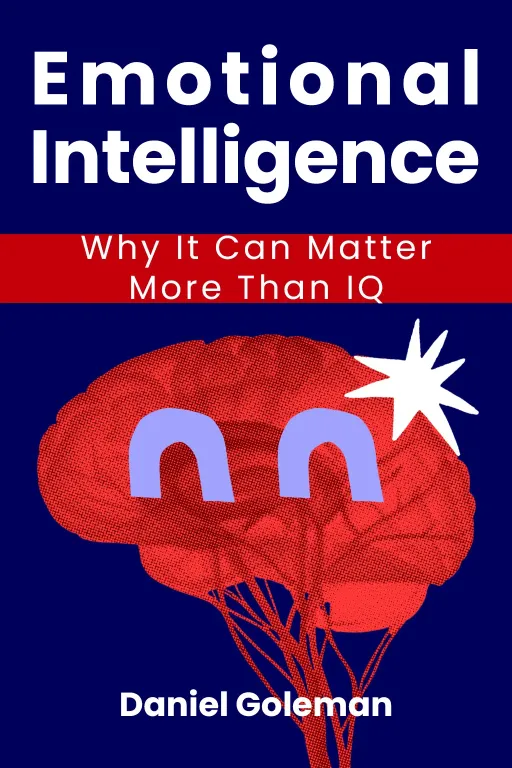
Nova: Exactly. And this isn't some new-age concept. This is fundamental. This blind spot is precisely what thinkers like Daniel Goleman and Seth Godin have highlighted. Goleman, in his seminal work "Emotional Intelligence," argued that IQ alone is insufficient for success. He identified five key components: self-awareness, self-regulation, motivation, empathy, and social skills. These aren't just 'soft skills'; they are critical levers for leadership and influencing others.
Atlas: So, it's about understanding your own emotions and then being able to understand and influence others'? That’s a powerful toolkit for any leader or innovator. But how does that translate into making an resonate? Is it just about being more empathetic in meetings?
Nova: It's far more profound than just being empathetic in meetings, although that's a great start. It's about infusing empathy into the very of your innovation. Seth Godin expands on this in "Linchpin," where he talks about indispensable individuals who bring 'art' to their work. Their value isn't just in technical skill, but in their ability to connect, to empathize, to create emotional impact. A linchpin doesn't just execute a task; they make it meaningful, they make it resonate. True innovation isn't just about what you build; it's about how deeply it resonates with those you serve, and that requires emotional insight from conception to execution.
Atlas: That's a great way to put it. So, how does a conscientious leader or a pragmatic strategist, who’s used to thinking in terms of KPIs and ROI, actually this emotional understanding into their strategic planning? It sounds a bit abstract. Like, what's a concrete step I can take?
Nova: It starts with a shift in perspective. Instead of asking "What problem are we solving?" also ask "What human emotion are we addressing or evoking?" For example, when developing a new product, don't just survey for features. Conduct deep ethnographic research; immerse yourself in your users' lives. Understand their frustrations, their aspirations, their fears. What makes them feel seen, valued, or understood? This isn't just about marketing; it's about designing solutions that tap into those deeper emotional currents.
Atlas: So, it's not just about what the product, but what the product about the user, or how it makes them about themselves. That's a powerful distinction. It's like the difference between buying a drill because you need a hole, and buying a drill because you want to build a bookshelf for your child and feel like a capable parent. The emotional layer is the bookshelf, not just the hole.
Nova: Exactly! And that emotional layer is where true impact lies. It's what transforms a good idea into an indispensable one, a mere tool into something people genuinely connect with on a deeper level. It's the difference between temporary adoption and lasting loyalty.
Synthesis & Takeaways
SECTION
Nova: So, ultimately, the innovator's blind spot isn't a deficit of intelligence or strategy; it's a deficit of emotional insight. The most brilliant ideas, the ones that truly change the world, are those that skillfully weave together robust logic with profound human understanding. They don't just solve problems; they resonate with desires, alleviate anxieties, and inspire aspirations.
Atlas: That’s actually really inspiring. It means that as strategists and innovators, our job isn't just to be smart, but to be deeply human. It's about moving from just creating things that work, to creating things that.
Nova: And that's where you find true, sustainable impact. It’s about building a career with integrity, guiding with purpose, and translating vision into action that genuinely touches lives. Your voice matters, your vision is unique, but its power is unleashed when it speaks to the heart, not just the head.
Atlas: I love that. So, for our listeners, the challenge is to start looking for those emotional levers in their own work, in their own strategies. To ask not just 'what' and 'how,' but 'why' and 'how does this feel?'
Nova: Absolutely. Embrace the journey of influence. Start small. Speak up about the emotional landscape you see. This is Aibrary. Congratulations on your growth!