

Mastering Your Inner World: Emotional Intelligence & Self-Awareness
Golden Hook & Introduction
SECTION
Nova: Atlas, quick, five words to describe the most counter-intuitive strength you know. That one thing people often mistake for weakness but is actually pure power.
Atlas: Oh, that’s tough… Hmm. Okay. “Showing up, totally, authentically, scared.”
Nova: Perfect! Absolutely spot on. Because today, we’re peeling back the layers on exactly that: the profound, often challenging, but ultimately liberating power of embracing our inner world, especially those parts that make us feel, well, a little scared.
Atlas: That title alone, “Mastering Your Inner World,” it sounds like a hero’s journey, doesn’t it? But, many of us, myself included, probably think of "mastering" as conquering or suppressing. I’m curious what we’re actually talking about today.
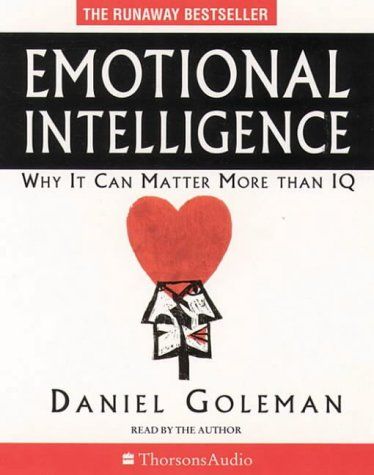
Nova: Well, we’re drawing from two titans in this space. First, Daniel Goleman's groundbreaking work, "Emotional Intelligence." Goleman, a science journalist for The New York Times, really brought the concept of EQ into the mainstream, showing us how critical it is, often more so than IQ, for navigating life successfully. He synthesized complex psychological research into something truly accessible.
Atlas: And then there's Brené Brown. Her name is synonymous with vulnerability these days.
Nova: Exactly. We’re also diving into her transformative book, "Daring Greatly." Brown, a research professor who dedicated decades to studying shame, courage, and worthiness, gave us the profound insight that vulnerability isn't a weakness to be avoided, but our most accurate measure of courage. Her empirical research gave a solid foundation to what many initially dismissed as just "soft skills."
Atlas: That's a powerful combination. On one hand, Goleman giving us the framework for understanding our emotions, and on the other, Brown showing us the courage to actually them and express them. For a curious explorer like me, the idea of deconstructing something as fundamental as emotion is fascinating.
The Architecture of Emotion: Deconstructing Emotional Intelligence & Vulnerability
SECTION
Nova: It’s truly a compelling interplay. Goleman's work essentially gave us a map of our inner emotional landscape. He broke emotional intelligence down into five key components: self-awareness, self-regulation, motivation, empathy, and social skills. And for our discussion today, self-awareness is the absolute cornerstone.
Atlas: Okay, so self-awareness. We hear that term a lot. But what does it look like day-to-day? Is it just knowing you're angry, or is there more to it for someone trying to be a practical seeker in their own life?
Nova: That’s a great question. It's far more nuanced than just labeling an emotion. Self-awareness, in Goleman's framework, is the ability to understand your own emotions, your goals, your values, and your strengths and weaknesses. It's about recognizing how your feelings affect your thoughts and behavior. For example, it’s not just feeling frustrated; it’s understanding you're frustrated, what triggers that frustration, and how it tends to make you react. Are you prone to snapping? Do you withdraw?
Atlas: So it’s about understanding the of the emotion, not just getting swept away by it. Like, if I'm feeling overwhelmed, self-awareness would help me understand that it’s probably a signal that I need to delegate or set boundaries, rather than just spiraling into stress.
Nova: Precisely. Emotions are data, not directives. They’re messengers, offering crucial information about our inner state and our environment. And once you have that data, you can move to self-regulation – consciously choosing how to respond rather than just reacting impulsively. This is where Brown's work on vulnerability beautifully intersects.
Atlas: Ah, vulnerability. The word itself often conjures images of weakness, of being exposed, or even being taken advantage of. For many, especially in high-stakes professional environments, putting yourself out there emotionally feels like asking for trouble. It's counter-intuitive to what we're often taught about strength and resilience.
Nova: Absolutely. That's the common misconception Brown challenges so powerfully. She argues that vulnerability is not weakness; it’s emotional exposure, risk, and uncertainty. And it’s the absolute core of courage. Think about it: you can’t be courageous without being vulnerable first. You can’t be brave without risking failure or rejection.
Atlas: I guess that makes sense. You can't be brave if there's no risk involved. But can you give an example? What does that look like in a real-world scenario, beyond just theoretical courage?
Nova: Of course. Consider a leader, let's call her Sarah, who is known for always having all the answers, for being unflappable. Her team respects her, but there's a certain distance. One day, a major project hits a snag, and Sarah, instead of trying to fix it all herself or pretend she has a foolproof plan, admits to her team, "I don't have all the answers here. This is challenging, and I'm feeling the pressure, just like you are. I need your best thinking on this."
Atlas: Wow. That’s a departure from the traditional image of a stoic leader.
Nova: It is. In that moment, Sarah is vulnerable. She’s risking her team seeing her uncertainty, perhaps even doubting her. But what happens? Her team, instead of seeing weakness, sees her humanity. They feel a deeper connection, a renewed sense of trust. They step up, share ideas more freely, and collectively solve the problem with greater innovation. Her vulnerability didn't destabilize the team; it galvanized them.
Atlas: So it’s not about oversharing every little worry, it’s about intentional, authentic transparency that builds connection and trust. For someone driven by personal growth, that’s a powerful reframing of what strength means. It sounds like a holistic approach to leadership and life.
Navigating Your Inner World: Practical Steps to Emotional Mastery and Vulnerable Growth
SECTION
Nova: It truly is. And that’s a fantastic point, Atlas, because it leads us perfectly from understanding the 'what' to the 'how' – how do we actually cultivate this emotional intelligence and vulnerable courage in our daily lives? Brown and Goleman both emphasize that this isn’t some grand, abstract philosophy; it’s built through tiny, consistent steps.
Atlas: Tiny steps? For someone who's always on the go, always trying to optimize, the idea of adding "emotional work" might sound like another thing on the to-do list. How do you even begin to integrate this, especially for our practical seeker listeners who need actionable strategies?
Nova: That's a valid concern, and it’s why the "tiny step" approach is so effective. One powerful practice, straight from Goleman's insights, is a daily emotion check-in. It's not a therapy session; it's literally a 30-second pause. Before reacting to something, or even during a quiet moment, simply ask yourself: "What am I feeling right now?" and "Why might I be feeling this?"
Atlas: Okay, so it’s not a deep dive into childhood trauma; it’s a few seconds of intentionality. I can see how that builds self-awareness over time. It's like taking a quick reading on your internal dashboard.
Nova: Exactly! It’s consciously choosing to observe your inner state rather than letting it run on autopilot. This is the bedrock of self-regulation. You identify the emotion – is it frustration, excitement, anxiety, calm? – and then you can choose your response with more intention. This small habit, consistently practiced, starts rewiring your brain for greater emotional mastery.
Atlas: That makes me wonder about vulnerability, then. If daily emotion check-ins are the tiny step for emotional intelligence, what’s the equivalent for embracing vulnerability? Because that still feels like a bigger leap for many. What's the smallest, least scary way someone could try this, especially for our holistic learner listeners who are looking for growth but might be hesitant?
Nova: Another excellent point. The key is to start small and safe. Brené Brown talks a lot about the "vulnerability hangover," that uncomfortable feeling after you've been vulnerable. So, you want to build up your tolerance. Start by sharing a small, non-critical struggle or a minor fear with one trusted friend or family member. It could be as simple as saying, "I'm actually a little nervous about that presentation tomorrow," instead of pretending you're completely confident.
Atlas: So it’s not about a grand gesture, like confessing your deepest secrets on social media, but a series of small, brave acts that build up, leading to those breakthroughs in self-understanding and connection you mentioned.
Nova: Precisely. Or even starting with journaling. Write down a fear or an insecurity you have, and just sit with it. The act of acknowledging it, even if only to yourself, is a powerful step in cultivating that inner courage. Each small act of vulnerability builds your resilience. It's like exercising a muscle; the more you use it, the stronger it gets, and the more capable you become of deeper, more meaningful connections and breakthroughs in self-understanding. It's about moving from a place of "should I?" to "I can handle this."
Synthesis & Takeaways
SECTION
Nova: So, bringing Goleman and Brown together, we see that emotional intelligence provides us with the map and the compass to our inner world. It teaches us to understand the signals our emotions are sending. And vulnerability, then, is the courage to actually step onto that map, to explore the terrain, to risk being truly seen and connected.
Atlas: For anyone who's a curious explorer, a practical seeker, or a holistic learner, this isn't just theory; it's the toolkit for a more authentic, connected, and ultimately, more successful life. It's about integrating the mind, body, and spirit by truly understanding the language of our feelings and having the courage to express them.
Nova: Exactly. It’s a journey, not a destination. It’s continuous self-discovery and growth. And the beautiful paradox is that by allowing ourselves to be seen in our imperfection, we find our greatest strength and deepest connections.
Atlas: I love that. It’s about being brave enough to be ourselves, even when it feels uncomfortable. We challenge you to pick just one tiny step this week – either a daily emotion check-in, taking 30 seconds to pause and identify what you're truly feeling, or a small, intentional act of vulnerability with a trusted person. See what shifts.
Nova: Embrace the joy of discovery in your inner world. The insights you gain will be invaluable.
Atlas: This is Aibrary. Congratulations on your growth!