

The Inner Citadel: Fortifying Your Emotional Resilience
Golden Hook & Introduction
SECTION
Nova: Atlas, I’m going to throw out three book titles, and I want you to give me your gut reaction, maybe a five-word review for each. Ready?
Atlas: Oh, I like this game. Hit me.
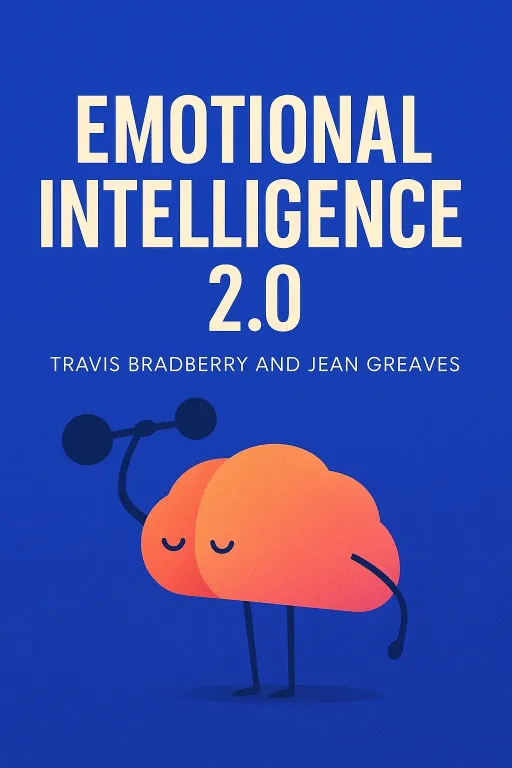
Nova: First up: "Emotional Intelligence 2.0."
Atlas: Practical, powerful, life-changing, must-read, essential.
Nova: Wow, strong start! Next: "Man's Search for Meaning."
Atlas: Profound, heartbreaking, inspiring, necessary, human spirit.
Nova: Excellent. And finally: "The Gifts of Imperfection."
Atlas: Liberating, brave, authentic, healing, truly transformative.
Nova: You nailed it! What's fascinating is, when you put those three together, you get this incredible roadmap for something we all desperately need, especially in today's world: fortifying our emotional resilience.
Atlas: Right? I mean, just hearing those titles back-to-back, you realize they’re all pointing to the same core truth, just from different angles. It’s not about avoiding challenges; it's about how you meet them.
Nova: Exactly. Today, we're diving into how these three monumental works – "Emotional Intelligence 2.0" by Travis Bradberry and Jean Greaves, "Man's Search for Meaning" by Viktor Frankl, and "The Gifts of Imperfection" by Brené Brown – give us the keys to building an unshakeable inner core. What's particularly striking about Viktor Frankl's work is not just the profound insights, but the unimaginable crucible in which they were forged. Frankl, a psychiatrist, endured Auschwitz, and seeing that experience through his eyes, you realize his 'logotherapy' isn't just theory; it's a testament to the human spirit's capacity to find meaning even when everything else is stripped away.
Atlas: Oh, I know that story. It's almost impossible to fathom the level of suffering he experienced, and yet, what he brought out of it was this incredible message of hope and responsibility. It makes you wonder how we, in our comparatively comfortable lives, can tap into even a fraction of that resilience.
Nova: And that's precisely where we start. Because while Frankl gives us the philosophical anchor, Travis Bradberry and Jean Greaves give us the practical toolkit.
The Foundational Toolkit: Emotional Intelligence
SECTION
Nova: "Emotional Intelligence 2.0" isn't just a book; it's practically a manual for navigating your inner world and the worlds of others. Bradberry and Greaves, renowned for their work with TalentSmart, really demystified emotional intelligence, breaking it down into four core skills: self-awareness, self-management, social awareness, and relationship management.
Atlas: I guess that makes sense. We hear 'emotional intelligence' thrown around so much, but it often feels like this nebulous, soft skill that's hard to pin down. What do they mean by 'self-awareness' in a practical sense?
Nova: That's a great question, and it's where the rubber meets the road. Self-awareness, for them, isn't just about knowing you're feeling angry; it's about understanding you're angry, what triggers that anger, and how it physically manifests in your body. It's about recognizing the pattern. Bradberry and Greaves emphasize that it's the foundational skill because you can't manage what you don't understand.
Atlas: So you're saying it's not just a feeling, but a whole chain reaction we need to observe. I imagine a lot of our listeners, especially those in high-stress roles, might feel like they're constantly reacting rather than observing their own internal states.
Nova: Exactly! They use a fantastic analogy. Imagine your emotions are like a wild horse. Self-awareness is knowing you're on a wild horse, recognizing its temperament, and understanding its habits. Self-management, the next skill, is actually learning to that horse. It's about taking that awareness and actively choosing your response instead of being hijacked by your emotions. It's the pause between stimulus and reaction.
Atlas: Oh, I love that analogy. It’s like, the horse is going to run, but you get to decide if you’re holding the reins or just clinging on for dear life. But how do they suggest you actually that? What’s a practical step for self-management?
Nova: One of their most powerful, yet deceptively simple, strategies is called "breathing room." When you feel an intense emotion rising, instead of reacting immediately, you create a physical and mental space. This could be counting to ten, taking a walk, or even just a few deep breaths. That tiny space is where you reclaim control. It sounds almost too simple, but the research they cite shows its profound impact.
Atlas: That makes me wonder, how does this play out when you're not just dealing with your own wild horse, but a whole stampede of other people's horses in a team environment? That's where social awareness and relationship management come in, right?
Nova: Absolutely. Social awareness is about accurately perceiving the emotions of others, understanding their body language, their tone, what’s being said. It's empathy in action. And relationship management is taking all that awareness – of yourself and others – and using it to build strong, healthy connections. It's about clear communication, conflict resolution, and inspiring others.
Atlas: So basically you’re saying, if you're tuned into your own emotional signals, you're better equipped to pick up on someone else's. And if you can manage your own reactions, you're more likely to respond constructively to theirs. It sounds like a domino effect for better collaboration.
Nova: Precisely. And in fields like healthcare, which is often a high-stakes, emotionally charged environment, these aren't just 'nice-to-have' skills; they're survival tools. Bradberry and Greaves highlight how emotional intelligence correlates directly with job performance, leadership effectiveness, and even physical well-being. It’s not about being 'soft'; it’s about being smart and resilient.
Atlas: That’s actually really inspiring. It frames emotional intelligence not as some innate trait you either have or don't, but as a set of learnable skills, like any other. And the fact that it's tied to tangible outcomes like performance and well-being? That’s a powerful argument for dedicating time to it.
Nova: It truly is. And that leads us beautifully to the deeper, more philosophical anchors that fortify this practical toolkit. Because knowing how to manage your emotions is one thing, but having a profound reason you manage them, and a fundamental acceptance of your own humanity, takes resilience to an entirely different level.
The Philosophical Anchor: Meaning and Imperfection as Strength
SECTION
Nova: So, we've talked about the practical 'how' of managing emotions. But what about the 'why'? What gives us the strength to keep riding that wild horse, even when the path is incredibly difficult? That's where Viktor Frankl's "Man's Search for Meaning" and Brené Brown's "The Gifts of Imperfection" converge in such a profound way.
Atlas: Oh, Man’s Search for Meaning is just… it’s a gut punch and a revelation all at once. The sheer scale of the suffering he witnessed, and survived, in the concentration camps… it makes most of our daily stressors seem trivial by comparison.
Nova: It does, and that's precisely its power. Frankl observed that even in the most dehumanizing conditions, those who survived often had one thing in common: a sense of meaning or purpose. It wasn't about physical strength or youth; it was about having a 'why' to live. He famously said, "He who has a 'why' to live can bear almost any 'how'."
Atlas: That gives me chills. So, it wasn't about avoiding suffering, but about finding something the suffering, or it, that made it bearable. That sounds rough, but it makes so much sense.
Nova: Absolutely. He developed logotherapy, which centers on helping individuals find their unique meaning in life, whether through work, love, or even facing unavoidable suffering with dignity. It's about recognizing that we have the freedom to choose our attitude, regardless of our circumstances. It’s a radical act of defiance against despair.
Atlas: Like how he talks about finding beauty in a sunset, even from inside the camp, or the thought of reuniting with a loved one. Those tiny sparks of meaning kept the flame alive.
Nova: Precisely. And this is where Brené Brown's work in "The Gifts of Imperfection" beautifully complements Frankl's. Brown, a research professor known for her studies on shame and vulnerability, argues that true resilience isn't found in striving for perfection, but in embracing our imperfections.
Atlas: Wait, so it's not about being bulletproof, but about being… human? That sounds a bit counterintuitive to what society often tells us about strength.
Nova: It’s completely counterintuitive, and that's why it's so powerful. Brown challenges the notion that vulnerability is a weakness. She posits that it's actually our greatest measure of courage. To be fully seen, imperfections and all, is to live wholeheartedly. This is where self-compassion comes in. Instead of berating ourselves for our flaws, we treat ourselves with the same kindness and understanding we'd offer a good friend.
Atlas: That’s a great way to put it. So, if Frankl gives us the meaning to endure, Brown gives us permission to be human while we're enduring. It's like, you don't have to be perfect to be resilient; you just have to be authentically yourself.
Nova: Exactly. Think about it. If you're constantly striving for an impossible ideal of perfection, any setback feels like a catastrophic failure. But if you embrace imperfection, setbacks become learning opportunities. You're not spending energy hiding your perceived flaws; you're using that energy to connect, to grow, to be brave.
Atlas: I can see how that would be incredibly liberating. It takes the pressure off. And when you're not constantly battling yourself, you have more emotional bandwidth to deal with external challenges.
Nova: And that's the core of fortifying your emotional resilience. It's a two-pronged approach: the practical tools from emotional intelligence to navigate the day-to-day, and the profound philosophical anchors from Frankl and Brown that give us purpose and self-acceptance to endure the deeper challenges. It's not about avoiding the storm; it's about building an unshakeable core so you can dance in the rain.
Atlas: That’s such a hopeful way to look at it. It transforms resilience from a grim struggle into an act of self-discovery and courage.
Synthesis & Takeaways
SECTION
Nova: So, bringing it all together, what we've learned from these three incredible books is that emotional resilience isn't a passive trait; it's an active cultivation. It starts with the granular work of understanding and managing our emotions, as Bradberry and Greaves teach us.
Atlas: Right, like that 'breathing room' strategy – creating that tiny pause to choose your response rather than just reacting. That alone can be a game-changer for anyone feeling overwhelmed.
Nova: And then, it's about finding that deeper 'why,' that sense of meaning that Frankl speaks of, which can sustain us through even the most unimaginable hardships. It’s the ultimate antidote to despair.
Atlas: And the final piece, from Brené Brown, is permission to be imperfect. To embrace our vulnerability, because that’s where true courage and connection really lie. It sounds like a paradox, but it's where we find genuine strength.
Nova: It truly is. These books collectively offer a powerful message: resilience isn't about being tough or emotionless. It's about being deeply human, self-aware, purposeful, and brave enough to be imperfect. It's about building an inner citadel that can withstand any storm, not by blocking it out, but by understanding its nature and your own.
Atlas: So, for anyone listening who feels like they're constantly battling their emotions or the pressures of life, the takeaway is clear: start small, find your meaning, and give yourself a break. It's a journey, not a destination.
Nova: Exactly. Our challenge for you this week is to pick just one tiny step from the emotional intelligence toolkit – perhaps practicing self-awareness around a specific stressor – and see how it shifts your experience.
Atlas: And trust your intuition, as we always say. Your experience is a powerful guide.
Nova: This is Aibrary. Congratulations on your growth!









