

The Human Element: Cultivating Empathy and Connection in a Data-Driven World
Golden Hook & Introduction
SECTION
Nova: We often hear that in a data-driven world, logic reigns supreme, that emotions are distractions, even liabilities. But what if the very thing you're taught to suppress or ignore is actually your greatest strategic asset?
Atlas: Oh man, that's a bold claim, especially for anyone who spends their days knee-deep in spreadsheets and algorithms. I imagine a lot of our listeners, who are all about those hard facts, are already raising an eyebrow. Are we really saying feelings should be on the balance sheet now?
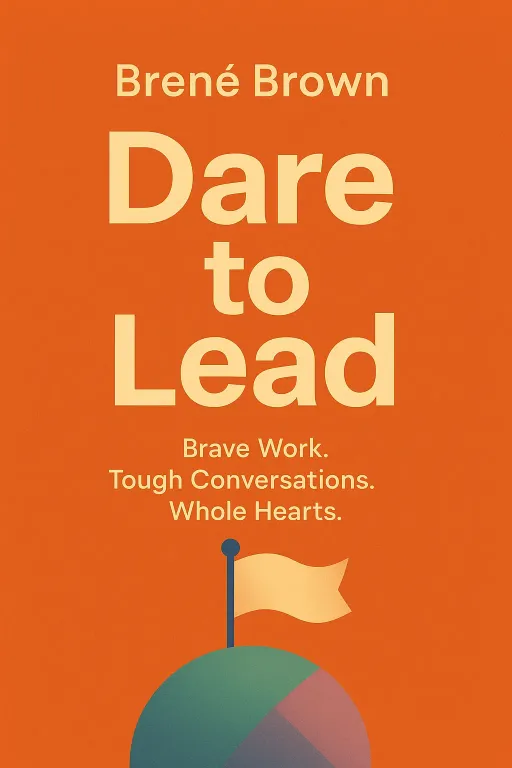
Nova: Well, Atlas, not exactly on the balance sheet, but certainly in the boardroom. Today, we're dissecting two powerful works that fundamentally shift our understanding of effective leadership and impact. We're diving into "Dare to Lead" by Brené Brown, a research professor who's spent decades studying courage, vulnerability, shame, and empathy. And we're pairing that with "Emotional Intelligence 2.0" by Travis Bradberry and Jean Greaves, who translated complex psychological concepts into actionable strategies for the modern professional.
Atlas: So, we're talking about the 'soft skills' that everyone pays lip service to but rarely truly integrates. What makes these books different, especially for our audience who are driven by impact and ethical innovation?
Nova: What's fascinating about Brown is her rigorous research methodology. She's not just sharing anecdotes; she's a shame researcher, a grounded theory expert, who meticulously collected data from thousands of interviews over decades to understand the anatomy of courage and vulnerability. It's that academic rigor applied to deeply human experiences that makes her work so compelling and credible. And Bradberry and Greaves? They took the foundational work on emotional intelligence and built a practical, step-by-step guide that's been widely adopted in corporate training, demonstrating its real-world utility. Both challenge the notion that 'soft skills' are secondary. My take is, while data and systems are undeniably crucial, the human element—empathy and emotional intelligence—is the ultimate leverage point for ethical innovation and lasting impact.
Atlas: Right, like, it's not just about what the numbers, it's about what they to people. That makes sense. So, where do we start with this human element?
Vulnerability as a Strategic Advantage
SECTION
Nova: We start with vulnerability. Brown's central argument, especially in "Dare to Lead," is that vulnerability isn't a weakness; it's our most accurate measure of courage. It's the willingness to show up and be seen when you have no control over the outcome. And for leaders, this isn't just about sharing your feelings; it's about having tough conversations, owning mistakes, asking for help, and setting boundaries.
Atlas: But wait, looking at this from a high-stakes tech or financial environment, isn't that incredibly risky? As a strategic analyst, if you admit uncertainty or a mistake, it could be perceived as incompetence, especially in a competitive landscape. You're taught to project confidence, to have all the answers.
Nova: Exactly, that's the deeply ingrained myth she busts. Brown argues that this armor, this facade of invulnerability, actually innovation and trust. Think about a product development team. If the project lead can't admit they're struggling with a technical challenge, or that a deadline is unrealistic, what happens? People hide problems, they don't ask for help, and the project eventually implodes.
Atlas: I've definitely seen that play out. The "hero" leader who tries to solve everything alone, and then everyone else just watches silently as things go sideways because they're afraid to speak up.
Nova: Precisely. Brown has this powerful concept: "Clear is kind. Unclear is unkind." A leader who is vulnerable enough to say, "I don't have all the answers, but I'm committed to finding them with you," or "This project is harder than I anticipated, what support do we need?"—that leader builds psychological safety. And psychological safety is the bedrock for high-performing teams, for honest feedback, for truly innovative problem-solving where people aren't afraid to share nascent ideas or admit failure.
Atlas: So basically, you're saying that the courage to be vulnerable actually creates an environment where better data can flow, and more accurate insights can emerge, because everyone feels safe enough to be honest. It's not about being weak, it's about creating strength through transparency.
Nova: Exactly! Imagine a strategic analyst presenting a complex market forecast. Instead of just presenting the "final answer" with absolute certainty, a vulnerable analyst might say, "Here's our projection, and here are the three key assumptions that, if they shift, could significantly alter this outcome. We need to be vigilant here." That's vulnerability. It acknowledges uncertainty, invites scrutiny, and ultimately builds more robust, defensible strategies because it's transparent about the limitations.
Atlas: That’s a great way to put it. It shifts from "I have all the answers" to "We're in this together, let's solve this honestly." It makes me wonder, though, how do you even start to cultivate that? For someone who's spent their career being rewarded for being bulletproof, this feels like unlearning a core survival mechanism.
Emotional Intelligence: The Bridge to Ethical Innovation
SECTION
Nova: And that naturally leads us to the second key idea we need to talk about, which often acts as the practical toolkit for embodying the vulnerability we just discussed: emotional intelligence. Bradberry and Greaves, in "Emotional Intelligence 2.0," break it down into four core skills: self-awareness, self-management, social awareness, and relationship management. It’s about understanding your own emotions, managing them, understanding others' emotions, and then managing those interactions effectively.
Atlas: Okay, so this is where the rubber meets the road. For our strategic analyst, often focused on logic and data, how do these four components actually build stronger teams and foster more ethical, human-centered solutions? Give me a concrete example.
Nova: Absolutely. Let's take the example of designing an AI-driven hiring tool. A purely logical approach might focus solely on optimizing for efficiency and finding candidates with specific keywords or past performance metrics. But an analyst with high emotional intelligence, particularly strong social awareness, would pause. They'd consider the human impact.
Atlas: So, not just crunching the numbers, but thinking about the people those numbers represent?
Nova: Precisely. They might ask: "What biases could be embedded in the historical data we're feeding this AI?" "How might this algorithm unintentionally exclude qualified candidates from diverse backgrounds?" "What's the emotional experience of someone being evaluated by an opaque algorithm?" This analyst uses social awareness to anticipate the emotional and ethical implications for job seekers and the company culture.
Atlas: That makes me wonder, how would that play out in real life? The purely logical system might seem 'fair' because it's objective, but it could be replicating past injustices.
Nova: Exactly. Imagine this analyst then uses relationship management skills—the ability to influence and inspire others—to bring these concerns to the development team. Instead of just pointing out flaws, they might propose solutions, like incorporating diverse data sets, blind screening for certain initial stages, or building in human oversight checkpoints. They're bridging the logical need for efficiency with the emotional and ethical need for fairness.
Atlas: So, the emotional intelligence isn't just about being 'nice.' It's a critical tool for identifying blind spots, for anticipating unintended consequences, and for ensuring that the innovation itself is truly beneficial and equitable, not just efficient. It's about building solutions that people will actually trust and adopt, which is essential for impact.
Nova: That’s a perfect example. Nova's Take here is that emotional intelligence provides the lens through which technical solutions become truly human-centered. It's the difference between building a technically brilliant system that alienates its users, and one that resonates deeply because it understood the underlying human needs and potential vulnerabilities.
Atlas: So, for our listeners who are strategic analysts, who are driven by impact but might be thinking, "I'm not a therapist, I'm an analyst," what's a tiny step they can take this week to start integrating this?
Nova: A tiny step: In your next interaction, consciously practice active listening. Don't just wait for your turn to speak. Really try to understand the underlying emotions or perspectives of the other person, even if they're not explicitly stated. Look for the "why" behind their "what."
Atlas: I love that. It’s actionable. It’s not about suddenly becoming Brené Brown; it’s about a conscious shift in how you engage.
Synthesis & Takeaways
SECTION
Nova: And that leads us to the deeper question: How can a strategic analyst, often focused on logic and data, intentionally integrate emotional intelligence to not just build stronger teams, but to foster more ethical, human-centered solutions? It's about recognizing that the most powerful insights often lie at the intersection of hard data and human truth.
Atlas: It’s not just about optimizing for numbers, but optimizing for human flourishing within those numbers. Our curiosity is a superpower, but so is our capacity for empathy. It’s about leveraging both for profound understanding and meaningful impact.
Nova: Absolutely. The courage to be vulnerable, combined with the practical skills of emotional intelligence, isn't just about personal growth. It's about building systems, products, and strategies that are more resilient, more innovative, and ultimately, more humane. It’s recognizing that the deepest insights often come from understanding the human story behind the data, not just the data itself.
Atlas: So, the next time you're looking at a complex problem or designing a new solution, ask yourself: Where's the human element here? What are the emotions at play, and how can I integrate that understanding to create something truly impactful and ethical?
Nova: Because in a world drowning in data, what truly differentiates us, what truly drives responsible innovation, is our capacity for empathy and connection. That's the ultimate leverage point.
Atlas: This is Aibrary. Congratulations on your growth!









