

Mastering the Art of Emotional Intelligence in Leadership
Golden Hook & Introduction
SECTION
Nova: Atlas, quick game: I’ll say a common leadership trait, and you tell me what's often missing. Ready?
Atlas: Oh, I like this. Hit me.
Nova: Strategic vision.
Atlas: Hmm, often missing? The ability to actually that vision without making everyone's eyes glaze over.
Nova: Exactly! Okay, next: Decisiveness.
Atlas: Ha! The empathy to understand the human cost of that decision. Or, you know, just listening to the people actually doing the work.
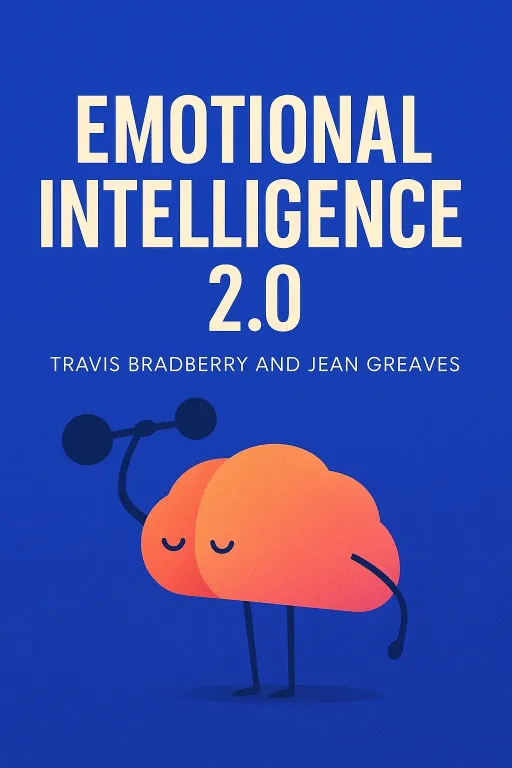
Nova: Bingo! You’re getting warm. Because today, we're diving into how those 'missing pieces' aren't just extras; they're the entire operating system for truly great leadership. We're talking about mastering the art of emotional intelligence, inspired by incredible insights from books like by Travis Bradberry and Jean Greaves, and Daniel Goleman's seminal work,. What's fascinating about Bradberry and Greaves is how they distilled decades of research into a practical, accessible framework, making EQ less of a fuzzy concept and more of a measurable skill set. It really democratized the idea for a lot of people.
Atlas: That’s actually really inspiring, because for so long, leadership felt like it was about raw intellect or just being the loudest in the room. But you just hinted at something profound: that leadership isn't just about what you, but how you and how you make others. So how do we even begin to unpack something that sounds so… internal?
The Four Pillars of EQ in Leadership
SECTION
Nova: That's the perfect question, Atlas, because it brings us directly to our first core idea: the four foundational pillars of emotional intelligence. Bradberry and Greaves lay them out beautifully: self-awareness, self-management, social awareness, and relationship management. Think of them as building blocks. You can't put the roof on if the foundation isn't solid.
Atlas: Okay, so self-awareness. That sounds like... just knowing your own feelings? Is it really that simple, or is there more to it for a leader?
Nova: It’s deceptively simple on the surface! True self-awareness for a leader isn't just knowing you're angry; it's understanding you're angry, what triggers it, and how that anger impacts your team. It's about recognizing your strengths, weaknesses, values, and goals. It’s the internal compass. Without it, you're navigating blind. I remember a story from a leader who, for years, thought he was 'calm under pressure.' But his team consistently seemed stressed around deadlines. It wasn't until a 360-feedback session that he realized his 'calm' was perceived as aloofness, even disinterest, which made his team feel unsupported. His internal self-perception was completely out of sync with his external impact.
Atlas: Wow. So, it's not just about introspection, but about understanding your on others. That makes me wonder, how does self-management build on that? Because knowing you're angry is one thing; not yelling at your team is another.
Nova: Exactly! Self-management is the action arm of self-awareness. It's about regulating those tricky emotions, staying adaptable, taking initiative, and maintaining a positive outlook even when the metaphorical ship is sinking. If self-awareness is knowing you're prone to snap judgments when stressed, self-management is consciously pausing, taking a breath, and seeking more information before reacting. It's the discipline to align your actions with your values, even under pressure.
Atlas: I can definitely relate to that. For our listeners who are managing high-pressure teams, those moments when you feel that surge of frustration, but you to respond differently... that’s a real exercise in self-management. But how do these internal skills then translate outward?
Nova: That's where social awareness comes in, the third pillar. This is your 'emotional radar' for others. It’s empathy at its core—understanding the emotions, needs, and concerns of the people around you. It’s picking up on the unspoken cues in a team meeting, recognizing the subtle shift in a colleague's tone, or understanding the cultural dynamics at play. Goleman, in, emphasizes how crucial this is; he talks about how leaders often fail not because of a lack of technical skill, but a lack of 'people skills.'
Atlas: So basically you’re saying, if you're not socially aware, you're probably missing half the conversation. You might be hearing the words, but not the music.
Nova: Precisely. And then, the final pillar, relationship management, is where all these skills converge. It's using your self-awareness, self-management, and social awareness to inspire, influence, develop others, resolve conflict, and build strong bonds. It’s the symphony conductor, orchestrating all the individual talents into a harmonious whole. It’s not just about being nice; it’s about strategically building trust and rapport to achieve collective goals.
Atlas: That’s a great way to put it. So, these aren't just fluffy concepts. These are tangible skills that, when combined, create a leader who's not just effective, but truly influential.
Resonant Leadership: Mood, Actions, and Inspiration
SECTION
Nova: Absolutely. And this leads us to our second core idea, deeply explored in Goleman's: the concept of resonant leadership. It's about how emotionally intelligent leaders create this powerful 'resonance' that inspires high performance through their mood and actions.
Atlas: So, a leader's mood isn't just their personal business? It actually has a measurable impact on the team? That sounds a bit out there.
Nova: It’s not just personal, Atlas, it's profoundly public. Think of a leader as the emotional thermostat for their team. If the leader walks in radiating stress, anxiety, or negativity, that mood literally becomes contagious. It's called 'mood contagion.' Goleman and his co-authors, Richard Boyatzis and Annie McKee, describe how a leader's emotional state creates a ripple effect, influencing the collective mood, energy, and performance of everyone around them.
Atlas: Wow. That's kind of heartbreaking for some leaders, because if you're under immense pressure, you might not even realize you're projecting that onto your team. So, what does a 'resonant' leader do differently? How do they manage that ripple?
Nova: A resonant leader consciously chooses their emotional state. They understand that their mood is a strategic asset. They cultivate optimism, empathy, and authenticity. Imagine a leader facing a major setback. The non-resonant leader might panic, lash out, or withdraw. The resonant leader, however, acknowledges the difficulty but then actively frames it as a challenge, expresses confidence in the team, and focuses on solutions. They project calm and a belief in capability, even when things are tough. This isn't about faking it; it's about genuine self-management and empathy.
Atlas: So it's like an orchestra conductor who, even if they're having a terrible day, still has to stand up there and project confidence and control to get the best out of the musicians. They can't let their personal turmoil derail the entire performance.
Nova: That’s a perfect analogy! And it’s not just about managing negative emotions, but actively fostering positive ones. Resonant leaders inspire hope, excitement, and a sense of shared purpose. They understand that people are more engaged, more creative, and more resilient when they feel understood, valued, and emotionally safe. They create an environment where people to excel, not just to.
Atlas: That makes sense. It’s about leading with connection, not just command. But what if you’re a leader who struggles with this? What if you feel like your emotional radar is a bit… rusty?
Cultivating Your Emotional Radar: Practical Steps for Empathetic Leadership
SECTION
Nova: That's a brilliant segue, Atlas, because our third core idea is all about cultivating that emotional radar. It’s about practical, actionable steps to build empathetic leadership. And it starts with something surprisingly simple: active listening.
Atlas: Active listening. I feel like I hear that phrase all the time, but what does it mean in a leadership context? Is it just nodding your head and saying 'uh-huh'?
Nova: Far from it! Active listening is about focusing solely on understanding the speaker's perspective, planning your response. It's about being fully present. Try this: in your next team meeting, pick one person, and as they speak, make it your sole mission to understand their message, their underlying feelings, and their unspoken cues. Don't interrupt, don't formulate your rebuttal, just absorb. You'll be amazed at the subtle emotional information you pick up – the hesitation in their voice, the shift in their body language, the worry behind their words.
Atlas: That’s a powerful tiny step. Because I imagine a lot of our listeners, especially those in fast-paced environments, are often listening to respond, not to understand. It’s a very different mindset. So, once you’ve picked up on those cues, what do you do with them?
Nova: That’s where you integrate emotional check-ins. It's not about being a therapist, but about acknowledging and validating. It could be as simple as, "I noticed you seemed a bit quiet during that discussion, is everything okay?" or "That project update sounded challenging; how are you feeling about the timeline?" These small gestures show you're paying attention, that you care, and that you're creating a psychological safe space.
Atlas: That’s actually really inspiring. It sounds like intentionally weaving empathy into the fabric of daily interactions. It's not a once-a-year review conversation; it's a continuous process.
Nova: Exactly. Think of it as building an emotional gym. You wouldn't expect to get strong by lifting weights once a month. You need consistent, deliberate practice. These small acts of active listening and emotional check-ins are your daily reps. Over time, your 'emotional radar' becomes sharper, your responses become more nuanced, and your ability to connect and inspire grows exponentially. It's this consistent effort that transforms a good leader into an emotionally intelligent, truly resonant one.
Synthesis & Takeaways
SECTION
Nova: So, Atlas, as we wrap up, what's the one thing you hope our aspiring leaders take away from today's deep dive into emotional intelligence?
Atlas: Honestly, it’s that emotional intelligence isn't some innate gift; it's a muscle you can build. It's about being intentional. It's about understanding that your is a strategic tool, and your is a superpower. It completely reframes what 'strength' in leadership looks like. It’s not about being stoic; it’s about being.
Nova: I couldn't agree more. And it's a journey, not a destination. True leadership starts from within, understanding your own emotions, and then skillfully navigating the emotions of others to foster a truly collaborative environment. It’s the difference between managing people and truly inspiring them. It's about leading with empathy, expanding your influence, and making a profound difference that goes beyond the bottom line. It's about building a legacy of genuine connection.
Atlas: It really is. And for anyone out there who feels like they’re struggling to connect, or whose team feels a bit disconnected, just remember that tiny step: practice active listening. Just one meeting. Just one conversation. See what shifts.
Nova: Because that one shift can create a ripple effect, transforming not just your leadership, but the entire culture around you.
Atlas: This is Aibrary. Congratulations on your growth!









