

Debugging the Mind: Emotional Agility and the UX of the Soul
Golden Hook & Introduction
SECTION
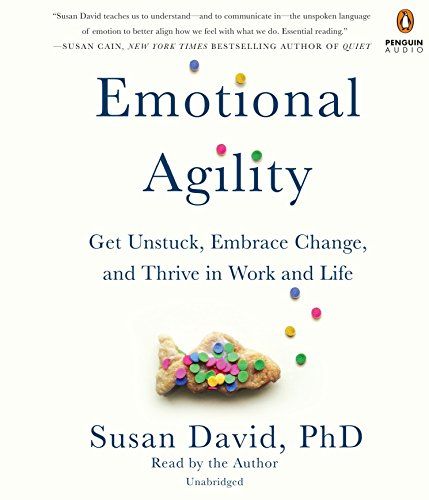
Nova: Imagine your mind is running a highly sophisticated piece of software, but suddenly, a single negative thought triggers an infinite loop, freezing your entire system. In cybersecurity, we might call that a denial-of-service attack. But in psychology, Dr. Susan David calls it getting hooked. Today, we are diving into her groundbreaking book,, to learn how to debug our inner systems. And we have the absolute perfect guest to help us navigate this. Joining us is Tinotenda Jaine Chikomo, who is not only studying cybersecurity and AI prototyping, but is also a certified counselor, mental health advocate, and UX designer! Tinotenda, welcome! It is so wonderful to have you here with us.
Tinotenda Jaine Chikomo: Thanks, Nova! It is absolutely wonderful to be here. You know, when I first read, my brain immediately started making connections between my counseling background and my tech studies. It’s fascinating how much our mental processes mirror complex computer systems. We often treat our minds like black boxes, but Susan David gives us the ultimate debugging manual.
Nova: Oh, I love that! A debugging manual for the soul. That is exactly what we need. Today, we’re going to tackle this book from two distinct, powerful angles. First, we'll explore how to debug our emotional loops by stepping out of our thoughts and treating them as data, not directives. And then, we'll discuss how to prototype a more resilient life through small, value-aligned behavioral tweaks, treating our personal growth like an agile software update. So, Tinotenda, let's start with this idea of getting hooked. What does that actually look like in our daily lives?
Tinotenda Jaine Chikomo: Well, getting hooked is essentially when a thought, a feeling, or a story we tell ourselves takes over our entire cognitive bandwidth. In counseling, we see this when clients get trapped in rumination. In tech terms, it’s like a runaway background process that consumes one hundred percent of your CPU. You can't run any other applications because all your energy is being spent on this one, looping thought.
Nova: That makes so much sense! It’s like your brain is spinning that little colorful loading wheel, and you’re just frozen. Susan David illustrates this beautifully with a case study about a brilliant executive named Richard. Now, Richard was incredibly successful, but he had this deep-seated, underlying fear of failure. When his company launched a massive, high-stakes project, his internal system went into overdrive. He got hooked by the thought, "If this project fails, my entire career is over, and I am worthless." Because he was hooked by that fear, he started micromanaging his team, working eighty hours a week, and shutting down any creative ideas that felt even slightly risky. The outcome? His team burned out, the project stalled, and he actually ended up creating the very failure he was terrified of! He was completely driven by his emotional programming without even realizing it.
Tinotenda Jaine Chikomo: That story of Richard is such a classic example of what we call an unhandled exception in programming. He had this raw emotional input—fear—and instead of processing it as just a data point, his system executed it as an absolute command. He couldn't separate his identity from his thoughts. As counselors, we talk about the space between stimulus and response. When you are hooked, that space shrinks to zero. You react automatically. But emotional agility is about creating that space, which Susan David calls showing up and stepping out.
Deep Dive into Core Topic 1
SECTION
Nova: Showing up and stepping out. I love those terms. They sound so active, don't they? But how do we actually do that when we're in the middle of a mental storm? How do we step out of the storm to look at it objectively?
Tinotenda Jaine Chikomo: It starts with changing how we view the data. In cybersecurity, we use telemetry data to monitor system health. If a server sends an alert saying 'CPU temperature high,' we don't panic and throw the server out the window, right? We don't say, 'Oh no, the server is evil!' We treat it as useful information. We investigate why it's overheating. But when it comes to our emotions, we often do the opposite. We either try to suppress the alert—which is like ignoring a security breach—or we let the alert completely take over our system, like Richard did.
Nova: Oh, that is a brilliant analogy! Suppressing the alert is what Susan David calls bottling, and letting it take over is brooding. Both of them keep us hooked, don't they?
Tinotenda Jaine Chikomo: Exactly! Bottlers try to sweep their emotions under the rug. They say, 'I'm fine, everything is great, positive vibes only!' But that emotional energy doesn't just disappear. It gets stored in the system, often leading to physical stress, sudden outbursts, or eventual burnout. Brooders, on the other hand, obsessively analyze the alert. They spin around in the loop of 'Why is this happening to me? Why am I so anxious?' without ever taking constructive action. Both approaches fail because they treat the emotion as either a system error to be deleted or an absolute truth to be obeyed.
Nova: Right, right. So instead of bottling or brooding, how do we step out? What is the emotional agility equivalent of analyzing that telemetry data safely?
Tinotenda Jaine Chikomo: Susan David suggests a incredibly simple yet powerful linguistic shift. Instead of saying 'I am angry' or 'I am anxious,' we should say, 'I am having the thought that I am angry,' or 'I am noticing the feeling of anxiety.' It sounds like a small tweak, but from a cognitive perspective, it’s a massive architectural change. You are moving from being the emotion to being the observer of the emotion. You are decoupling the user from the operating system.
Nova: Wow, yes! Decoupling the user from the operating system. That is such a powerful way to put it. When we say 'I am anxious,' we are identifying with the state. We are the anxiety. But when we say 'I am noticing the feeling of anxiety,' we are creating that vital buffer. We are the container, not the content.
Tinotenda Jaine Chikomo: Exactly! And once you have that distance, you can actually analyze the data. You can ask, 'What is this emotion trying to tell me?' Because emotions, even the painful ones like anger, grief, or jealousy, are actually signposts. They point directly to our values. If you feel a sharp pang of jealousy when a colleague gets promoted, instead of beating yourself up for being petty, you can step out and say, 'Hmm, this jealousy is data. It’s telling me that career growth and recognition are deeply important to me right now.' Suddenly, a negative emotion becomes a guide for positive action.
Nova: That is so liberating! It takes away the shame of having negative emotions. We don't need to have a perfectly clean, error-free system log all the time. We just need to know how to read the logs without crashing!
Tinotenda Jaine Chikomo: Precisely. It’s about building a robust error-handling protocol. In AI development, we don't expect our prototypes to work perfectly on the first run. We expect bugs. The goal isn't to write bug-free code on day one; the goal is to build a system that can handle exceptions gracefully without crashing. That is emotional agility.
Deep Dive into Core Topic 2
SECTION
Nova: That leads us beautifully into our second core topic: Walking Your Why and Moving On. Once we've debugged our immediate emotional loops, how do we actually design a life that aligns with our core values? Susan David talks about this idea of walking your why, which is all about making sure our daily actions are in sync with what we truly care about. But she warns us about something called social contagion. Tinotenda, can you explain what that is?
Tinotenda Jaine Chikomo: Oh, social contagion is a huge issue, especially in our hyper-connected digital age. It’s essentially the psychological equivalent of downloading a software update just because everyone else is doing it, without checking if it’s compatible with your hardware. We look at social media, or our peers, and we unconsciously adopt their values, their goals, and their definitions of success. We start running someone else's code on our system.
Nova: Yes! And then we wonder why our system is lagging and overheating! We're trying to run software we weren't designed for. Susan David shares the story of Sophia to illustrate this. Sophia was a highly successful corporate lawyer. She had the prestigious job, the high salary, the beautiful apartment—everything society told her she should want. But internally, she was miserable. She felt completely disconnected from her work. She had caught the social contagion of corporate success, but it didn't align with her core value of creative expression and community service. She was walking someone else's why. When she realized this, she didn't just quit her job overnight and move to a commune—which would be a massive, high-risk system overhaul. Instead, she started making what Susan David calls tiny tweaks.
Tinotenda Jaine Chikomo: I love the concept of tiny tweaks. As a UX designer and AI prototyper, this resonates with me so deeply. In product design, we don't build a massive, complex system from scratch and launch it without testing. That’s a recipe for disaster. Instead, we build a Minimum Viable Product—an MVP. We make small, iterative changes, test them, gather data, and refine. Sophia did exactly that. She didn't crash her life. She started prototyping her new path. She volunteered at a local non-profit on weekends. She took a night class in graphic design. She made small, low-risk adjustments to her daily interface to see what felt right.
Nova: That is such a healthy way to look at change! It takes away the terrifying pressure of having to reinvent your entire life in one giant leap. We can just run micro-experiments!
Tinotenda Jaine Chikomo: Exactly. It’s all about iterative optimization. If you want to be more connected to your family, you don't have to quit your job to spend twenty-four hours a day with them. You can make a tiny tweak, like turning off your phone during dinner. That’s a micro-UX improvement for your relationship. It’s low-cost, low-risk, but over time, those small updates compound into a completely upgraded operating system.
Nova: Oh, I love that! Micro-UX improvements for our lives. That is a fantastic mental model. And it makes so much sense for someone with an analytical mind. It turns personal growth into a series of curious experiments rather than a heavy, moral obligation.
Tinotenda Jaine Chikomo: Yes, and it removes the fear of failure. If an AI prototype fails, we don't say the AI is a failure. We just say, 'Okay, that model didn't work. Let's adjust the parameters and train it again.' If we can bring that same curiosity and playfulness to our own lives, we become incredibly resilient. When a tiny tweak doesn't work out, it’s not a personal defeat; it’s just data. It’s just a failed test that helps us refine our next prototype.
Nova: This is so empowering, Tinotenda. It really shifts us from being passive users of our minds to being active, creative designers of our lives. We get to write our own code, set our own parameters, and design our own internal user experience.
Tinotenda Jaine Chikomo: Absolutely. And as counselors, we know that agency is the key to mental health. When people feel like they have no control over their internal or external lives, they slide into helplessness. But emotional agility gives us our agency back. It reminds us that while we can't always control the external code or the unexpected data packets life throws at us, we are the ones who write the response protocols.
Synthesis & Takeaways
SECTION
Nova: That is a perfect place to start wrapping up our conversation. We have covered some truly profound ground today. We talked about how getting hooked is like an infinite cognitive loop, and how we can use the tools of showing up and stepping out to debug our minds. We explored how to treat our emotions as telemetry data—valuable signposts pointing to our core values—rather than absolute commands. And finally, we looked at how we can prototype our lives through tiny, iterative tweaks, avoiding the trap of social contagion and walking our own why. Tinotenda, if our listeners could take away just one actionable debugging tool from our chat today to apply to their lives immediately, what would you recommend?
Tinotenda Jaine Chikomo: I would recommend what I call the Two-Second Pause and Label protocol. The next time you feel a strong, overwhelming emotion—whether it’s frustration during a meeting, anxiety about a deadline, or even self-doubt—pause for just two seconds. Take a breath, and internally rewrite your experience. If your brain says, 'I can't do this, I'm going to fail,' pause and say to yourself, 'I am noticing the thought that I might fail.' This simple, two-second linguistic patch decouples you from the loop. It gives your system the processing space it needs to choose a value-aligned response instead of an automatic reaction. Treat your mind with the same curiosity and kindness you would bring to a complex, beautiful piece of technology.
Nova: That is an incredibly beautiful and practical tool. The Two-Second Pause and Label protocol. I am definitely going to implement that patch in my own system today! Tinotenda, thank you so much for sharing your incredible, unique perspective with us. You have given us a whole new way to look at our minds.
Tinotenda Jaine Chikomo: Thank you, Nova! It was an absolute pleasure. Keep debugging, everyone!
Nova: And to all our wonderful listeners out there, thank you for tuning in. Remember, your emotions are not system errors. They are the data that can guide you to your most authentic, agile self. Until next time, keep prototyping, keep learning, and keep showing up for yourselves. We'll see you in the next episode!