The Dual Engine of Creative Resilience and Street Smart Strategy
Golden Hook & Introduction
SECTION
Nova: The most dangerous thing you can do in your career is to play it safe by sanding down your edges until you are perfectly smooth and completely forgettable.
Atlas: That is a bold way to start a conversation, but I can see why you would say that. Most people spend their entire professional lives trying to blend into the background of whatever room they are in.
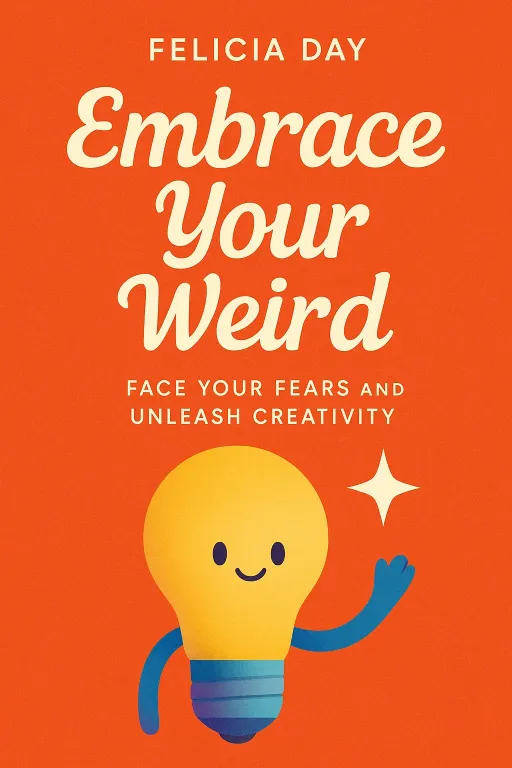
Nova: Exactly, and that is the quickest route to being replaced by an algorithm or just getting lost in the noise. Today, we are looking at two very different, yet surprisingly compatible, blueprints for success. We are diving into Embrace Your Weird by Felicia Day and Hustle Harder, Hustle Smarter by Curtis 50 Cent Jackson.
Atlas: That is quite the pairing. You have Felicia Day, who essentially pioneered the digital creator economy by being unapologetically herself, and then you have 50 Cent, who is a master of business strategy and navigating high-stakes environments. They seem like they are operating on different planets.
Nova: They are, and that is exactly why this combination works. Felicia Day wrote Embrace Your Weird as a guide to defeating the creative anxiety that keeps us stuck, showing us how our idiosyncratic impulses are actually our greatest assets. On the flip side, 50 Cent’s Hustle Harder, Hustle Smarter is a masterclass in street-smart adaptability, calculated risk, and how to weaponize your own vulnerabilities. When you combine them, you get a complete system for growth: the weirdness provides the direction, and the hustle provides the vehicle.
The Weird Advantage
SECTION
Atlas: I can see the value in that, but let us be honest for a second. In a corporate environment, or really any professional setting, being weird is usually treated as a liability. How do you actually embrace that without getting fired or losing credibility?
Nova: The key is to redefine what we mean by weird. Felicia Day isn’t suggesting you walk into a board meeting wearing a costume. She is talking about the specific, unique impulses that you usually suppress because you are worried they do not fit the mold. Think about the projects you have been involved in where you had an idea that felt slightly off-center—maybe a different way to present data, a unique angle for a pitch, or a creative solution to a bottleneck.
Atlas: Right, those are the ideas that usually die in the draft folder because we assume no one else will get it.
Nova: Precisely. And that is the creative anxiety she is talking about. When you suppress those impulses, you are not just hiding a quirk; you are hiding your unique value proposition. Day’s journey is fascinating because she was a classically trained violinist and a computer science major who decided to pursue acting and gaming culture when that was considered a fringe hobby. She leaned into the exact thing that everyone told her was niche and weird, and it became the foundation of her entire career.
Atlas: So, she is arguing that the thing you are most embarrassed about is actually the thing people are going to connect with?
Nova: That is the core of it. When you lean into your specific interests, you stop trying to appeal to everyone. Trying to appeal to everyone is a recipe for being bland. By embracing the weird, you effectively filter your audience. You attract the people who actually value what you bring to the table, and you repel the people who were never going to be your customers or your collaborators anyway.
Atlas: That makes sense, but it still feels like a massive leap of faith. If I am in a high-pressure environment where efficiency is the only metric that matters, how do I justify taking a risk on a weird idea?
Nova: You justify it through results. That is where the friction usually happens. We assume that weird means inefficient. But often, the weird solution—the unconventional angle—is the one that cuts through the noise. Think about any major breakthrough in your industry. Was it the result of someone doing exactly what everyone else was doing, or was it the result of someone looking at a problem from a completely bizarre, unexpected angle?
Atlas: It is almost always the latter. I suppose the fear is that if the weird idea fails, you look foolish. If the conventional idea fails, you can at least say you followed the best practices.
Nova: That is the trap of the safe failure. 50 Cent has a term for this in his book: he talks about the difference between being a victim of your circumstances and being a strategist of your circumstances. When you play it safe, you are a victim of the standard operating procedure. You are letting the system dictate your outcome. When you lean into your unique perspective, you are taking the driver’s seat. You are saying, I am going to apply my specific, weird lens to this problem, and if it fails, it is a calculated risk, not a failure of imagination.
The Hustle Pivot
SECTION
Atlas: That leads perfectly into the second piece of this puzzle. If Felicia Day gives us the courage to be ourselves, 50 Cent seems to provide the grit to make that reality stick. I have always found his transition from music to business fascinating. He treats his career like a chess match.
Nova: He absolutely does. His book is not about working hard in the sense of grinding yourself into the ground. It is about working smart. He focuses on the idea of street-smart adaptability. He argues that the world is constantly shifting, and if you are too rigid in your strategy, you will break.
Atlas: I think that is the biggest misconception about the word hustle. People think it means working eighteen hours a day, never sleeping, and pushing through walls. But 50 Cent’s version of the hustle is much more analytical.
Nova: Exactly. It is about reading the room. He talks about vulnerability as a strategic edge. Most people try to hide their weaknesses, but he suggests that if you can identify your vulnerabilities—whether it is a lack of experience in a specific area, a public perception issue, or a gap in your resources—you can turn them into assets. You acknowledge them, you own them, and you use them to dictate the terms of the engagement.
Atlas: How does that look in practice for someone who is not a mogul? If I am sitting in an office, how do I turn a vulnerability into a strategic edge?
Nova: Let us say you are the youngest person on a team. That is a vulnerability because you lack institutional history and the trust that comes with tenure. The standard approach is to try to act like you have been there forever, which usually just makes you look insecure or like you are trying too hard.
Atlas: Right, you try to mimic the senior leadership, which never works.
Nova: Instead, you use the 50 Cent approach. You own the vulnerability. You say to your team, I have a fresh perspective because I do not have the baggage of how things have been done here for the last ten years. You lean into the fact that you are an outsider. You use that position to ask the questions that no one else is asking because they are too deep in the weeds. You turn your lack of experience into a license to innovate.
Atlas: That is a powerful reframe. You are not hiding the gap; you are using it as a vantage point.
Nova: It is about leverage. 50 Cent is a master of leverage. He looks at what he has—his brand, his audience, his story—and he finds the best way to apply it to a new market. He didn't just sell music; he sold a lifestyle. He didn't just sell beverages; he leveraged his credibility to make a specific brand synonymous with success. He is constantly asking, how can I use what I already have to get to where I want to be, without needing to reinvent the wheel from scratch?
Atlas: It sounds like he is saying you should not just work hard on the task in front of you, but work hard on understanding the mechanics of the system you are operating within.
Nova: That is the secret. Most people work hard on the task. The top one percent work hard on the system. They understand the incentives, they understand the power dynamics, and they understand the timing. That is the hustle. It is not about the volume of your output; it is about the strategic placement of your output.
Synthesis & Takeaways
SECTION
Atlas: Okay, so if we are bringing these two together, we have the creative impulse from Felicia Day and the strategic execution from 50 Cent. I feel like the missing piece is the bridge between them. How do we make this actionable for someone who is busy and wants to see results this week?
Nova: We go back to the idea of the tiny step. The problem is that most people wait for the perfect moment to unleash their weird idea or to execute their big strategy. They wait for the permission, the resources, or the clear path. But that never comes.
Atlas: So, what is the tactical move?
Nova: It is a two-part exercise. First, you have to identify the weird idea. This week, take fifteen minutes—just fifteen—and write down one idea you have for a professional project that you have been suppressing because it feels too unconventional. Maybe it is a new way to organize your team, a different style of communication for your clients, or a project that sits at the intersection of two different departments. Just write it down. Get it out of your head.
Atlas: That is easy enough. What is the second part?
Nova: The second part is the 50 Cent influence. You list two aggressive, practical steps to pitch or execute that idea this week. Not next month, not when you have more time. This week. If the idea is to restructure a meeting, the steps might be: one, draft the agenda for the new format; two, send it to one key stakeholder for feedback.
Atlas: I like that. It forces you to take the weird, abstract impulse and immediately subject it to the reality of strategic execution.
Nova: Exactly. You are testing the hypothesis. If you don't act on it, it stays a fantasy. If you act on it, even in a small way, you are gathering data. You are finding out if your weird idea actually has legs. And if it doesn't? You have learned something, you have adapted, and you have moved on to the next strategy.
Atlas: It also removes the fear. If you only commit to two small steps, the stakes are low. You are not betting your whole career on it. You are just running a test.
Nova: That is the ultimate form of resilience. You become unshakeable because you are constantly iterating. You are not tied to one outcome; you are tied to the process of being yourself and being strategic about it.
Atlas: This is a great way to look at growth. It is not about becoming someone else; it is about becoming more of who you are, but doing it with a sharper, more calculated edge.
Nova: And that is the definition of impact. We are not just looking for more information; we are looking for the wisdom to apply what we know. We want to make our time count, and the only way to do that is to stop playing the game by someone else’s rules and start playing it by our own, with a strategy that actually works.
Atlas: I am going to take that advice to heart. I have a few weird ideas sitting in my notebook that I have been too cautious to bring up. It is time to treat them like a strategic pivot.
Nova: That is the spirit. Start small, act fast, and keep refining. You will be surprised at how much ground you can cover when you stop trying to fit in and start trying to stand out.
Atlas: This has been an incredibly grounding conversation. It is easy to get lost in the noise of productivity hacks, but this brings it back to the core: authenticity and strategy.
Nova: That is the sweet spot. If you can master both, you are unstoppable. Thank you for diving into this with me.
Atlas: Anytime. This is Aibrary. Congratulations on your growth!