

The Code Alchemist: Mastering JavaScript for Real-World Projects
Golden Hook & Introduction
SECTION
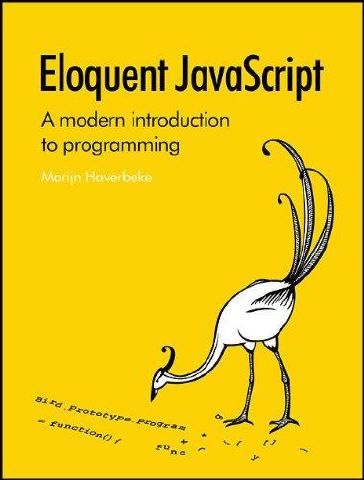
Nova: Imagine you are building a bustling digital city, but instead of concrete and steel, your raw material is pure logic. You write a line of code, and suddenly, a button clicks, a database updates, and a user halfway across the world smiles. But as your city grows, it starts to lag, collapse, or behave in bizarre, unpredictable ways. Why? Because you treated JavaScript like any other language, missing its secret superpowers. Today, we are going to tackle this legendary book, Eloquent JavaScript by Marijn Haverbeke, from three different angles. First, we will explore the magic of first-class functions and closures. Then, we will demystify the asynchronous event loop that powers modern web apps. And finally, we will focus on how to transition from writing syntax to architecting real-world projects that scale. I am Nova, and joining me today is Joy Das, a final-year Computer Science and Engineering student from Metropolitan University, Sylhet, who is passionate about software engineering and future tech investments. Welcome, Joy!
Joy Das: Thanks, Nova! It is absolutely wonderful to be here. You know, as a final-year student, I am constantly looking at how to bridge the gap between academic theory and building actual, production-ready projects. JavaScript is everywhere, but it is so easy to write messy JS if you do not understand what is happening under the hood. Eloquent JavaScript really challenges you to stop treating it like a toy language and start treating it like a powerful, expressive tool. I am really excited to dive into these concepts with you today!
Nova: Oh, we are going to have so much fun with this! It is a beautiful language when you look at it through the right lens. Let's start with that first-class citizen status. We often hear that in JavaScript, functions are "first-class citizens." But what does that actually mean for someone trying to build a project?
Deep Dive into Core Topic 1
SECTION
Joy Das: Right, so in many traditional languages, functions are just blocks of code that you define and call. But in JavaScript, functions are values. You can assign them to variables, pass them as arguments to other functions, and even return them from functions. It is like treating code itself as data.
Nova: Yes! It is like having a recipe that you can not only cook, but also hand over to a friend, put in a box, or have another recipe generate for you. And this brings us to one of the most famous, and sometimes feared, concepts in JavaScript: the closure. Marijn Haverbeke describes a closure as a function that "closes over" the local variables that were active when the function was created. How do you visualize a closure, Joy?
Joy Das: Hmm, the way I like to think about it is like a little backpack. When a function is born, it gets a backpack. Inside that backpack, it carries all the variables that were in its environment at the moment of its creation. Even if you take that function out of its original context and run it somewhere else entirely, it still has access to that backpack.
Nova: That is a fantastic analogy! A backpack of memories. Let's make this super concrete. Imagine we write a function called createCounter. Inside it, we declare a variable count = 0. Then, we return an inner function that increments and returns count. When we call createCounter, it finishes executing, right? Normally, in other languages, that local variable count would be wiped from memory. But in JavaScript, because the inner function "closes over" that variable, it keeps it alive in its backpack!
Joy Das: Exactly! And this is incredibly powerful for project development. If I am building a software project, say a shopping cart module or a game engine, I do not want my variables to be global. Global variables are a nightmare because any part of the program can accidentally change them, leading to bugs that are incredibly hard to track down. With closures, we can create private state. We can have variables that only specific functions can access and modify. It is a clean way to achieve encapsulation without needing heavy object-oriented boilerplate.
Nova: It really is. It gives you this elegant, lightweight way to protect your data. But, Joy, as an analytical thinker, you must also see the flip side of this. If these functions are carrying around these "backpacks" of variables, what does that mean for memory management?
Joy Das: That is a really sharp point, Nova. Since closures keep references to their outer variables, those variables cannot be garbage collected as long as the inner function is still alive. If you are not careful, especially in large-scale applications or single-page apps that run for a long time without a page refresh, you can end up with memory leaks. You have to be mindful of where you are creating closures and make sure you are not holding onto references you no longer need. It is all about that balance between expressive power and resource management.
Nova: Spot on! We have to respect the engine running our code. And speaking of the engine, that leads us right into our second core topic: how JavaScript actually executes code, especially when things get busy.
Deep Dive into Core Topic 2
SECTION
Nova: JavaScript is single-threaded. It can only do one thing at a time. It has one call stack. Now, to a computer scientist, that sounds like a massive limitation, doesn't it? If a user clicks a button that fetches data from an API, and that fetch takes three seconds, does the entire browser just freeze?
Joy Das: Oh, absolutely! If JavaScript were strictly synchronous, the entire user interface would lock up every time we made a network request or read a file. Users would hate it. But JavaScript uses an asynchronous model to get around this. It is non-blocking.
Nova: Yes! And the magic behind this non-blocking behavior is the Event Loop. Let's paint a picture here. Imagine a busy restaurant. You have a waiter, who represents the single thread of JavaScript. You also have a kitchen staff, representing the browser's Web APIs or the Node. js runtime environment. If the waiter had to stand at the kitchen counter waiting for every single dish to cook before taking the next order, the restaurant would go bankrupt!
Joy Das: Right! That would be a synchronous disaster. Instead, the waiter takes an order, hands it to the kitchen, and immediately moves to the next table to take another order. The kitchen cooks the food in the background. When a dish is ready, they put it on the pickup counter. That pickup counter is like our Callback Queue.
Nova: Beautifully put! And the Event Loop is like the restaurant manager. It constantly looks at the waiter. If the waiter is free—meaning the Call Stack is empty—the manager takes the first dish from the pickup counter, the Callback Queue, and hands it to the waiter to deliver to the table.
Joy Das: This is such a crucial concept for building real-world projects. When we use things like fetch or setTimeout, we are handing those tasks off to the browser's APIs. The browser handles the waiting in the background, and when it is done, it pushes our callback function into the queue. This is why JavaScript can handle thousands of concurrent connections in a Node. js server, even though it is running on a single thread. It is incredibly efficient because it never wastes time waiting.
Nova: It really is a masterclass in resource scheduling. But writing callbacks inside callbacks inside callbacks quickly leads to what developers call "Callback Hell" or the "Pyramid of Doom," where your code starts drifting so far to the right of the screen that it is unreadable. How does guide us out of that mess?
Joy Das: Marijn Haverbeke does a wonderful job explaining Promises and the async/await syntax. A Promise is basically an object that represents the eventual completion or failure of an asynchronous operation. It is like a pager you get at a restaurant. It is not your food, but it is a promise that you will get your food when it is ready.
Nova: I love that! The pager! And then async/await is like the ultimate syntactic sugar on top of Promises. It lets us write asynchronous code that looks and reads exactly like synchronous code.
Joy Das: Exactly. Instead of chaining . then blocks, we can just write await fetchData. It makes the code so much cleaner and easier to reason about. For a developer, readability is everything. If I am working on a project with a team, or even if I am looking at my own code three months from now, clean, readable asynchronous code saves hours of debugging. It reduces cognitive load, which is so important when you are managing complex application state.
Nova: It really is. And that transition from just making things work to making things readable and maintainable brings us perfectly to our third topic: the architecture of eloquent code and how it connects to the real world.
Deep Dive into Core Topic 3
SECTION
Nova: Joy, you mentioned that your future goals include not just being a skilled software engineer, but also a successful businessman and investor. I find that fascinating because code quality is often viewed purely as a technical concern, but it actually has massive business implications.
Joy Das: Oh, absolutely, Nova. In business, time is money, and in software, technical debt is interest on a bad loan. If you write messy, unorganized code to get a product to market quickly, you might win in the short term. But as you try to add new features, the system becomes fragile. A change in one place breaks something completely unrelated. Development slows to a crawl, your developers get frustrated, and your competitors outpace you.
Nova: Yes! The cost of maintenance can dwarf the cost of initial development. In, Haverbeke talks about modularity. He says that a program is modular if it is split into pieces that can be understood and built in isolation. Why is this modular mindset so critical for both engineering and business?
Joy Das: Well, from an engineering perspective, modularity allows you to manage complexity. If a module has a clear, well-defined interface, you do not need to know how it works internally to use it. You can swap it out, upgrade it, or test it independently. From a business perspective, this means scalability. It means you can have different teams working on different modules without stepping on each other's toes. It also means your software is an asset that can adapt to market changes quickly. If I am investing in a tech startup, one of the first things I would want to know is: is their codebase a modular engine of growth, or is it a monolithic house of cards?
Nova: A monolithic house of cards! That is a scary, but very real image. And JavaScript has evolved so much to support this. We now have native ES modules, using import and export, which makes structuring our projects so much cleaner. We do not have to rely on global scripts loaded in a specific order in our HTML files anymore. We can build true, self-contained components.
Joy Das: Right, and that is especially important when we start interacting with the DOM—the Document Object Model. The DOM is essentially the tree structure of the webpage that JavaScript can manipulate. shows us how to interact with the DOM efficiently. But as projects grow, direct DOM manipulation can become slow and messy. That is why modern frameworks like React or Vue exist—they build on these modular principles to manage the UI state efficiently. But you cannot truly master those frameworks without understanding the vanilla JavaScript and DOM concepts first.
Nova: That is such a vital point, Joy! So many beginners jump straight into a framework like React without understanding the underlying JavaScript. They get stuck because they do not know what is the framework's magic and what is just standard JavaScript. Mastering the fundamentals in gives you that x-ray vision to see through the abstraction layers of any framework.
Joy Das: Exactly. It is about building on solid rock rather than sand. When you understand closures, prototypes, scope, and the event loop, learning a new framework or tool becomes a matter of days, not months. You see the patterns. You understand the framework is doing what it is doing.
Synthesis & Takeaways
SECTION
Nova: We have covered some incredible ground today, Joy. From the way closures act as private backpacks of memory, to the elegant dance of the single-threaded event loop handling asynchronous tasks, all the way to how modular code architecture directly impacts business agility and investment value. If you had to synthesize this for our listeners—especially those who, like you, want to build robust projects—what is the core takeaway?
Joy Das: I think the core takeaway is that writing eloquent code is not about being clever or using obscure syntax. It is about managing complexity. It is about writing code that is simple, readable, and modular. As Marijn Haverbeke writes, 'The art of programming is the art of organizing complexity.' Whether you are building a small personal project or a massive enterprise system, the principles remain the same: keep your functions focused, protect your state with closures, handle your asynchronous operations cleanly, and structure your code so that it can grow without collapsing.
Nova: That is beautiful. "The art of organizing complexity." I love that. And for our listeners who want to take action today, what is one practical step they can take to start applying these principles right now?
Joy Das: I would challenge everyone to build a small project—maybe a simple task manager or a weather dashboard—using vanilla JavaScript. No frameworks, no external libraries. Focus on using closures to keep your state private, use ES modules to organize your files, and handle your API calls using clean async/await syntax. By forcing yourself to work without the safety net of a framework, you will truly understand how the JavaScript engine works, and you will feel that sense of mastery that comes from building something from the ground up.
Nova: What an inspiring challenge! Build it raw, build it clean, and build it with vanilla JS. Joy, thank you so much for sharing your insights, your analytical perspective, and your passion with us today. You are going to make an incredible software engineer and a very smart investor!
Joy Das: Thank you so much, Nova! This was an absolute blast. I hope it encourages everyone to pick up and start building!
Nova: And thank you to all our listeners. Go out there, organize your complexity, and keep building. We will see you in the next episode!