

The Factory Floor Mindset: Building from Scratch with Peris Karanga
Golden Hook & Introduction
SECTION
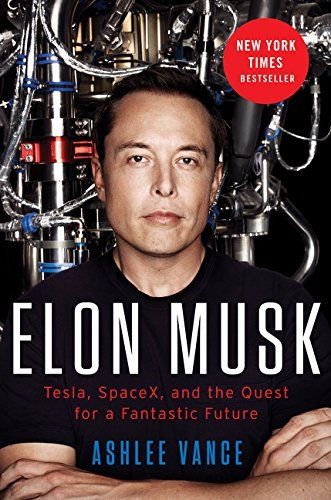
Dr. Roland Steele: Imagine sleeping on a dusty beanbag next to your desk, showering at the local YMCA, and having your employees kick you awake in the morning just so they can use the only computer your company owns because you were coding on it all night. That was not a temporary setback for Elon Musk. That was the actual launchpad for his first company, Zip2. Today, we are stripping away the polished, billionaire myth to look at the raw, gritty reality of building startups from scratch. We are going to tackle Ashlee Vance's biography of Elon Musk from two distinct angles. First, we will explore the monastic focus of early-stage founders, looking at how giants like Musk, Bill Gates, and Mark Zuckerberg eliminated all distractions to build their empires. Second, we will dive straight onto the factory floor, dissecting Musk's famous idiot index and how first-principles engineering can help manufacturing entrepreneurs bypass competition entirely. Joining me today is Peris Karanga, an entrepreneur in the engineering and manufacturing space who has been grappling with these exact challenges of drive, focus, and competition. Peris, welcome to the show.
Peris Karanga: Thanks, Roland. It is great to be here. I have to tell you, sneaking a peek into Vance's book really shook me. As an entrepreneur in manufacturing, you often hear these sanitized success stories. But reading about the sheer, almost pathological intensity of Musk's early days, it makes you look at your own business and ask, do I actually have that kind of drive? And more importantly, how do you build something of that scale when you are constantly fighting distractions and the fear of established competitors?
Dr. Roland Steele: It is a profound question, Peris. And as an economist, I look at this through the lens of incentives and transaction costs. When we look at the early days of these tech giants, we often romanticize the hustle. But there is a structural, economic reason why they lived in their offices. Let us break that down.
Deep Dive into Core Topic 1
SECTION
Dr. Roland Steele: Let us start with Zip2 in 1995. Elon and his brother Kimbal rented a tiny, basic office in Palo Alto. They did not have money for an apartment, so they lived in the office. Elon coded literally all night, slept on that beanbag, and then during the day, the website had to run on that same computer. He wrote a program that kept the site active during the day while he slept, and then he would wake up and start coding again. Now, to the average observer, that looks like madness. But from an economic standpoint, what he was doing was reducing the transaction costs of daily life to absolute zero. No commute, no apartment maintenance, no social obligations, no decision fatigue about what to eat or where to go. Every single ounce of cognitive energy was funneled into a single asset: the codebase.
Peris Karanga: That makes a lot of sense, but it also sounds incredibly isolating. When I look at my own journey over the last few years, I find that the sheer volume of daily decisions, managing suppliers, dealing with logistics, answering emails, it dilutes that singular focus. You start the day wanting to innovate, and you end it just trying to survive the administrative noise. How did these founders maintain that monastic focus without completely burning out, or did they just have a different psychological makeup?
Dr. Roland Steele: It is a mix of both, but the structure of their environment played a massive role. Look at Bill Gates in the early days of Microsoft. He was notorious for sleeping on the office floor, and he actually memorized the license plates of all his employees so he could track who was coming and going. Or Mark Zuckerberg in the early Facebook days in Palo Alto, renting a house where everyone lived and worked, jumping straight from their beds to their laptops. They created a closed-loop system. The incentive structure of a closed-loop system is highly rewarding because the feedback loop is instantaneous. You write code, it runs, you see the result. In manufacturing, Peris, your feedback loops are naturally longer because you are dealing with physical atoms, not digital bits. That lag in feedback can feel like a loss of drive, when in reality, it is just a different operational rhythm.
Peris Karanga: That is an incredibly liberating way to look at it. In manufacturing, if I want to test a prototype, I have to wait for tooling, wait for raw materials, run the machine, and then inspect the part. That process can take weeks, whereas a software developer gets feedback in seconds. So, the lack of drive I have been feeling might not be a personal failing, but rather the cognitive friction of these long physical feedback loops. But how do we, as physical product entrepreneurs, combat that? How do we build that distraction-free momentum when we cannot just live in a digital sandbox?
Dr. Roland Steele: You have to look at how Musk transitioned this monastic focus from software to hardware when he started SpaceX and Tesla. He did not change his work ethic; he changed how the physical engineering environment was structured. When SpaceX was building the Falcon 1 rocket in El Segundo, Musk set up his desk right in the middle of the factory floor. The engineers, the machinists, and the designers were all within arm's reach of each other. If an engineer designed a part that was too difficult to machine, the machinist did not send an email or file a ticket. They walked ten feet over to the engineer's desk and said, this is impossible to build, change it. Musk shortened the physical feedback loop to mimic the speed of software development.
Peris Karanga: That is brilliant. It is about collapsing the physical distance between design and execution. In my own factory, we often treat office work and shop floor work as two separate domains. But by physically integrating them, you eliminate the transaction cost of communication. You do not just save time; you maintain the creative momentum. The drive is sustained because the friction of waiting is removed.
Dr. Roland Steele: Exactly. And it also removes the distraction of corporate bureaucracy. When you are sitting on the factory floor, you cannot ignore the reality of the product. You are not looking at spreadsheets all day; you are looking at the actual metal being bent. That brings us to the fear of competition. Many entrepreneurs are paralyzed by the scale of established players. But Musk's approach to physical manufacturing shows that established players are often incredibly bloated and inefficient because they rely on outdated supply chains. And that leads us directly to our second core topic.
Deep Dive into Core Topic 2
SECTION
Dr. Roland Steele: Let us talk about the concept of first-principles thinking and what Musk calls the idiot index. This is a concept that every manufacturing entrepreneur needs to tattoo on their brain. Peris, have you ever encountered a situation where you looked at the price of a component from a supplier and thought, there is no way this should cost this much?
Peris Karanga: Oh, absolutely. All the time. We will look at a simple machined bracket or a custom wire harness, and the supplier quote is astronomical. But because we are small, we often feel we have no choice but to pay it. We assume they have economies of scale we cannot match, or that there is some hidden complexity we do not understand.
Dr. Roland Steele: Right, and that is where the idiot index comes in. Musk defined the idiot index as the ratio of the total cost of a finished product to the cost of its raw materials. If you are building a rocket, the raw materials are aluminum, titanium, copper, and carbon fiber. On the open market, those raw materials cost a fraction of a percent of the cost of a finished rocket. If the finished rocket costs eighty million dollars, but the raw materials only cost two million, your idiot index is forty. That means the manufacturing process, the supply chain, and the middleman markups are incredibly inefficient. When Musk first wanted to launch a mission to Mars, he went to Russia to buy refurbished Intercontinental Ballistic Missiles. The Russians wanted eight million dollars per rocket. Musk felt that was absurd. On the flight home, he did the math. He calculated the cost of the raw materials needed to build a rocket from scratch. He realized that by using first-principles thinking, breaking the rocket down to its basic physical components, he could build a rocket for about ten percent of the typical market price. That was the birth of SpaceX.
Peris Karanga: That is mind-blowing. He did not ask how to negotiate a better deal with the Russians. He asked, what is a rocket made of? It is made of aerospace-grade aluminum, titanium, copper, and carbon fiber. What do those materials cost on the commodities market? And can we build the machines to put them together ourselves? That is first-principles thinking applied directly to the bill of materials.
Dr. Roland Steele: Precisely. It is about bypassing the market gatekeepers. In economics, we call this vertical integration. Traditional aerospace companies were essentially assembly plants. They outsourced ninety percent of their components to thousands of sub-contractors. Each sub-contractor added their own profit margin, their own overhead, and their own shipping costs. By the time the part reached the rocket, the price was inflated by thousands of percent. SpaceX decided to build up to eighty-five percent of their rocket components in-house. They bought raw metal sheets and machined their own valves, their own engines, and their own avionics systems.
Peris Karanga: But as an entrepreneur, that sounds incredibly risky and capital-intensive. Building everything in-house means you have to buy the CNC machines, hire the specialized technicians, and master multiple manufacturing disciplines. How do you balance the financial risk of vertical integration with the benefit of lowering your idiot index?
Dr. Roland Steele: It is a calculated trade-off, but the risk of relying on a fragile supply chain is often much higher, especially when you are trying to disrupt an industry. Look at Tesla with the Model S. When they were starting out, traditional automotive suppliers refused to take them seriously. They would not design custom parts for a startup that was only planning to build a few thousand cars. Tesla was forced to vertically integrate. They designed their own battery packs, their own electric motors, and even their own door handles. Because they did it themselves, they were not beholden to the development timelines of external suppliers. They could iterate weekly instead of waiting for a three-year automotive product cycle. For a manufacturing entrepreneur like you, Peris, vertical integration is not about doing everything at once. It is about identifying the components in your product that have the highest idiot index and bringing those specific processes in-house first.
Peris Karanga: That is a very actionable distinction. I do not need to buy a steel mill. I just need to look at my bill of materials, find the parts where the markup is highest relative to the raw material cost, and focus my engineering talent on mastering those specific fabrications. It actually removes the fear of competition because you realize your competitors are likely trapped in those same inefficient supply chains. If they are buying their parts from the same suppliers with the same high markups, and you are building from raw materials using first principles, you have a structural cost advantage they cannot easily copy.
Dr. Roland Steele: Exactly. You are no longer competing on their terms. You are competing on the laws of physics and basic chemistry. Musk often says that a business is just a machine that builds the machine. The product is the machine, but the factory is the machine that builds it. If you design a highly efficient factory, the product cost naturally plummets.
Peris Karanga: It shifts the focus from marketing and sales back to pure engineering. It makes me realize that my lack of drive lately might actually be a symptom of feeling helpless against market forces and supply chain bottlenecks. But if I view my business as an engineering problem to be solved, breaking it down to first principles, that is incredibly motivating. It gives me a sense of agency.
Synthesis & Takeaways
SECTION
Dr. Roland Steele: That is the ultimate takeaway from Musk's journey. It is not about copying his hundred-hour work weeks or his chaotic management style. It is about adopting his cognitive framework. We have covered two massive concepts today. First, the monastic focus of early founders. It is about structuring your environment to eliminate cognitive friction and shorten your feedback loops. If you are an engineering entrepreneur, get out of the back office and put your desk on the factory floor.
Peris Karanga: And second, the idiot index and first-principles design. Do not accept industry standards or supplier quotes as absolute truths. Break your product down to its raw material costs. If the gap between the raw materials and the finished part is massive, that is not a barrier; it is an entrepreneurial opportunity to vertically integrate and build a structural competitive advantage.
Dr. Roland Steele: Well said, Peris. To wrap up today's episode, I want to leave our listeners, and especially you, Peris, with a single, powerful question to ponder. Look at your current business or the project you are working on right now. What is the single biggest distraction you can eliminate today to create your own monastic focus, and what is the highest idiot index component in your product that you can redesign from first principles?
Peris Karanga: That is the challenge I am taking back to my factory floor tomorrow. Roland, thank you for this incredible conversation. It has completely reframed how I view my drive and my business.
Dr. Roland Steele: Thank you, Peris. And to our listeners, stop managing the noise and start building from scratch. We will see you next time.