

The Framework for Holistic Ascension
Golden Hook & Introduction
SECTION
Nova: We often chase the next big trend, the latest hack, the ultimate productivity secret that promises to unlock everything. But what if the true engine of enduring success isn't about effort, or even just effort, but a deeper architecture of self?
Atlas: Whoa, that’s a bold claim, Nova. So we're talking about building from the inside out, not just optimizing the surface-level tactics we hear about constantly? That’s going to resonate with anyone who feels like they’re always running to catch up.
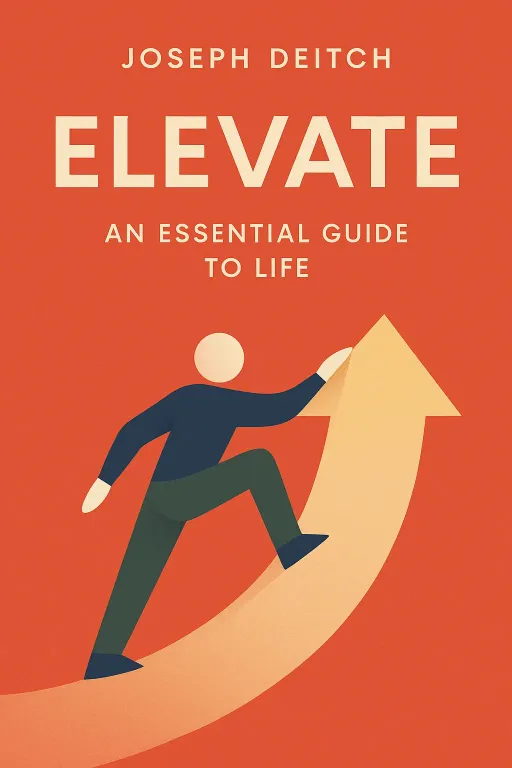
Nova: Exactly, Atlas. Today, we're dissecting two powerful frameworks that, when combined, create something truly resilient. First, we’re looking at Joseph Deitch, the visionary behind Commonwealth Financial Network, in his profound book. Deitch offers a meticulous blueprint for integrating awareness with decisive action.
Atlas: Okay, so we have a modern architect of success, someone who built a financial powerhouse, giving us practical insights. That immediately adds a layer of credibility. But you mentioned a second voice?
Nova: And then we’ll layer on the timeless wisdom of Jim Rohn, a true titan of personal development, from his classic. Rohn's work isn't about fleeting trends; it’s about the foundational, unshakeable principles that sustain success over decades.
Atlas: Alright, so we’ve got a highly successful contemporary entrepreneur focused on strategic integration, and a foundational philosopher of self-improvement. That sounds like a potent combo for anyone trying to master tech trends, scale a venture, or just optimize their limited time for maximum impact.
Nova: Absolutely. It’s about building an internal operating system that can thrive amidst any external turbulence. Let's start with Deitch and this idea of 'awareness with action.' It sounds straightforward, but it’s profoundly transformative.
Deep Dive into Core Topic 1: Deitch's "Awareness with Action"
SECTION
Nova: Deitch’s central premise in is that peak performance doesn't come from just being aware, nor from simply taking action. It's the seamless, almost instinctive, integration of the two. Think of it less as a sequence and more as a continuous feedback loop.
Atlas: So, it’s not just "know thyself" and then "do things." It’s "know thyself, then, then, and." Is that the loop?
Nova: Precisely. Deitch emphasizes that awareness isn't passive self-reflection. It’s active, multi-layered. It’s self-awareness – understanding your strengths, weaknesses, biases. It’s situational awareness – knowing the market, the competition, the trends, the unspoken dynamics in a meeting. And it’s relational awareness – how you impact others, and how they impact you.
Atlas: That makes me wonder, for our listeners who are focused strategists in fast-paced environments, how do you build that heightened, multi-layered awareness when you're already swamped with daily operations? It sounds like another thing to add to the mental load, and time is already a precious commodity.
Nova: That’s a critical point, Atlas, and Deitch addresses it head-on. He argues it’s not about information, but information and. It's about creating dedicated space for reflection – even 20 minutes daily, as our listener profile might appreciate – to step back and analyze patterns, not just data points.
Atlas: So, it’s not just about looking at the quarterly reports, but asking those numbers are what they are, and for the next quarter?
Nova: Exactly. Imagine a tech leader, let’s call her Sarah, who was constantly reacting to market shifts. Her team was brilliant, but they were always in "firefighting" mode, trying to keep up. Sarah was aware of the trends, but she wasn’t that awareness into a proactive, strategic action plan.
Atlas: I know that feeling. It’s like being in a boat with a hole, and you’re aware of the water coming in, but you’re just bailing furiously instead of patching the hole and steering to shore.
Nova: A perfect analogy! Deitch would say Sarah needed to elevate her awareness of not just external market signals they became crises, but also her team's capacity, her own energy levels, and the underlying of the reactive culture. Then, she could not from panic, but from a deeply informed position. She might implement a weekly 'strategic pause' for her leadership team, not to review metrics, but to discuss the 'why' behind them, and to anticipate future shifts.
Atlas: That’s fascinating. It’s a deliberate practice, not just a passive state of mind. But how do you ensure that heightened awareness translates into effective, rather than just busy, action? Because sometimes, you can be hyper-aware and still feel paralyzed by options.
Nova: That’s where the "action" part of Deitch's framework becomes crucial. It’s about. Action isn't just movement; it’s purposeful movement. With Sarah, her team’s actions became more focused once they understood the larger landscape. They moved from scattered efforts to targeted initiatives because their awareness gave them clarity on to direct their energy.
Atlas: So, it’s like moving from being a firefighter to an urban planner. You’re not just putting out fires; you’re designing systems to prevent them, based on understanding the city's flow. That's a great example, especially for scaling ventures where every action has compounding effects. But what happens when even the most intentional actions face unexpected turbulence? What's the bedrock that keeps you going?
Deep Dive into Core Topic 2: Rohn's "Discipline and Character"
SECTION
Nova: And that naturally leads us directly to Jim Rohn. Because even with perfect awareness and the most intentional actions, without the bedrock of discipline and character, those actions often falter, and our resilient engine sputters. Rohn’s isn't about quick fixes; it’s about cultivating the inner strength to execute consistently, especially when it’s hard.
Atlas: Okay, so Deitch gives us the strategic map and the compass, and Rohn gives us the fuel and the engine. What does Rohn specifically mean by "discipline" and "character" in this context? Because those words can sometimes feel a bit abstract.
Nova: Rohn simplifies it beautifully. Discipline, for him, is about doing what needs to be done, when it needs to be done, whether you feel like it or not. It’s the consistent application of effort towards a goal, even when motivation wanes. Character, then, is the integrity, the self-respect, and the alignment of your actions with your deepest values. It’s the inner commitment that ensures your discipline isn’t just robotic, but purposeful.
Atlas: That makes me wonder, Nova. Rohn’s work is often seen as classic motivational speaking. Does his emphasis on discipline and character still resonate in a world obsessed with AI, rapid disruption, and endless "hacks"? It sounds a bit old-school, almost simplistic, when we're talking about mastering tech trends.
Nova: That’s a fair challenge, Atlas, and it’s precisely why Rohn’s wisdom is critical now. The external world is chaotic, but the internal principles of discipline and character are timeless anchors. Think of it this way: AI might change we work, but it doesn't change the fundamental need for a leader to consistently show up, to make difficult decisions with integrity, or to inspire trust.
Atlas: So, when everything around you is shifting, your internal compass needs to be rock solid.
Nova: Exactly. Imagine a leader, let's call him David, with brilliant ideas and great market awareness. He’s an innovator, but he struggles with consistency. He starts many projects but finishes few. He avoids difficult conversations, and occasionally takes shortcuts that compromise quality. Rohn would say David lacks the discipline to follow through and the character to prioritize long-term integrity over short-term ease.
Atlas: I’ve seen that play out. Great vision, but the execution engine keeps stalling. For someone like David, who's driven by impact but struggles with time and maybe even the emotional weight of those "tough conversations," how does Rohn suggest cultivating that character and discipline? It feels like a long game, not a quick fix.
Nova: It a long game, but it starts with small, daily steps. Rohn often spoke about the cumulative effect of small disciplines. It’s not one heroic act; it’s the daily planning, honoring small commitments, honest self-assessment, and taking responsibility. These seemingly minor habits build the character that withstands major market turbulence. It's about doing the little things consistently, which then empowers you to tackle the big things effectively.
Atlas: So, it’s not about being rigid, but having a resilient inner framework that allows you to be flexible externally. Like a strong spine that lets you bend without breaking. That’s powerful. It’s the opposite of being fragile, really.
Synthesis & Takeaways
SECTION
Nova: That’s a brilliant way to put it, Atlas. And this is exactly where Deitch and Rohn become a formidable duo. Deitch gives us the map and the compass – the refined awareness to see where we are and where we need to go, and the strategic thinking for intentional action. Rohn provides the fuel and the engine – the discipline to keep moving, and the character to stay true to course, even when the path is unclear or riddled with obstacles.
Atlas: So, it’s not enough to be smart and aware, and it’s not enough to be disciplined and have good character. The real power comes from the integration, the constant interplay. For a pragmatic learner or a driven innovator, this means their desire for efficiency and impact needs to be rooted in something deeper than just the next hack.
Nova: Absolutely. The ultimate takeaway is this: a truly resilient leadership engine isn't built on one-off insights or sporadic bursts of effort. It's constructed from the continuous loop of informed awareness leading to strategic action, all underpinned by unwavering discipline and strong character. This combination means you're not just surviving market turbulence; you're through it, building something truly enduring. It’s about building a foundation that makes that effort sustainable and truly meaningful.
Atlas: That’s actually really inspiring. For our listeners who are driven by impact, mastering trends, and scaling ventures, this isn't just about getting more done. It's about building a foundation that makes that effort sustainable and truly meaningful. So, if you're looking to turn those small, efficient learning blocks into lasting momentum, start by consciously integrating what you know with how you act, and anchor it all in consistent discipline.
Nova: Absolutely. We'd love to hear how you apply these principles in your own life and work. Share your insights on our social media channels – what small disciplines are you committing to this week? How are you elevating your awareness to drive more intentional action?
Atlas: Your insights truly help us all grow. We’re always learning from you.
Nova: This is Aibrary. Congratulations on your growth!









