

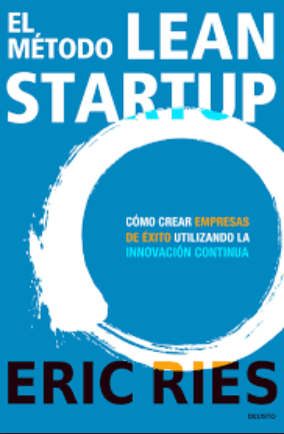
El método Lean Startup : cómo crear empresas de éxito utilizando la innovación continua - 1. edición
Introduction: Ditching the 50-Page Business Plan
Introduction: Ditching the 50-Page Business Plan
Nova: Welcome to Aibrary, the show where we dissect the ideas that reshape industries. Today, we’re diving deep into a book that fundamentally changed how the world builds things: Eric Ries’s "The Lean Startup."
Nova: : That book feels like it’s been around forever, but it really only hit the mainstream in 2011. What was the big problem it was trying to solve, Nova?
Nova: The problem was the traditional startup playbook, which was essentially: spend months or years perfecting a massive business plan based on assumptions, build the whole thing in secret, launch it with a huge fanfare, and then—often—discover that nobody actually wanted it. Ries called this the 'launch and pray' method.
Nova: : Launch and pray. That sounds terrifyingly expensive. So, Ries basically said, stop praying and start testing?
Nova: Exactly. He proposed a scientific approach. Instead of a massive plan, you have a set of hypotheses. The entire methodology boils down to one core concept: the Build-Measure-Learn feedback loop. It’s about minimizing the time it takes to get through that loop.
Nova: : Build, Measure, Learn. It sounds deceptively simple. Is it just a fancy way of saying 'iterate quickly'?
Nova: It’s more rigorous than that. It’s about. You aren't just iterating for the sake of iteration; you are seeking empirical data to prove or disprove your fundamental business assumptions. The goal isn't to build a product; the goal is to how to build a sustainable business.
Nova: : So, if the goal is learning, what’s the smallest thing you can build to start that learning process?
Nova: That brings us perfectly to the MVP, the Minimum Viable Product. It’s the cornerstone of the whole philosophy, and frankly, the most misunderstood part of the book. Let's break down what that really means in our next chapter.
Key Insight 1: Validated Learning Through MVP
The Minimum Viable Product: Not Just Half a Product
Nova: When people hear MVP, they often picture a buggy, half-finished piece of software. Ries is clear: the MVP is not about feature quantity; it’s about learning velocity.
Nova: : Right. It has to be. It needs to offer enough value that early adopters will actually use it and give you feedback. What’s a classic example of this done right?
Nova: The Airbnb founders are the poster children for this. They didn't build a global booking platform with integrated payments and complex algorithms. They had a hypothesis: people will pay to sleep on an air mattress in a stranger's apartment during a sold-out conference.
Nova: : That’s a bold hypothesis! How did they test it leanly?
Nova: They built the absolute minimum: a simple website, took photos of their own loft in San Francisco, and listed it for the conference attendees. They manually handled the transactions. They proved the core assumption—that people would trust strangers enough to book a stay—before writing a single line of complex backend code.
Nova: : That’s brilliant. It’s a 'Concierge MVP' or a 'Wizard of Oz MVP' in disguise, where the founders are doing the work manually behind the scenes. What about Groupon? I heard they started incredibly simply too.
Nova: Groupon is another fantastic case. Their initial MVP wasn't a complex e-commerce engine. It was literally a basic WordPress site that posted a single daily deal. They manually generated the PDFs for the coupons and emailed them out. They were testing demand for group buying, not testing their ability to scale payment processing.
Nova: : So, the MVP forces you to confront the riskiest assumption first. If nobody signs up for the basic version, you know you need to rethink the entire value proposition, not just tweak the color scheme.
Nova: Precisely. Ries emphasizes that if you build a full product based on a flawed assumption, you've just wasted a massive amount of time and money creating something nobody wants. The MVP is the antidote to that waste.
Nova: : It sounds like the MVP is less about the technology and more about the itself. It’s a tool for gathering data, not a product roadmap.
Nova: Exactly. And that data collection leads us directly into the 'Measure' part of the loop, which requires a different way of thinking about success metrics.
Key Insight 2: Metrics That Matter
Innovation Accounting: Escaping Vanity Metrics
Nova: This is where many established companies stumble when trying to adopt Lean principles. They look at their dashboards and see thousands of sign-ups, but the business isn't growing. Ries calls these 'Vanity Metrics.'
Nova: : Vanity metrics. Things like total registered users, total page views, or total downloads. They look great in a board meeting, but they don't predict future success.
Nova: Right. A classic vanity metric is total registered users. If you have a million users but 99% never return, that number is meaningless. Ries argues you must use 'Actionable Metrics.'
Nova: : What makes a metric actionable? Give us an example of a good one.
Nova: An actionable metric must clearly demonstrate cause and effect. For a subscription service, a great metric isn't total sign-ups; it’s the —what percentage of users who signed up in January are still active in March? That tells you if your product is actually sticking with people.
Nova: : That makes sense. It connects an action—like a feature release or a marketing campaign—directly to a measurable change in customer behavior. How do you track this scientifically?
Nova: Ries introduces the concept of Innovation Accounting. It’s a way to measure progress when you don't have traditional revenue or profit metrics yet. You set a baseline using your first MVP results, then you run an experiment, and you measure whether the experiment moved your actionable metrics above that baseline.
Nova: : So, if I launch Feature A, and my cohort retention goes up by 5%, that’s a successful experiment. If it goes down, I’ve learned something valuable, even though the feature launch was a 'failure' in the traditional sense.
Nova: Precisely. You’ve achieved. The opposite of success isn't failure; the opposite of success is. If you launch something and can’t definitively say whether it helped or hurt your key actionable metric, you’ve wasted time.
Nova: : This sounds like it requires a very disciplined, almost laboratory-like approach to product development. It’s not just about being fast; it’s about being methodical in your speed.
Nova: It is. And when the data consistently shows that your current path isn't working—when those experiments fail to move the needle on your actionable metrics—that’s when you have to face the hardest decision in the Lean Startup world: the Pivot.
Key Insight 3: Structured Change
The Pivot: When to Change Direction
Nova: The Pivot is often romanticized as a dramatic, last-minute change of heart, but Ries defines it as a designed to test a new fundamental hypothesis about the product, strategy, or engine of growth.
Nova: : So, it’s not just giving up on the original idea. It’s a strategic shift based on the data you’ve gathered from your Build-Measure-Learn cycles.
Nova: Exactly. Think of it like steering a ship that’s heading toward an iceberg. You don't just stop; you execute a calculated turn. Ries outlines several types of pivots. For instance, there’s the Zoom-In Pivot, where a single feature of your product becomes the whole new product.
Nova: : Can you give us an example of a pivot in action?
Nova: Instagram is a great example, though they didn't use the term at the time. They started as Burbn, a complex location-based social networking app with check-ins, plans, and photo sharing. The data showed that users loved the photo-sharing feature but ignored everything else.
Nova: : So they executed a Zoom-In Pivot. They ditched the check-ins, the planning features, everything, and focused 100% on making the photo sharing and filtering experience world-class. That was their pivot point.
Nova: : That’s a huge strategic shift. How do you know when to pivot versus when to just keep tuning the current model? That seems like the hardest judgment call.
Nova: That’s where the criticism often comes in. Some argue that Ries’s methodology encourages too much incrementalism, making founders pivot too early or too often, chasing small gains instead of sticking with a hard vision. Ries counters this by saying you must be disciplined about you pivot.
Nova: : How do you enforce that discipline?
Nova: You must define your 'leap-of-faith assumptions' upfront—the things you be right about for the business to work. You keep iterating on the MVP until you have enough validated learning to either prove those assumptions or prove them false. If they are false, you pivot. If you don't have enough data, you keep learning. It’s about avoiding the premature pivot, which is just as bad as never pivoting at all.
Nova: : It sounds like the methodology is a framework for managing uncertainty, not eliminating it. But what happens when this framework is applied outside of a tiny, nimble startup environment?
Key Insight 4: Real-World Application and Critique
Legacy and Limitations: From Startups to Enterprises
Nova: The impact of The Lean Startup has been enormous. It’s moved far beyond Silicon Valley startups. Major corporations now use these concepts for internal innovation labs, often calling it 'Lean Enterprise' or 'Agile Transformation.' It promotes efficiency and reduces the waste associated with large, slow-moving projects.
Nova: : I read one source suggesting it might make traditional, long-term business plans obsolete. That’s a massive claim. Why is it so disruptive to the old guard?
Nova: Because it replaces rigid planning with continuous experimentation. Instead of a 5-year plan, you have a 3-month experiment cycle. The Harvard Business Review even covered it, noting how it changes everything by focusing on validated learning and faster delivery.
Nova: : But we mentioned the critiques. What are the biggest sticking points for people who dislike the methodology?
Nova: The main criticism I found is that it can lead to a focus on over. If you are constantly optimizing for the next small metric improvement, you might never build that truly disruptive, visionary product that requires a leap of faith beyond current customer feedback.
Nova: : That’s a fair point. Steve Jobs famously said, 'People don't know what they want until you show it to them.' If you only listen to what people say they want today, you might never invent the iPhone.
Nova: Exactly. The Lean Startup methodology struggles when the innovation is truly discontinuous—when you are creating a category that has no existing customer base to learn from. In those cases, you have to rely more on intuition and vision, which the methodology sometimes seems to downplay.
Nova: : So, the key takeaway for listeners should be that Lean Startup is a powerful tool for and in known markets, but perhaps less prescriptive for true, category-defining invention?
Nova: That’s the perfect synthesis. It’s a scientific method for navigating uncertainty, but it’s not a substitute for vision or deep domain expertise. It’s a tool, not a dogma.
Conclusion: Building with Intent
Conclusion: Building with Intent
Nova: So, what’s the final word on Eric Ries’s massive contribution? We’ve covered the Build-Measure-Learn loop, the necessity of the MVP like Airbnb’s initial loft listing, and the discipline of Innovation Accounting over Vanity Metrics.
Nova: : And we learned that the Pivot is a structured course correction, not a surrender. The biggest lesson is that in the modern economy, speed of learning beats speed of execution every single time.
Nova: Absolutely. The actionable takeaway for anyone launching anything—a product, a service, or even a new internal initiative—is this: Identify your riskiest assumption today. Then, design the smallest possible experiment, the MVP, to test it. Don't build anything else until that first experiment yields validated learning.
Nova: : Stop building features, start building knowledge. It’s a powerful shift in mindset from 'What can we build?' to 'What must we learn?'
Nova: It forces intentionality into every development cycle. It’s about building with purpose, not just building fast. It’s a framework that has saved countless companies from the graveyard of failed assumptions.
Nova: : A library of knowledge for the modern builder. This has been incredibly insightful, Nova.
Nova: My pleasure. Thank you for joining us on this deep dive into The Lean Startup. This is Aibrary. Congratulations on your growth!