

The 'Playful Learning' Law: Rethinking Early Development.
Golden Hook & Introduction
SECTION
Nova: We've all seen it, heard it, maybe even felt it: that subtle, sometimes not-so-subtle, hum of anxiety from parents and educators. The one that whispers, "Are my kids falling behind? Should they know their ABCs faster? What about advanced math by age four?" It’s a fear that often pushes us towards early academics, sometimes at the expense of something far more profound.
Atlas: Oh man, I know that feeling. It’s like there’s this invisible timeline, and if your child isn’t hitting every academic milestone ahead of schedule, you’re somehow failing them. It’s a relentless pressure. But wait, isn't it logical to want children to be prepared? Isn't there a risk of them actually falling behind if we don't push academics early?
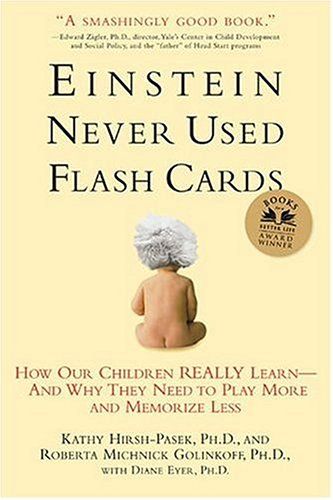
Nova: That’s the exact "blind spot" we’re talking about today, Atlas. And it’s precisely what renowned developmental psychologists Kathy Hirsh-Pasek and Roberta Golinkoff challenge so brilliantly in their book,. They, along with the timeless wisdom of Maria Montessori, whose work revolutionized education, make a powerful case for rethinking early development. What’s fascinating is how these authors, despite writing in different eras, share a profound, research-backed commitment to understanding the way children learn. They show us that true learning blossoms through joyful exploration, not forced instruction.
Atlas: So, you're saying that the very thing we’re pushing for, early academics, might actually be counterproductive to how children are wired to learn? That’s a pretty big claim to unpack.
The Blind Spot: Why We Push for Early Academics
SECTION
Nova: It absolutely is, and it challenges a deeply ingrained cultural belief. Our societal blind spot often convinces us that more structured learning, earlier, equals better outcomes. We see flashcards, workbooks, and early literacy programs as shortcuts to success. But Hirsh-Pasek and Golinkoff argue that this pressure, driven by a fear of children 'falling behind,' actually overlooks the foundational power of play. It’s like we’re so focused on the finish line of academic achievement that we miss the crucial steps nature designed for the journey.
Atlas: So basically you're saying there's a difference between what like learning and what truly foundational learning? Because to many, seeing a child recite their multiplication tables at a young age feels like progress.
Nova: Exactly! That’s the core distinction. Rote memorization, while it might produce a quick, measurable outcome, often doesn't build the deeper cognitive structures necessary for true understanding or creative problem-solving. Think about it this way: a child might memorize the names of ten dinosaurs from a book. That's one type of learning. But a child who spends an hour building a dinosaur habitat out of sticks, leaves, and mud, figuring out how to make a river flow, what plants to use, and where the 'herbivores' and 'carnivores' would live – that child is engaged in a far richer, multi-faceted learning experience. They're developing critical thinking, spatial reasoning, negotiation skills if other children are involved, and a genuine curiosity about ecosystems.
Atlas: I see what you mean. The first is about recall, the second is about and. That's a huge difference. For our listeners, especially those who are deeply invested in the holistic well-being of young children, it sounds like this isn't just about academics, it's about their overall healthy development and connection to the world around them.
Nova: Precisely. The consequences of this blind spot are far-reaching. When we force instruction too early, we can inadvertently stifle a child's natural curiosity and intrinsic motivation. Instead of learning being an exciting, self-driven adventure, it becomes a task, often associated with external rewards or punishments. This can lead to disengagement, anxiety, and a diminished love for learning itself. These authors provide compelling evidence that children who are pushed too hard, too fast, often don't fare better in the long run; in some cases, they may even show signs of burnout or reduced creativity later on. It's a classic case of 'slow and steady wins the race' when it comes to deep, meaningful development.
The Power of Play: How Joyful Exploration Builds Foundational Skills
SECTION
Nova: And that naturally leads us to what these authors advocate for: the profound, often underestimated, power of play. Both and converge on this central truth: play is not trivial; it is the child's most essential work. It's how they learn about the world, about themselves, and about others.
Atlas: Can you give an example? Like how does something as seemingly simple as building a tower of blocks actually translate into problem-solving later? It sounds intuitive, but I think many of us still struggle to see the direct connection.
Nova: Absolutely. Let’s take that block tower. A child isn't just stacking. They're engaging in fundamental engineering. They're forming hypotheses: "If I put this big block on top of that small one, what happens?" They're testing, observing, and adapting. They learn about gravity, balance, spatial relationships, and cause-and-effect. If the tower falls, they don't see it as a failure; they see it as data, a chance to try a different approach. That iterative process, that resilience in the face of a challenge, those are sophisticated problem-solving skills being honed.
Atlas: Wow, so it’s like a mini scientific experiment happening in their playroom. That’s actually really inspiring. And Maria Montessori’s concept of the "Absorbent Mind" really speaks to this, doesn't it? That children naturally absorb knowledge through sensory experiences. So their environment truly is their greatest teacher.
Nova: Exactly. Montessori observed that young children possess an incredible, almost effortless capacity to absorb information from their surroundings—not through formal instruction, but through direct interaction with a rich, stimulating environment. She saw children as active constructors of their own knowledge. It's why she emphasized carefully prepared environments, filled with materials children could manipulate, explore, and discover on their own. The child is drawn to these activities by an inner drive, not by external prompting.
Atlas: That makes me wonder, how does this play-based learning cultivate intrinsic motivation more than, say, a reward system for good grades? Because in our achievement-oriented world, rewards are often how we try to motivate.
Nova: That's a crucial question. Intrinsic motivation comes from the joy of the activity itself – the satisfaction of figuring something out, the delight of creating, the pleasure of mastering a new skill. When a child is deeply engaged in play, they're driven by an internal desire to explore and understand. A reward system, while effective for short-term compliance, shifts the focus from the inherent joy of learning to an external prize. The child learns to work for the reward, not for the love of learning. This can actually diminish their natural curiosity over time. Nova’s take is that allowing children to lead their play cultivates a deeper understanding and a lifelong love of learning that rote memorization simply can’t achieve.
Atlas: That makes sense. It’s the difference between doing something because you to, versus doing it because you to. For our listeners who are communicators and integrators, trying to build bridges between children's needs and educational approaches, it sounds like this is about fostering true engagement. So, if children are leading, how do parents and educators foster that without just letting them do anything? Is it about guiding, not dictating?
Designing Playful Environments: Cultivating Self-Directed Exploration
SECTION
Nova: Exactly! And that brings us to the deep question at the heart of all this: How do we design environments—both physical and relational—that natural, self-directed exploration without becoming chaotic or overwhelming? It’s not about just throwing a bunch of toys at a child; it’s about thoughtful curation. We're talking about rich textures, calming or stimulating sounds, and, crucially, open-ended materials.
Atlas: Okay, so for listeners who are thinking about their own homes or classrooms, what's one immediate, tangible thing they can do to create such an environment? Because the idea of 'open-ended materials' can sound a bit abstract. What does that actually look like in practice?
Nova: A great practical step is to embrace natural, simple materials. Instead of a battery-operated toy that does one thing, offer a basket of pinecones, smooth stones, fabric scraps, or even just a collection of different-sized cardboard boxes. These materials don't the child what to do; they the child what they do. A box can be a car, a house, a robot, a drum—the possibilities are endless, and the learning is driven by the child’s imagination and problem-solving. Another key is to rotate materials. You don’t need a hundred toys out at once; a few carefully chosen items presented beautifully can invite much deeper engagement.
Atlas: But isn't there a fine line between providing open-ended materials and just creating clutter? How do we ensure it's still an enriching environment and not just a messy room that overwhelms the child?
Nova: That's where intentionality and observation come in. Less is often more. The idea is to create a 'yes' space – an environment where most things are safe to explore and interact with, reducing the need for constant "no's." And then, we observe. What are they drawn to? How are they using the materials? Their play will tell us what they need next. It's about being a facilitator, not a director. This approach trusts the child's innate drive to learn and explore.
Atlas: It sounds like trusting our inner knowing, as the user profile suggests, is absolutely key here. Trusting that children are capable, and that our role is to create the conditions for their genius to emerge.
Synthesis & Takeaways
SECTION
Nova: Precisely, Atlas. What we’ve discussed today is a profound shift in mindset. It’s moving away from a fear-based, academically driven push towards a joy-based, developmentally supportive approach. It’s understanding that play isn't just a break from learning; it learning, in its most potent and natural form. The profound impact this has on a child's holistic well-being—their emotional regulation, social intelligence, creativity, and problem-solving skills—is immeasurable.
Atlas: It's a complete reframing, isn't it? From 'what do they need to learn' to 'how can we best support their natural drive to discover?' And it feels so much more aligned with how humans truly flourish. For our listeners, especially those nurturing young minds and seeking practical solutions, perhaps the biggest takeaway is that the best 'curriculum' often looks like freedom within a thoughtfully prepared environment. It’s about creating those rich, sensory-inviting spaces that respect the child’s absorbent mind. And for them, remember to schedule those brief, restorative moments for yourself each day. You pour from a full cup, and that sustained well-being is vital for the work you do.
Nova: Beautifully said. It's about trusting the process, trusting the child, and trusting ourselves to provide what they truly need to thrive.
Atlas: Absolutely.
Nova: This is Aibrary. Congratulations on your growth!